May
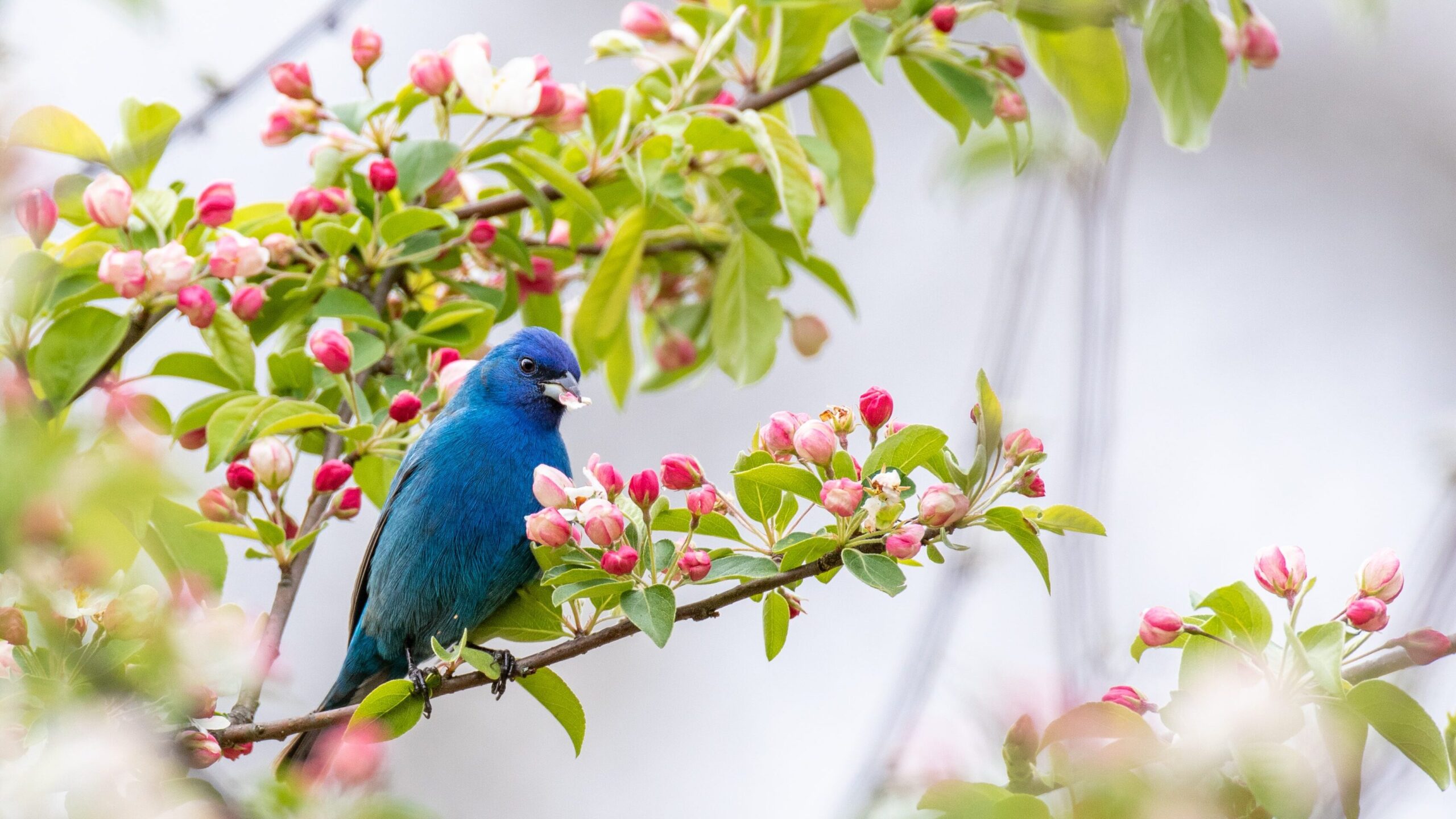
Birds are in full migration! Some birds are already nesting while those returning from their wintering grounds are rapidly settling in and thinking about where they’ll raise their young. If you pay attention, many of the native plants are blooming in alignment with the birds returning and the pollinators emerging. This “symphony” is remarkable. This is why our native habitat is so critical, it is already in tune with your “regional music.” Listen, watch, and get planting or tending!
Gardening for birds is a journey, not a destination. Pick a few things to do this month as you welcome the birds back.
Garden Checklist
Warm Regions:
Southern U.S. Regions
- Look for Plant Sales — there’s always room to add more plant diversity!
- Areas in Arizona, California, New Mexico, Texas, Hawaii, Florida, and parts of the southeast are getting late for spring planting. Local nurseries may be running sales.
- Water is critical, for birds and new plants!
- Add water, if necessary to newly planted plants.
- Add a water feature, be it bird bath, rain garden, wetland, or pond.
Cool Regions:
Rest of Regions in U.S. / CA
- Take your time Northern Canada and snow-covered or waterlogged areas.
- Delay any clean-up as long as possible, and leave as much on site as you can.
- Watch the forecast and time your plantings.
- Spring can be tricky for planting. Look for stretches above freezing for consecutive nights to help plants establish.
- Plant in the afternoon right before rain is predicted.
- Explore local nurseries for more plants.
- Share plants with neighbors and friends.
All Regions:
- Participate in Global Big Day
- Share your garden birds in the Garden for Bird eBird Project!
- Join the project here (if you already eBird).
- To learn more about why this is important, learn about the eBird Project here.
- We need more data to build on our understanding of how gardens impact bird populations.
- Share your garden birds in the Garden for Bird eBird Project!
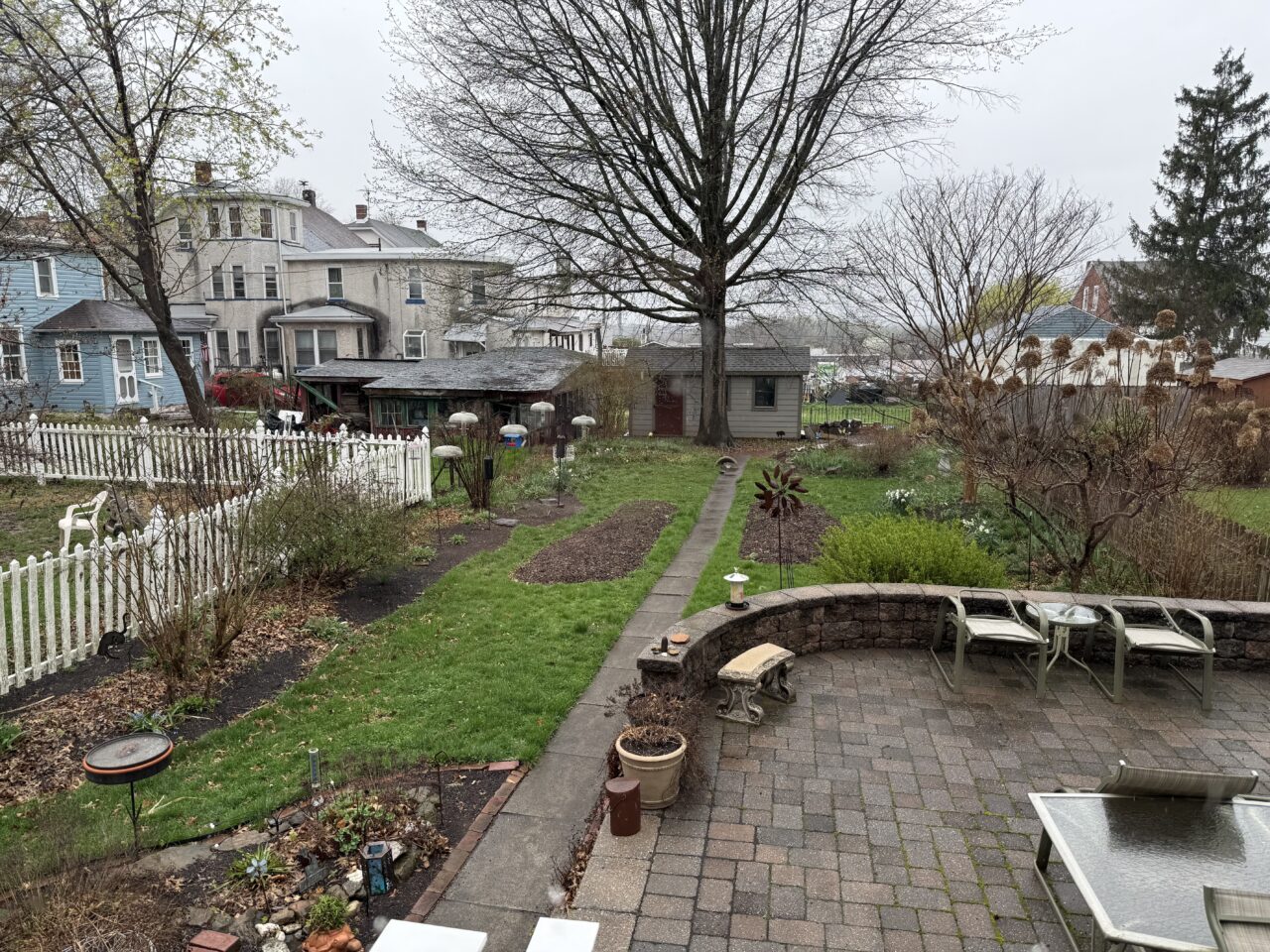
- Find some lawn to transition to native habitat.
- Do you need all that nonnative green lawn? Find a spot you can shrink to add more plants.
- Join our partners at Less Lawn More Life this summer and take the challenge. Robin Wall Kimmerer will be giving keynote kick-off on May 7.
- Submit May Pictures: Bird-friendly Features.
- Explore Photo Submissions
- March Photos: Planning/Before Pictures
- April Photos: Inviting Nesting Birds
- You only have to submit ONE photo all summer to be entered to win binoculars and books!
- Register for Upcoming Webinars
- A Walk in the Woods Spring Birding with Kevin McGowan on Friday, May 22, 2:00 p.m. EDT/ 11:00 a.m. PDT
- Native Plant Gardening — Big and Small Spaces and Why It Matters w/ Mhairi McFarlane, Tuesday, June 9 at 7:30 p.m. EDT / 4:30 p.m. PDT
- Follow BirdCast updates to learn what birds might be moving through.
- You can sign-up for migration alerts so you know when to turn your lights out during big migration events.
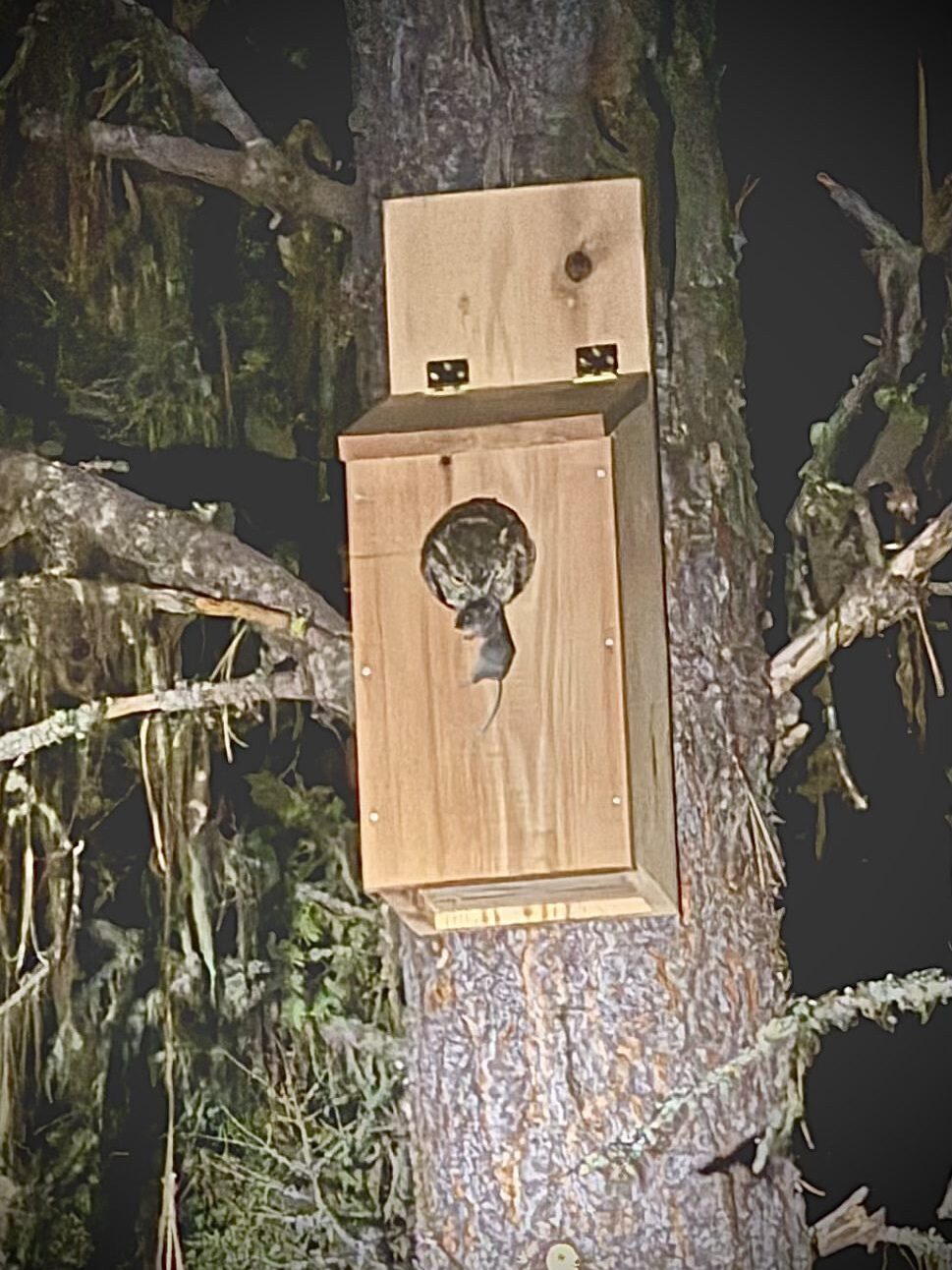
Bird Safety Tips
Turn Lights Out!
May is a peak month for migrating birds, as many species continue their journey to nesting habitats and begin nesting. Adding native plants to your garden now will provide them with food and shelter on their return migration in the fall. Peak migration season is also an important time to turn your attention to reducing light pollution around your home. Did you know that many bird species migrate at night? They become disoriented by artificial lights, often landing in urban or suburban areas where they are then at a greater risk of colliding with glass by day.
- Turn off unnecessary lights both inside and outside.
- Dim the lights you need to keep on.
- Switch cold, blue light to warmer, or yellower light.
- Select fittings which keep light focused and pointed downwards to light the spot where it is needed most.
Did you treat your windows to make them visible to birds? Or add other bird-friendly features? Share them with us.


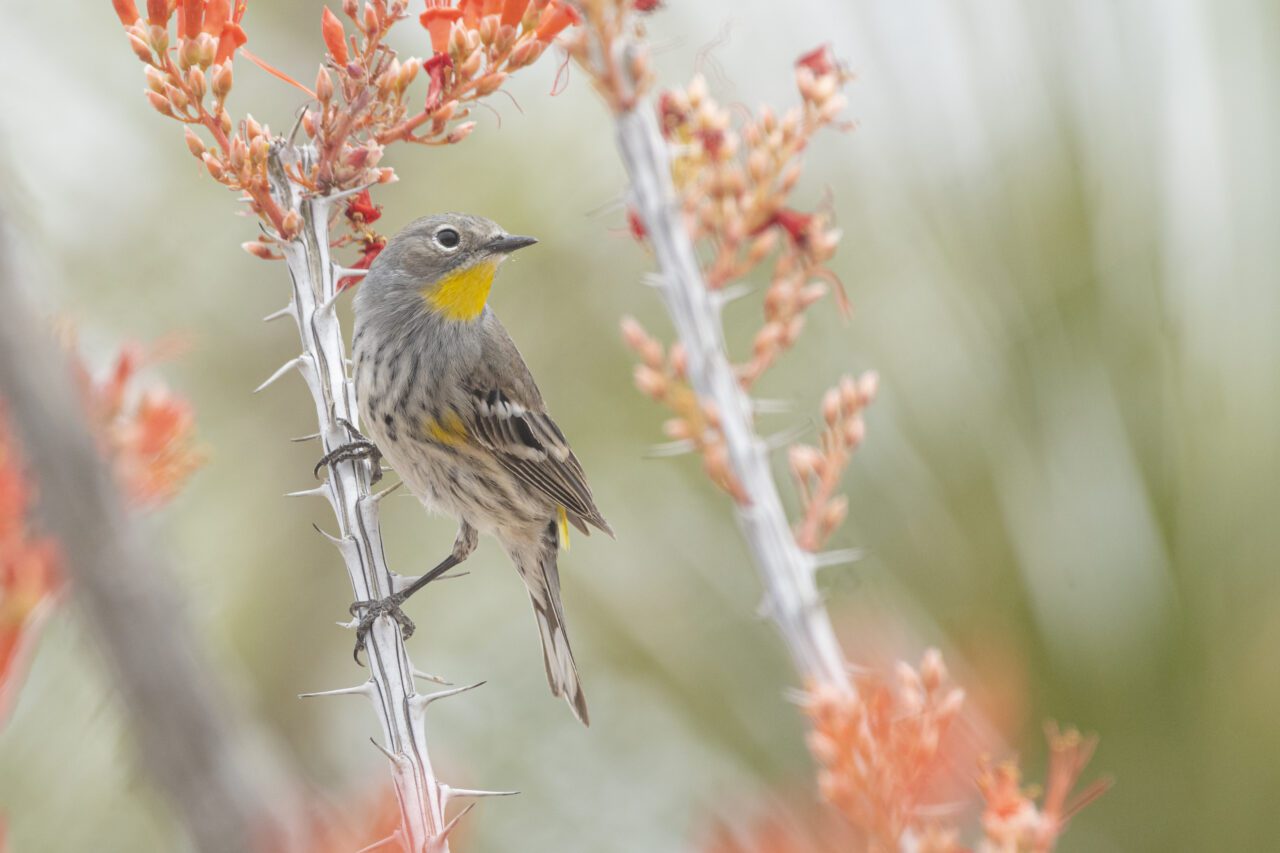
Featured Plant & Bird
Common Name: Ocotillo
Scientific Name: Fouquieria splendens
Native to: AZ , CA , NM , NV , TX
Plant characteristics: Perennial, shrubby cactus
Growing conditions: Part-shade in dry rocky, sandy soil. Tolerates drought.
Benefits to Birds & Biodiversity: Attracts a variety of hummingbirds, songbirds, and mammals. The nectar is a favorite among desert pollinators.
Additional Resources
- Still looking for native plants?
- Search nurseries with natives in U.S.
- Search nurseries with natives in Canada
- Review our resources pages for topics of interest from the beginning to experienced gardener.
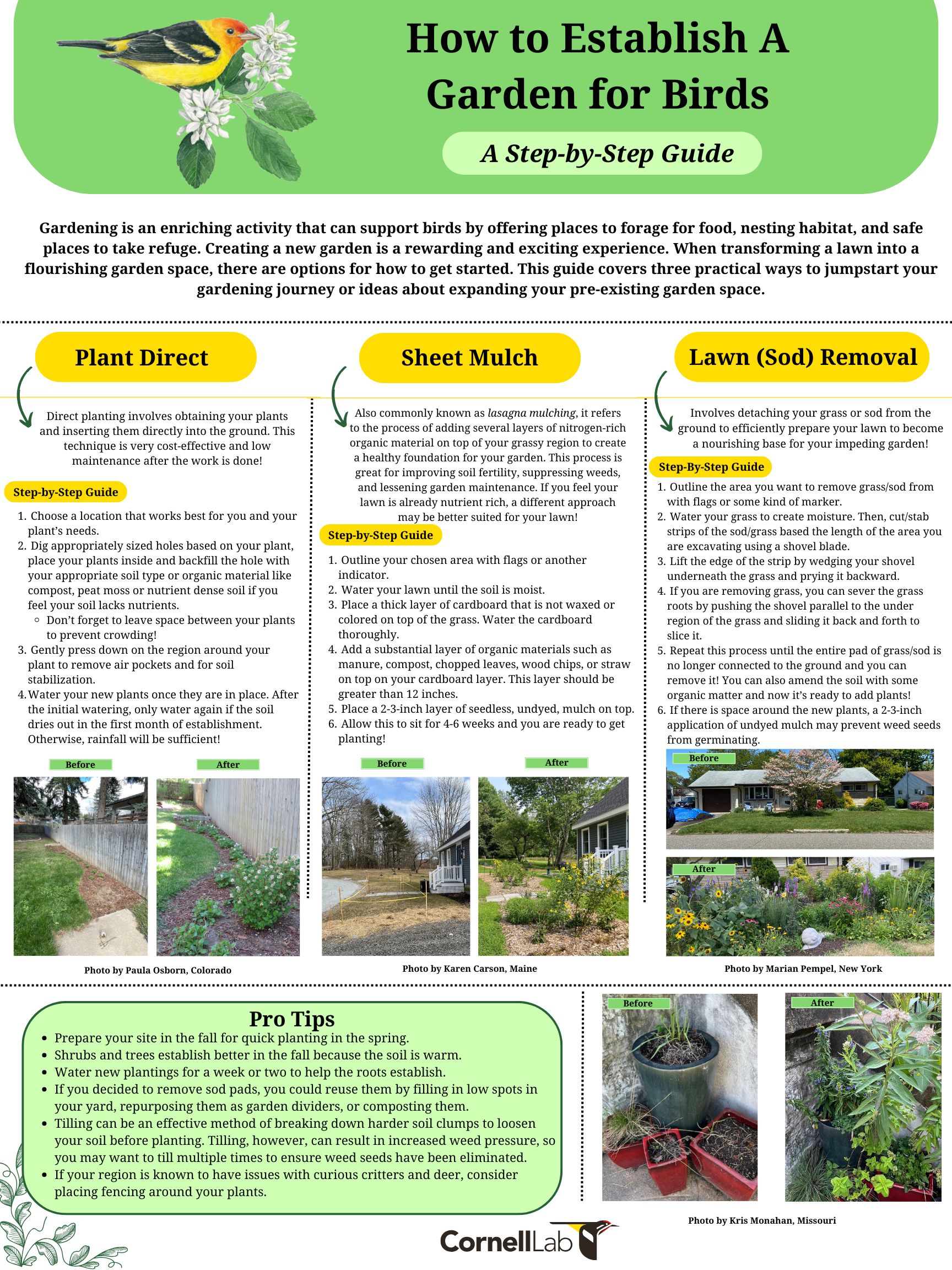
- Still planning to remove lawn for your garden? We can help.
- Explore this one page guide on options for removing lawn.
Stay Connected
By subscribing to stay connected to Garden for Birds, you agree to receive communications from the Cornell Lab. You may unsubscribe from the communications at any time.