Native vs Non-Native Plants: What Is the Issue?
Is my plant native, non-native, invasive – or is it a weed? This quick reference guide will help you cut through the confusion of some commonly used terms.
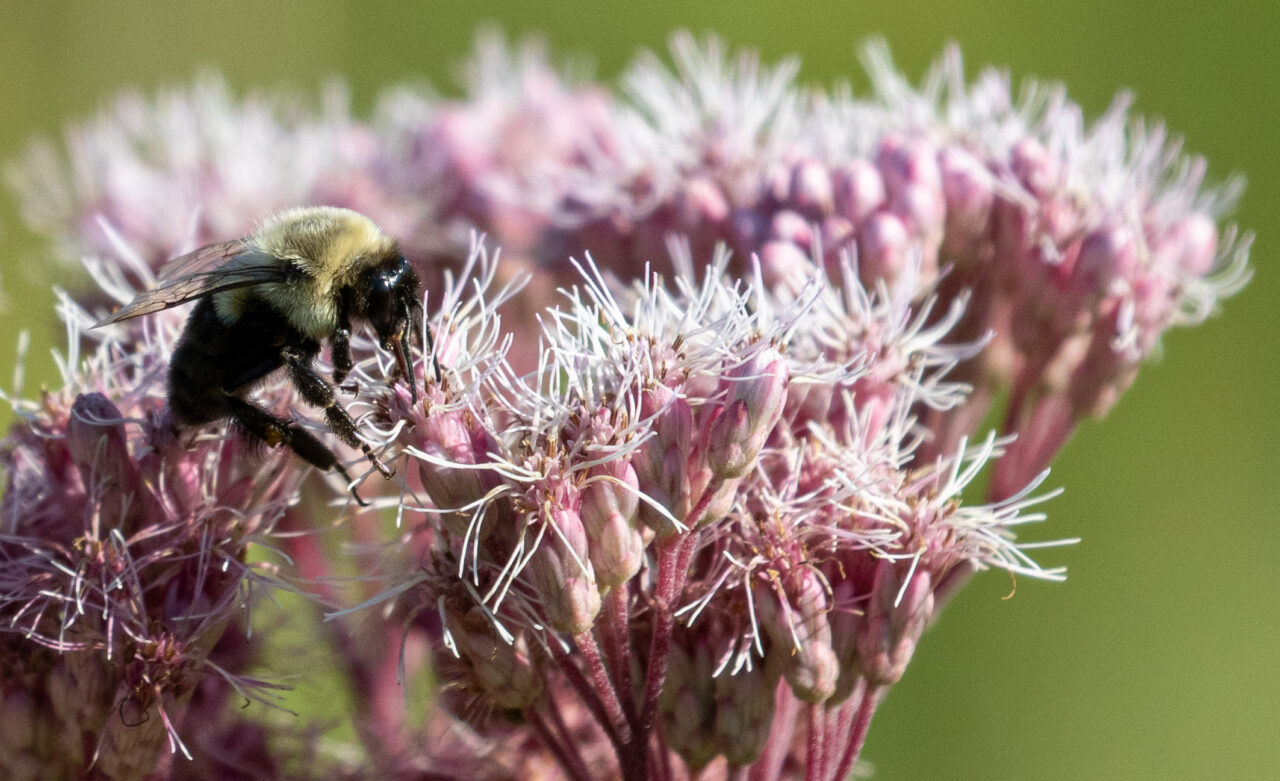
Bumble bee foraging on Joe Pye weed (Eutrochium maculatum). Photo by Mhairi McFarlane.
What Is a Native Plant?
A native plant is one which grows naturally in a given area. It has evolved with local soil and weather conditions, and so survives and thrives under nutrient, moisture, temperature, and wind conditions typical of the area. In turn, animals have evolved alongside, or “coevolved,” with these plants, and depend on them for food, shelter, and their own reproduction. “Animals” of course include everything from tiny nematodes living inside leaves; to butterflies; bees; grazing and browsing mammals from rabbits to moose; to birds; and humans.
What Is the Problem with Non-Native Plants?
There are almost 400,000 known species of vascular plant in the world, and people have been moving plants around for millennia. Today, the majority of plant species available in big box stores and commercial nurseries are not native to the areas where they are being sold. This is a problem because these non-native species often do not support all of the animals which have evolved to depend on plants native to the area. As houses, offices, and parking lots replace natural habitat, many animals including birds are seeing dramatic declines. The plants you choose for your outdoor spaces can go some way to reversing these declines.
Today, the majority of plant species available in big box stores and commercial nurseries are not native to the areas where they are being sold.
Invasive Plants
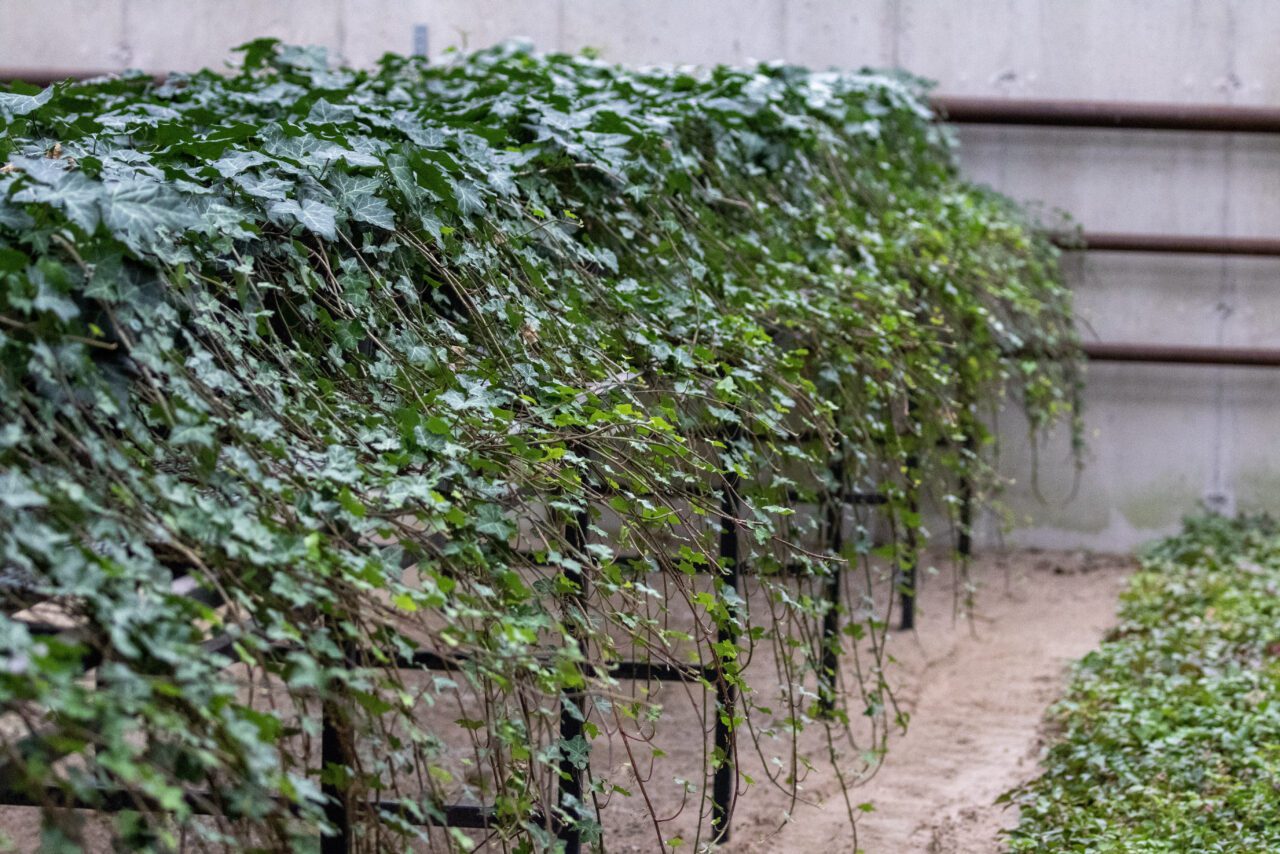
The increasingly connected world we live in today provides countless opportunities for plants (and animals) to be deliberately or accidentally moved between far-flung parts of the world in a matter of days. Some of these species thrive in their new location, spreading rapidly and replacing native plants and entire ecosystems which depend on them. It is still possible to purchase plants classified as invasive. Some states and provinces have rules requiring these to be clearly labeled. Avoid purchasing and planting non-native invasive species. See our invasive species FAQ for more.
Weeds
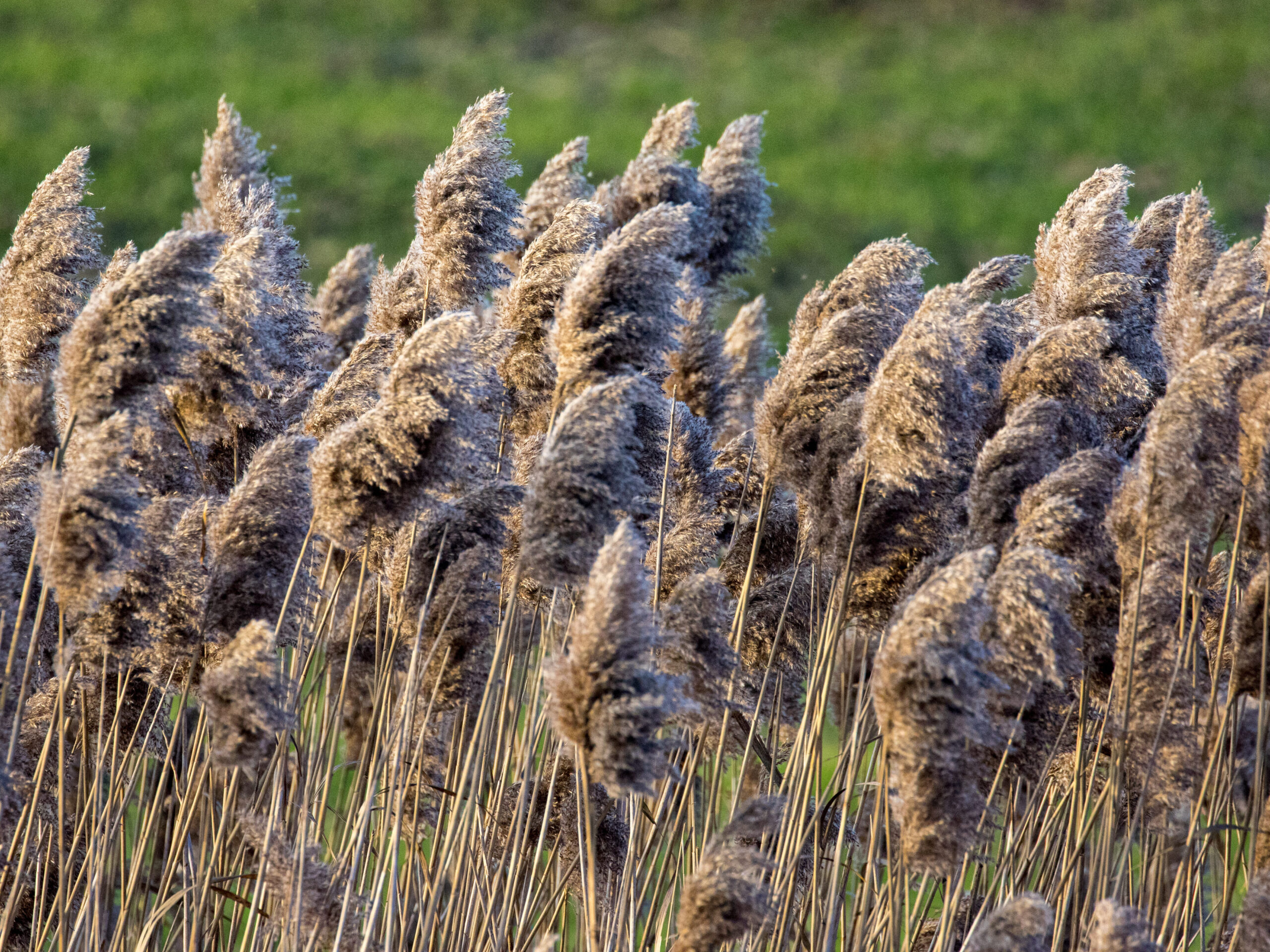
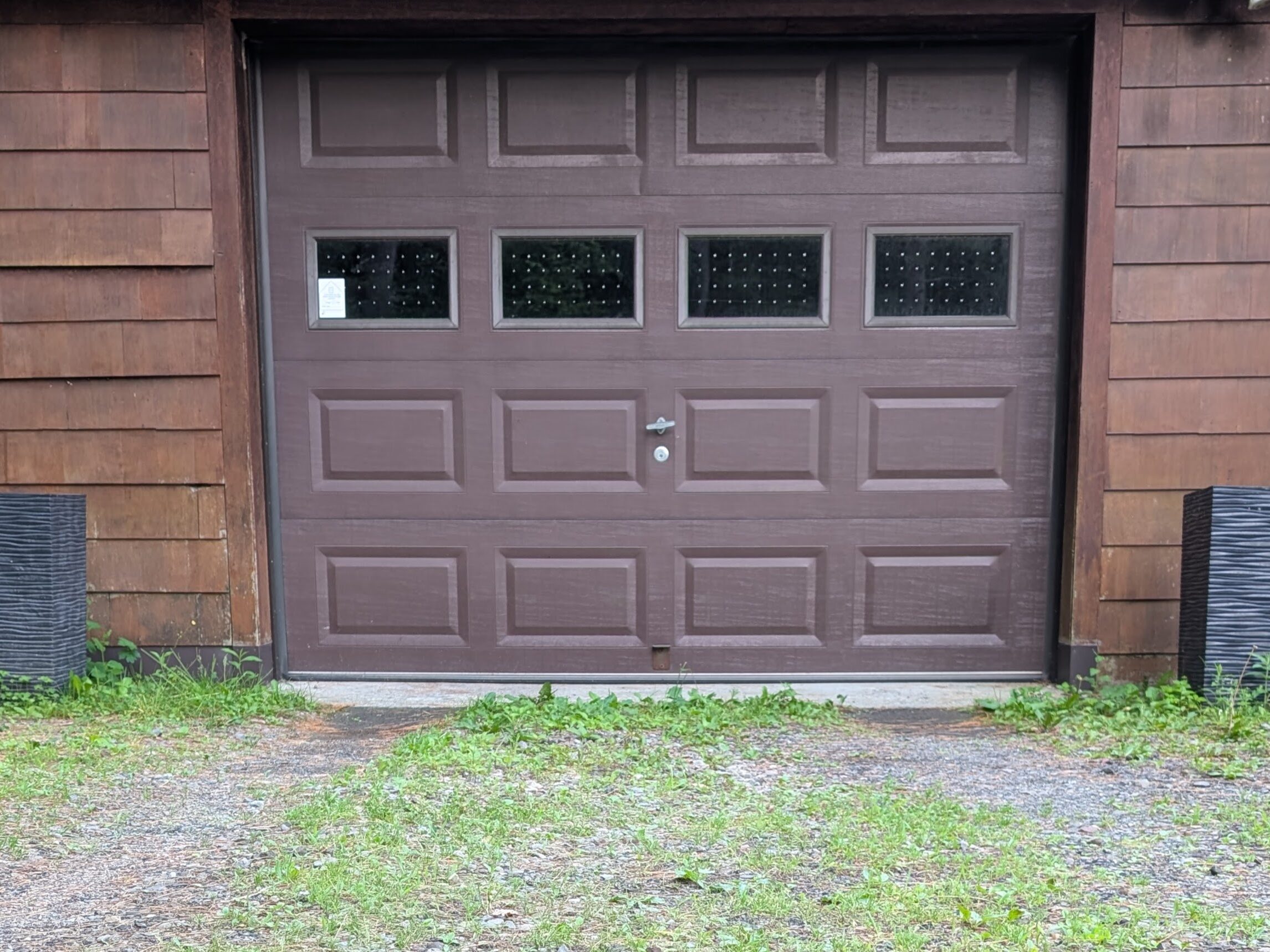
A “weed” is simply a plant which is growing somewhere humans don’t want it to. It might be a native plant trying to establish in your vegetable garden, or a non-native plant like a dandelion growing in your driveway. “Weeding” is an important maintenance task for any garden, to keep access routes safe and passable, and to keep things looking the way you want. Native “weeds” can be transplanted to more convenient spots, or given away to kick-start new native gardens.
Aggressive Plants
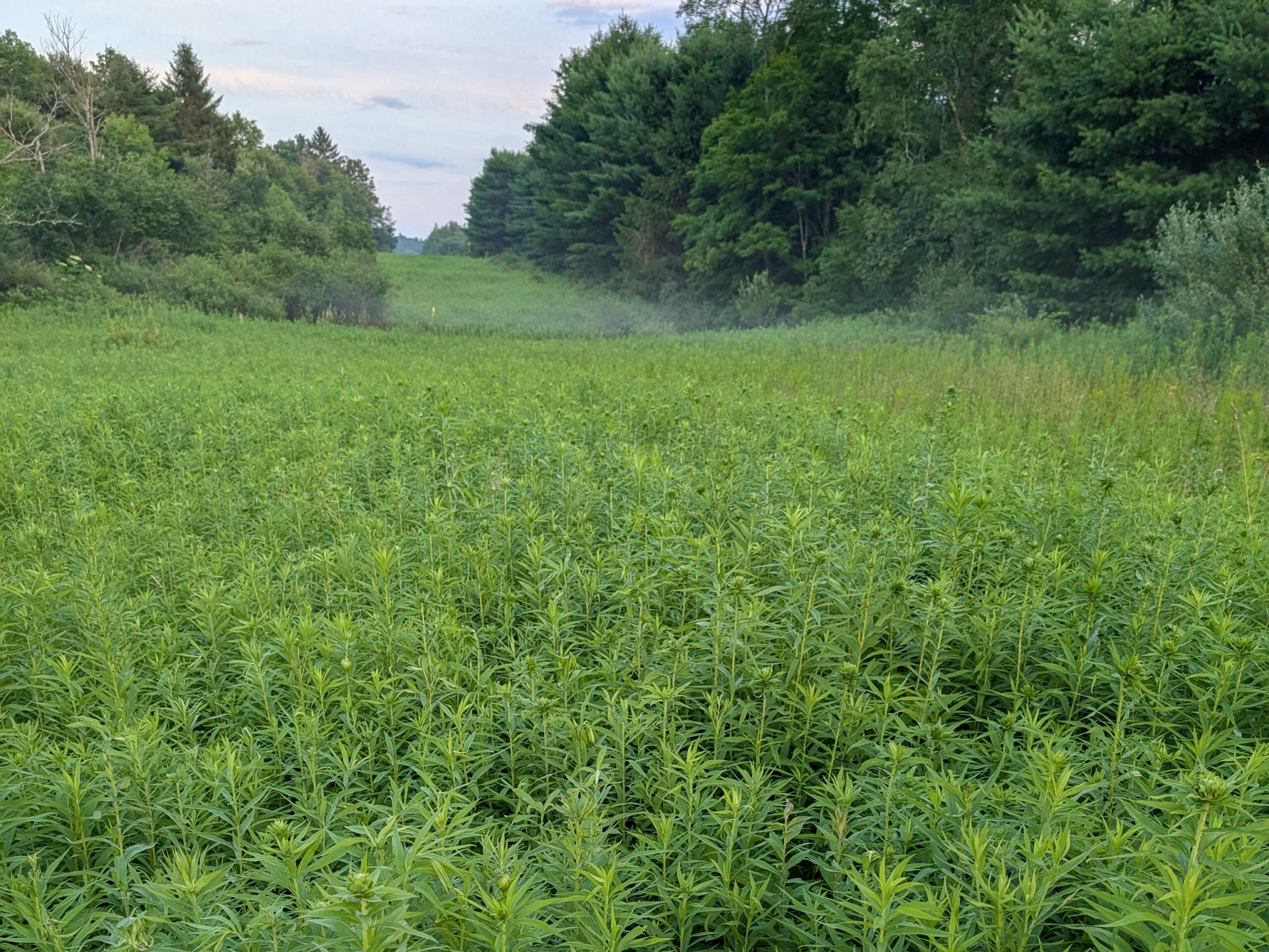
An aggressive plant is one which grows fast, or gets very big, or produces lots of viable seeds. In the context of native plant gardening, it is a useful term to help choose the best plant for a given spot. If you have a large area of former lawn you want to fill with native plants quickly, then choosing some aggressive native plants might be ideal. If you have a small spot beside your front door, then you might want to avoid something known to be aggressive.
See our FAQ for more definitions, and for support on management of non-native plants.
Stay Connected
By subscribing to stay connected to Garden for Birds, you agree to receive communications from the Cornell Lab. You may unsubscribe from the communications at any time.