Inviting Nesting Birds

See how people all over the United States and Canada are encouraging birds to nest safely on their property this year.
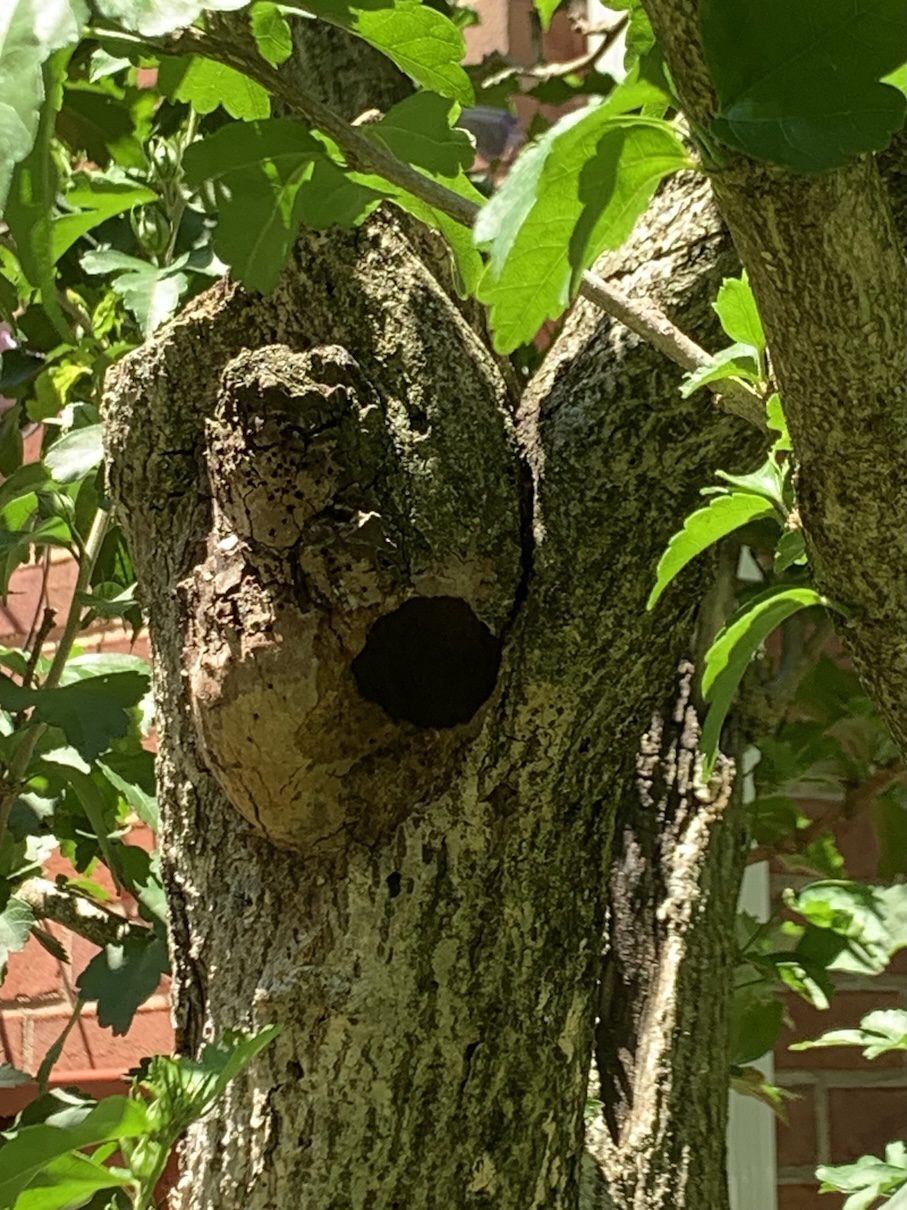
Maryland. We left the main trunk of an old Rose-of-Sharon in place rather than remove it. I noticed a knot and below it a well-formed hole. A family of chickadees moved in! Photo by Margaret Chang.
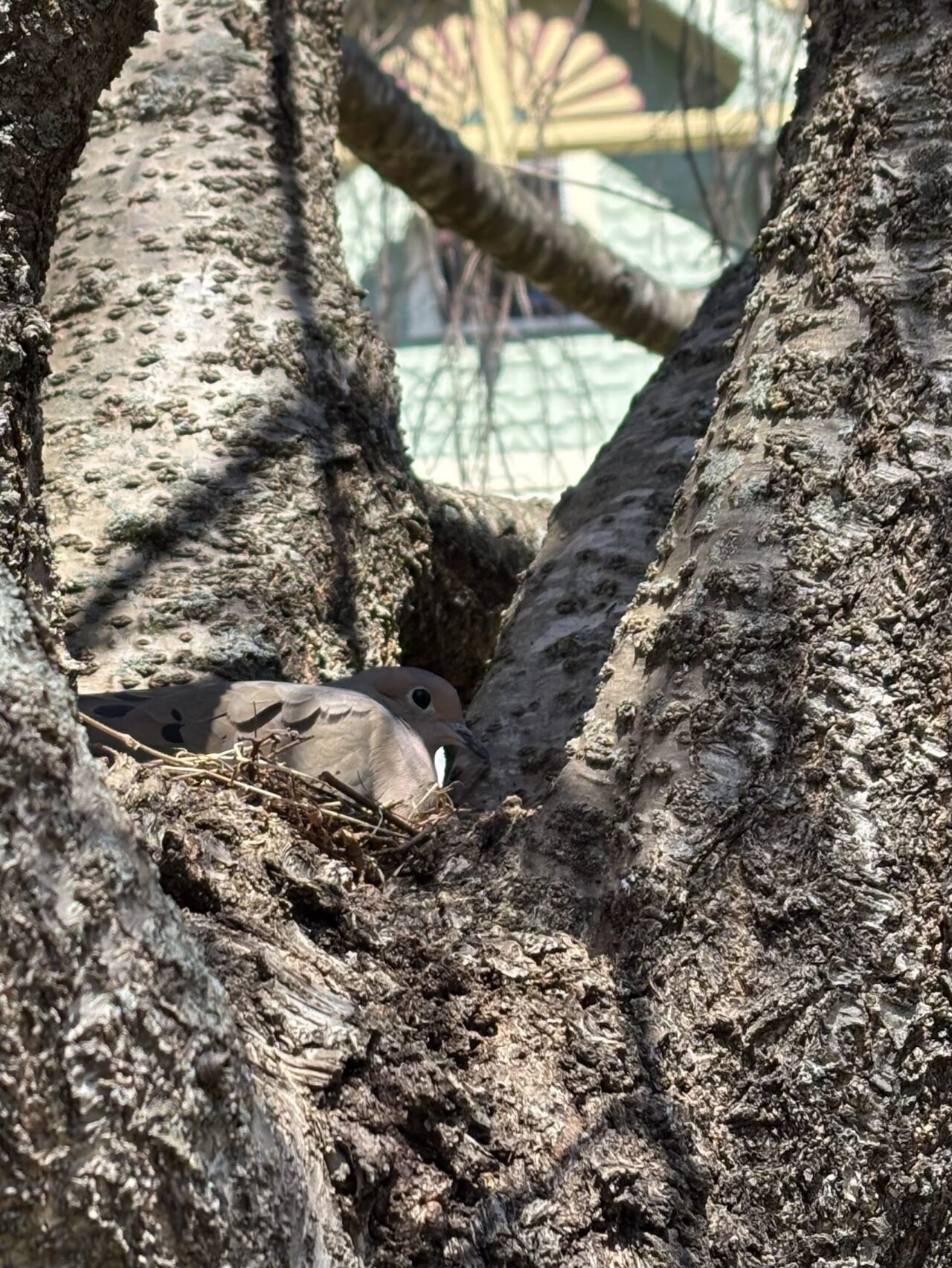
Florida. This staghorn fern has become home to a mourning dove family. Photo by Julie Maddux.
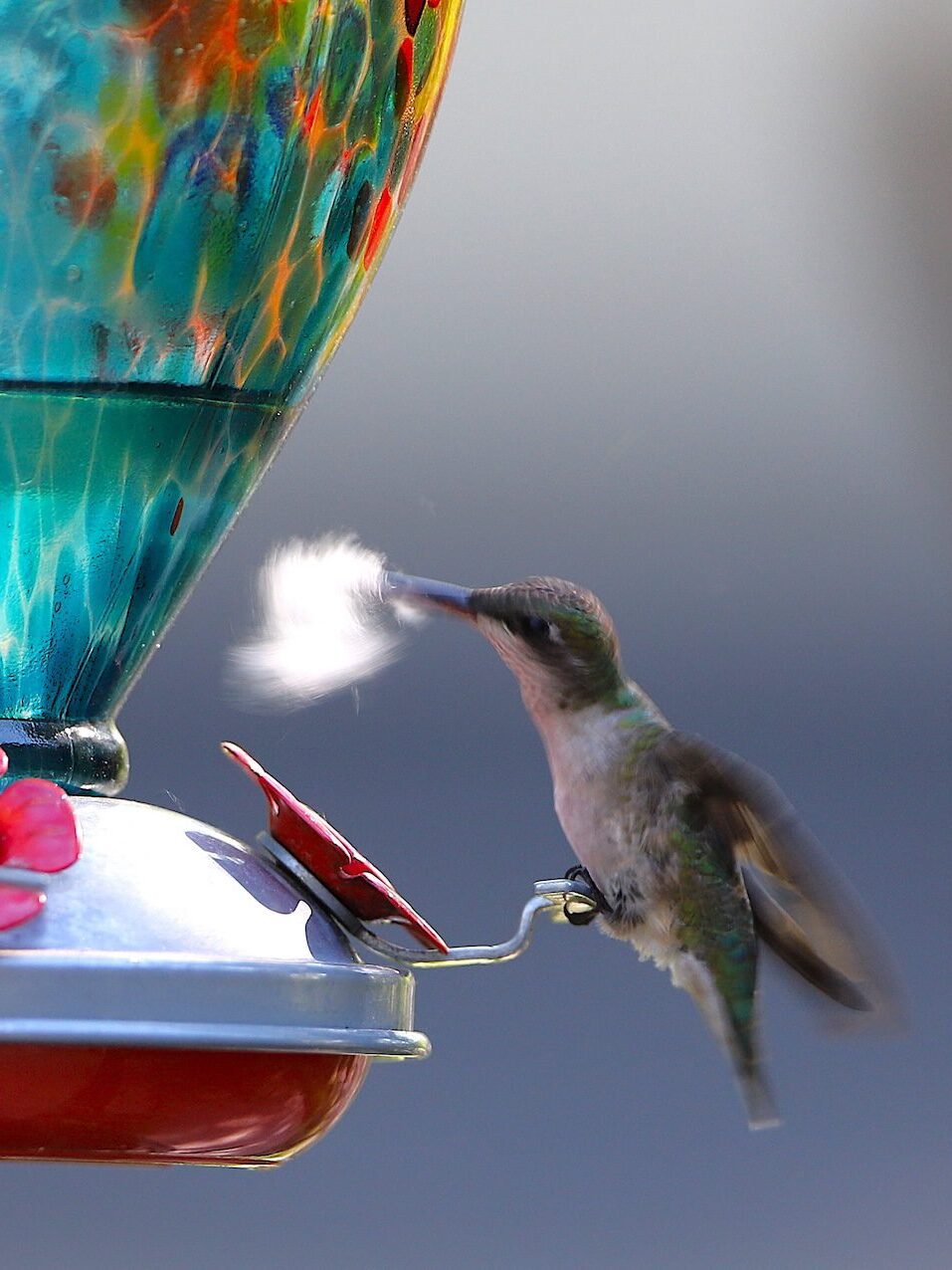
New York. The hummingbird must have grabbed some cotton from the cottonwood tree but needed to stop for a drink of sugar water. She had quite the dilemma. Finally, she tossed the cotton and took a long drink. Nature is so mesmerizing. Photo by Gary and Rita Villa
British Columbia.This nest box is above our raspberry patch near our small water feature. The chestnut-backed chickadees are successfully raising their young. Photo by Nancie Dohan.
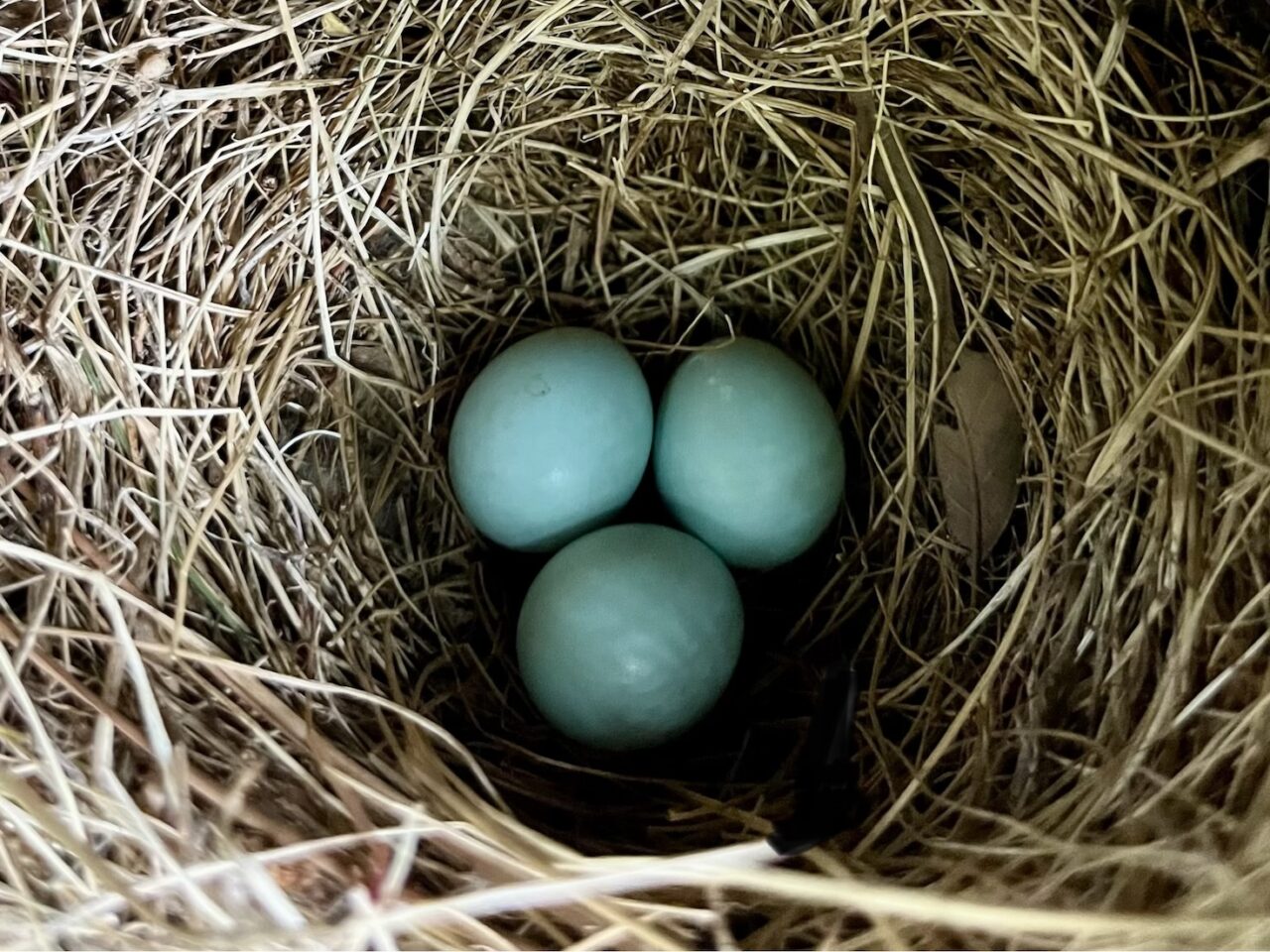
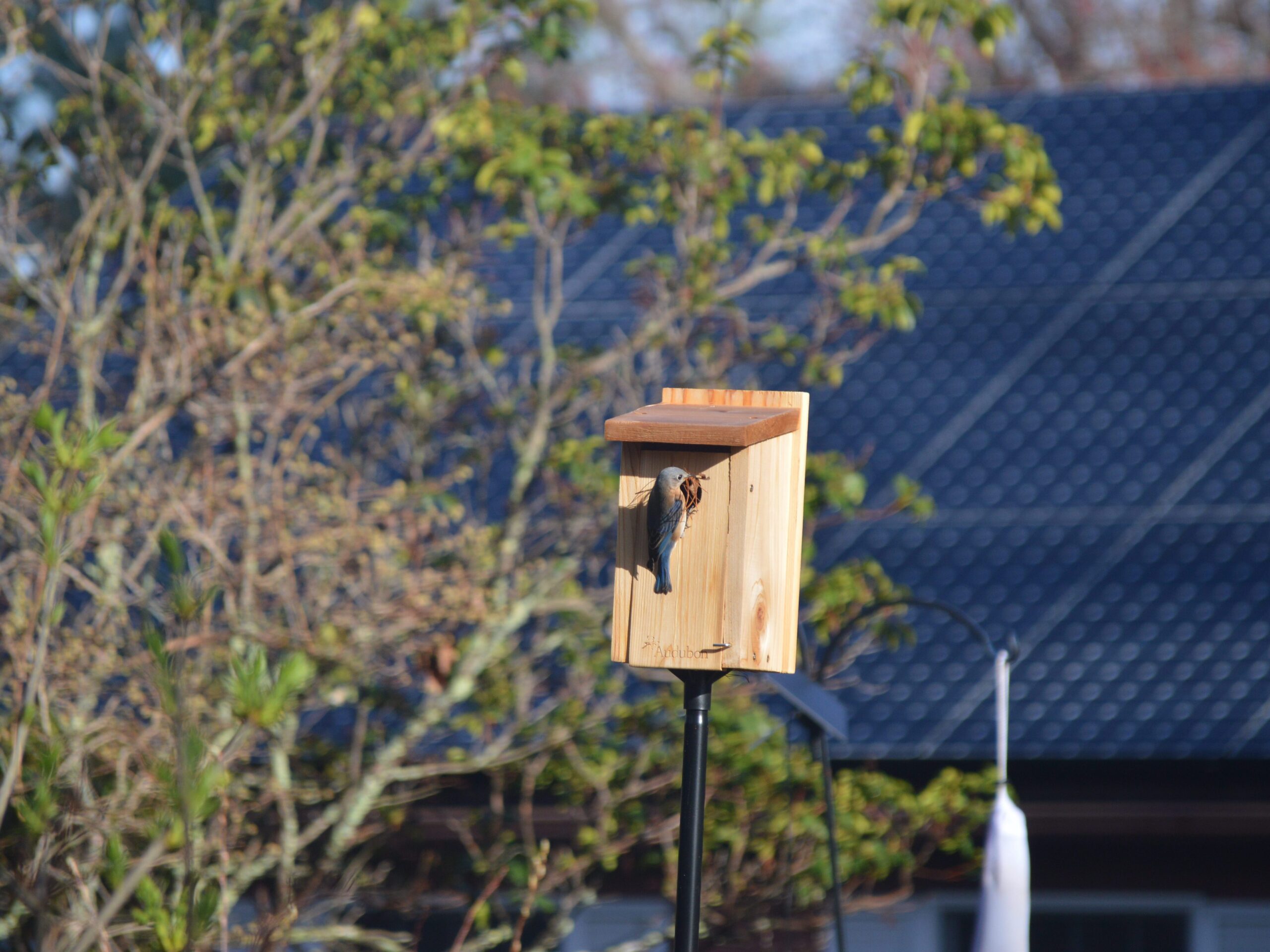
Virginia. The Carolina chickadees have fledged the box and the Eastern Bluebirds have moved in. A first ever EABB breeding confirmation in our yard! Photo by JoAnn Dalley.
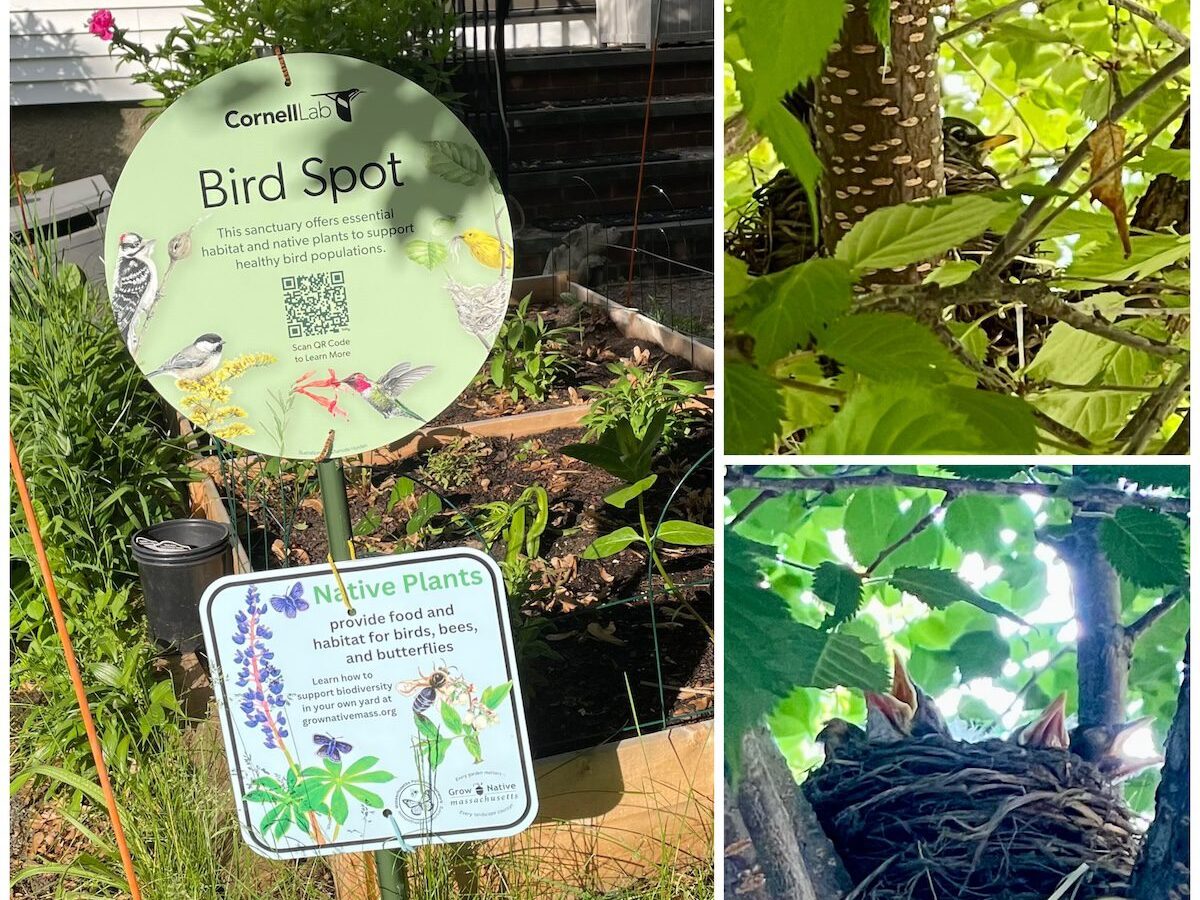
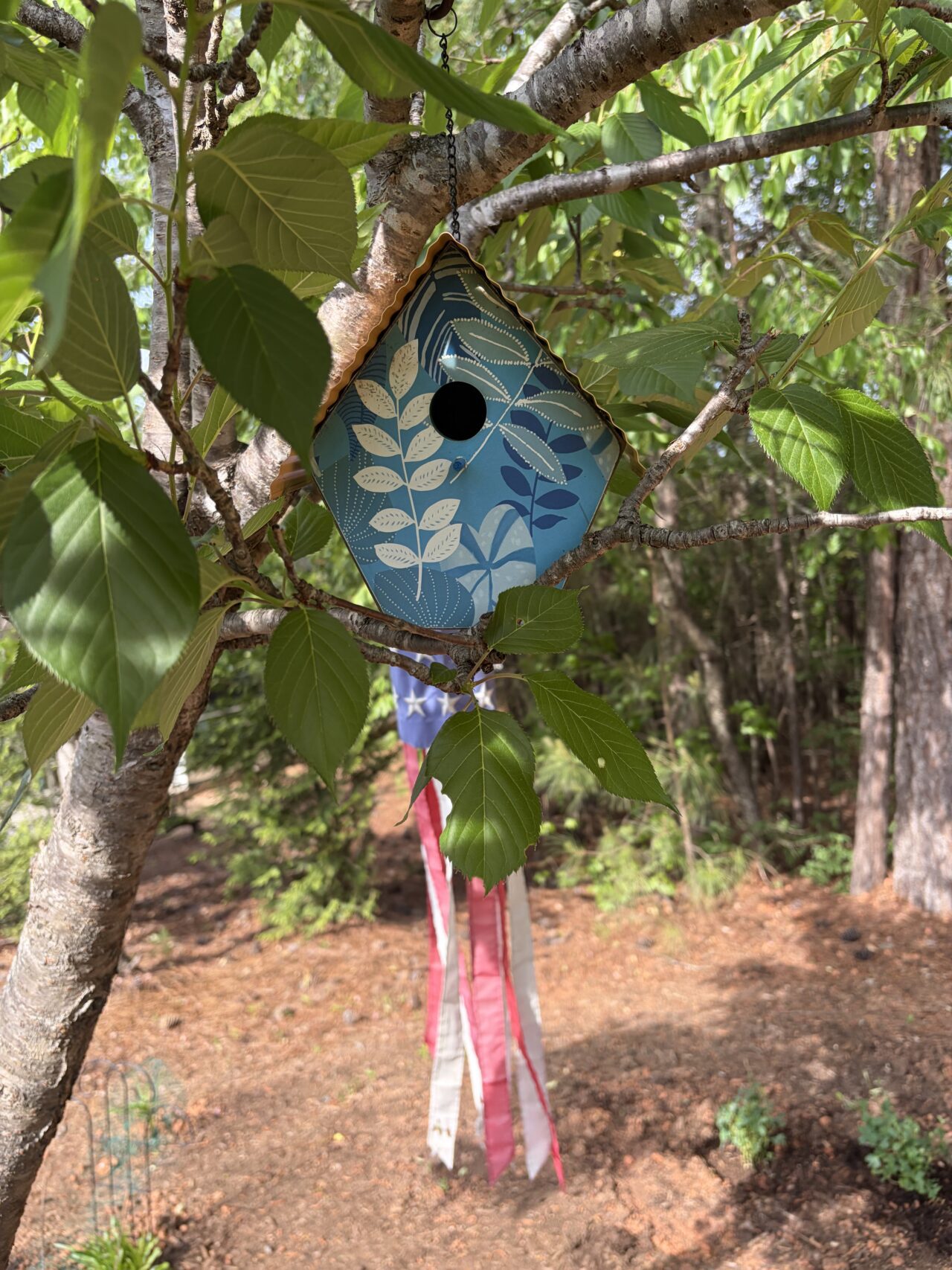
Massachusetts. I started this raised bed of native plants under a cherry tree in my front yard. A robin built a nest in the tree and is now raising babies!
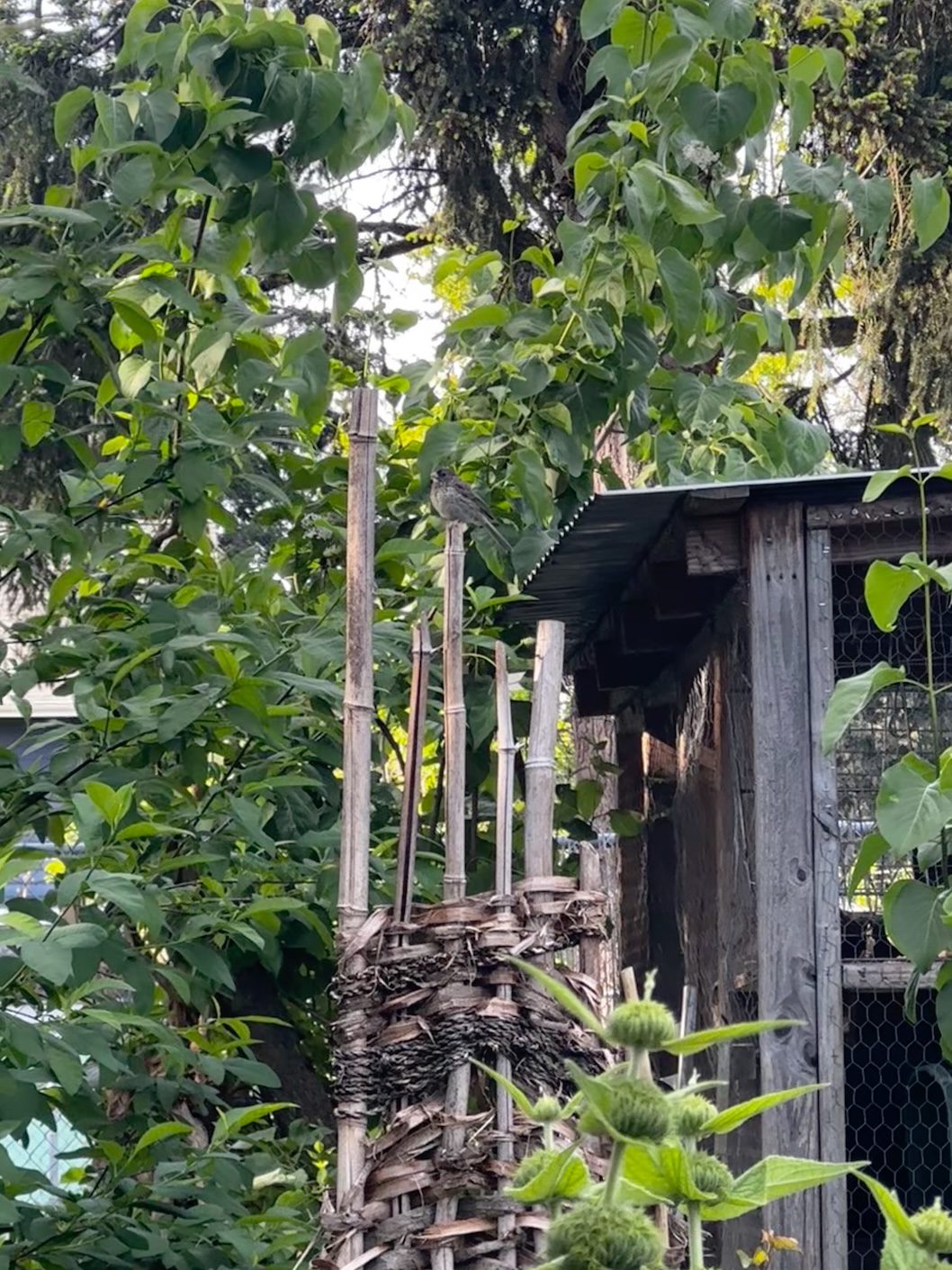
Washington. This privacy screen I made from bamboo, cedar bark, and daylily twine, has become a spot where baby birds wait safely for mom and dad. Photo by Katherine Wimble Fox.
Maine. This birdhouse my dad made is currently being used by chickadees who are bringing a variety of tasty wee wriggly things caught in the yard for them to eat! Photo by Ruth Clay.
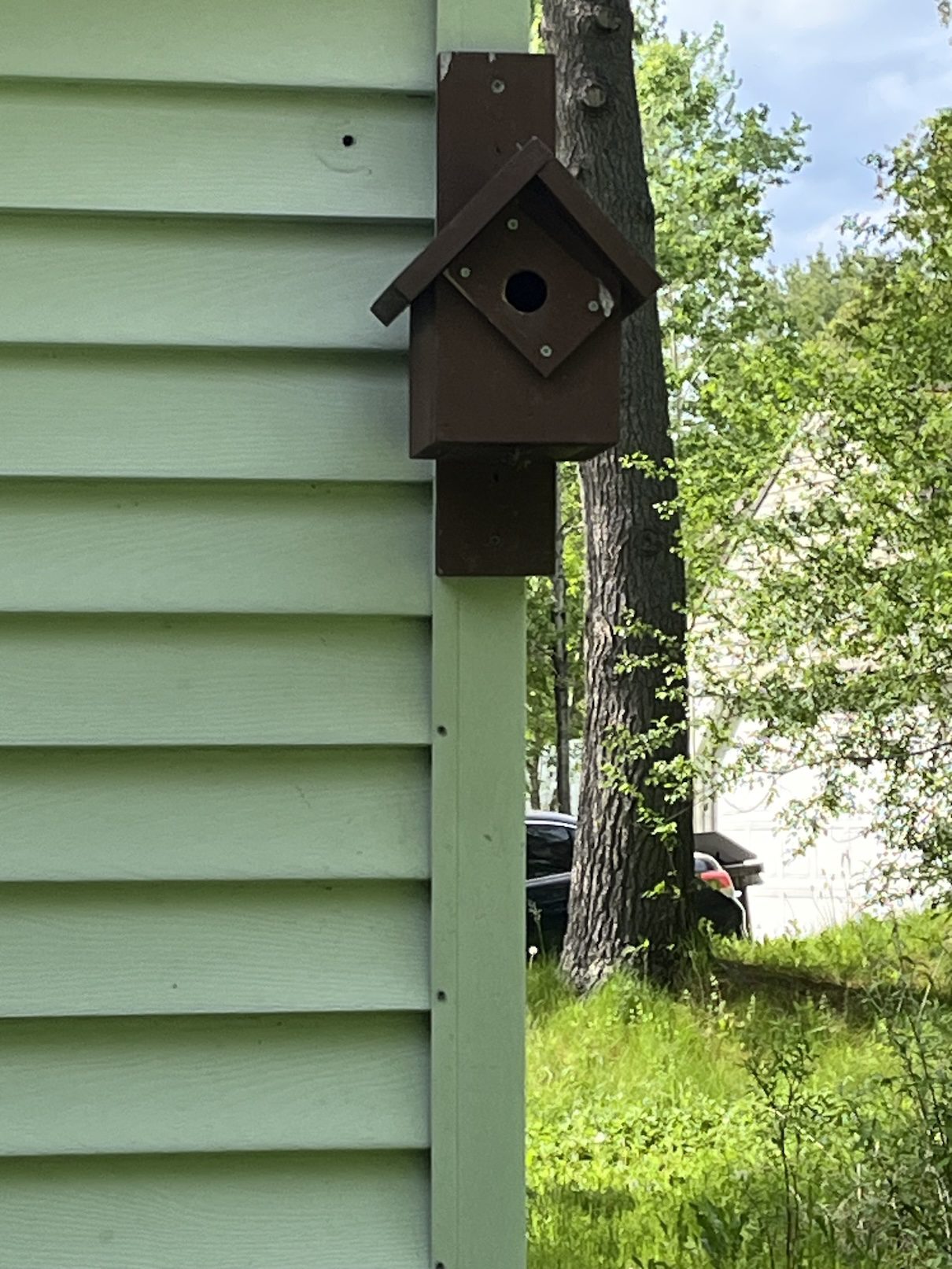
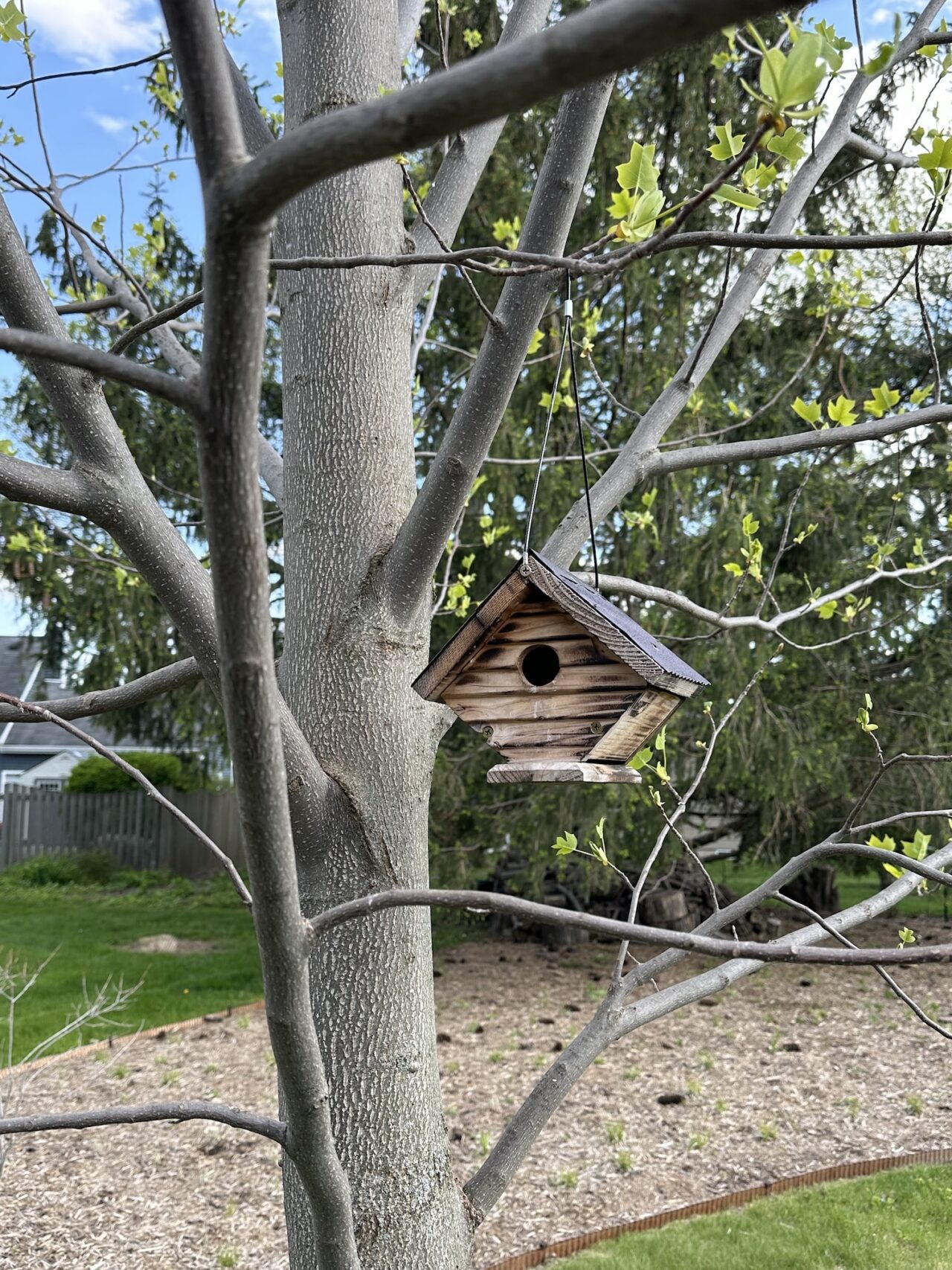
New Jersey. I recently added this nestbox, hoping to attract the Carolina Wrens I frequently hear in my yard. No tenants yet! Photo by Marie Longo.
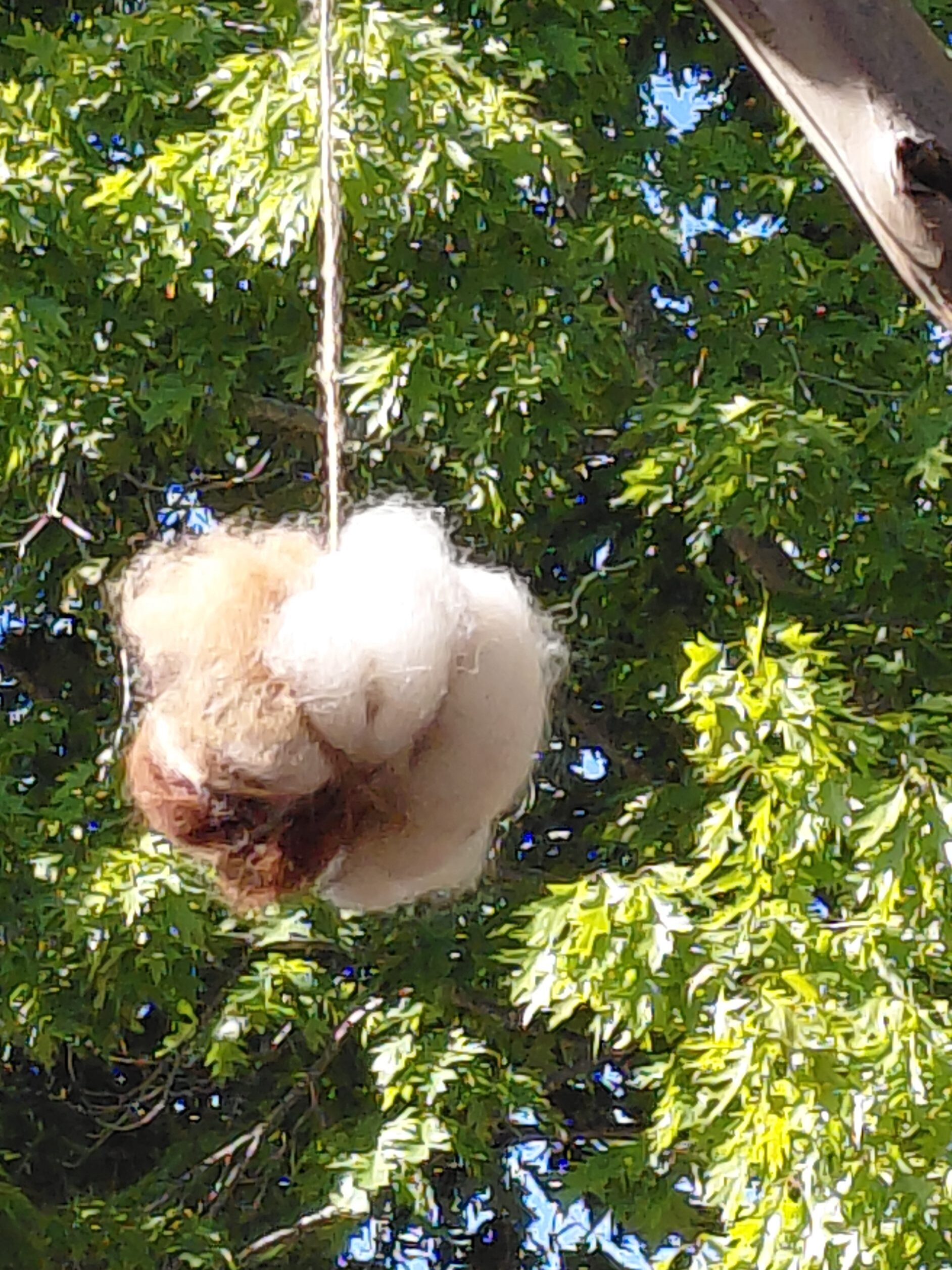
California. I had some excess alpaca wool from my craft projects and thought I would put it to good use by making a nesting ball. We have lots of nesting activity going on in our outdoor areas. Photo by Minerva Dutra.
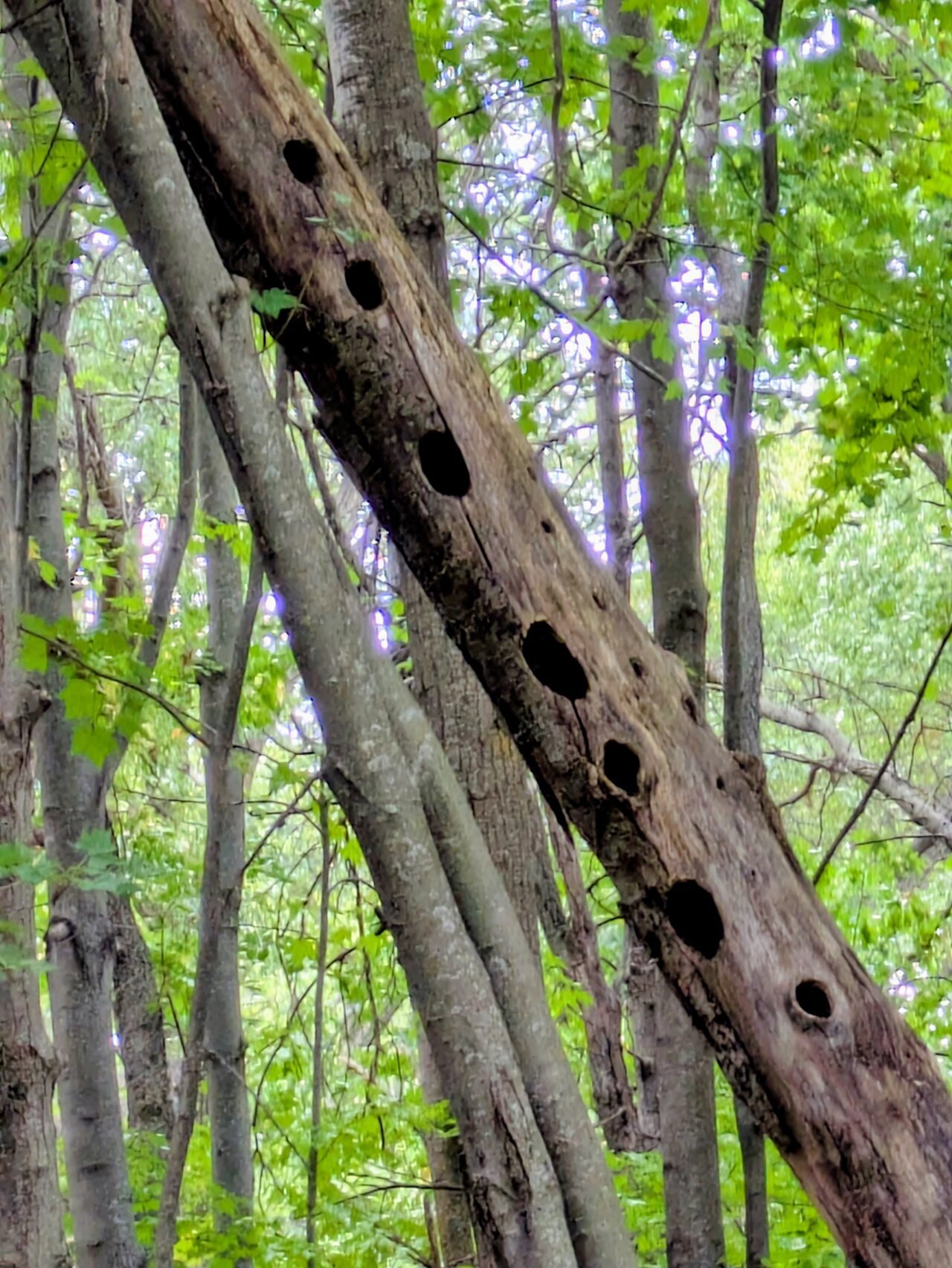
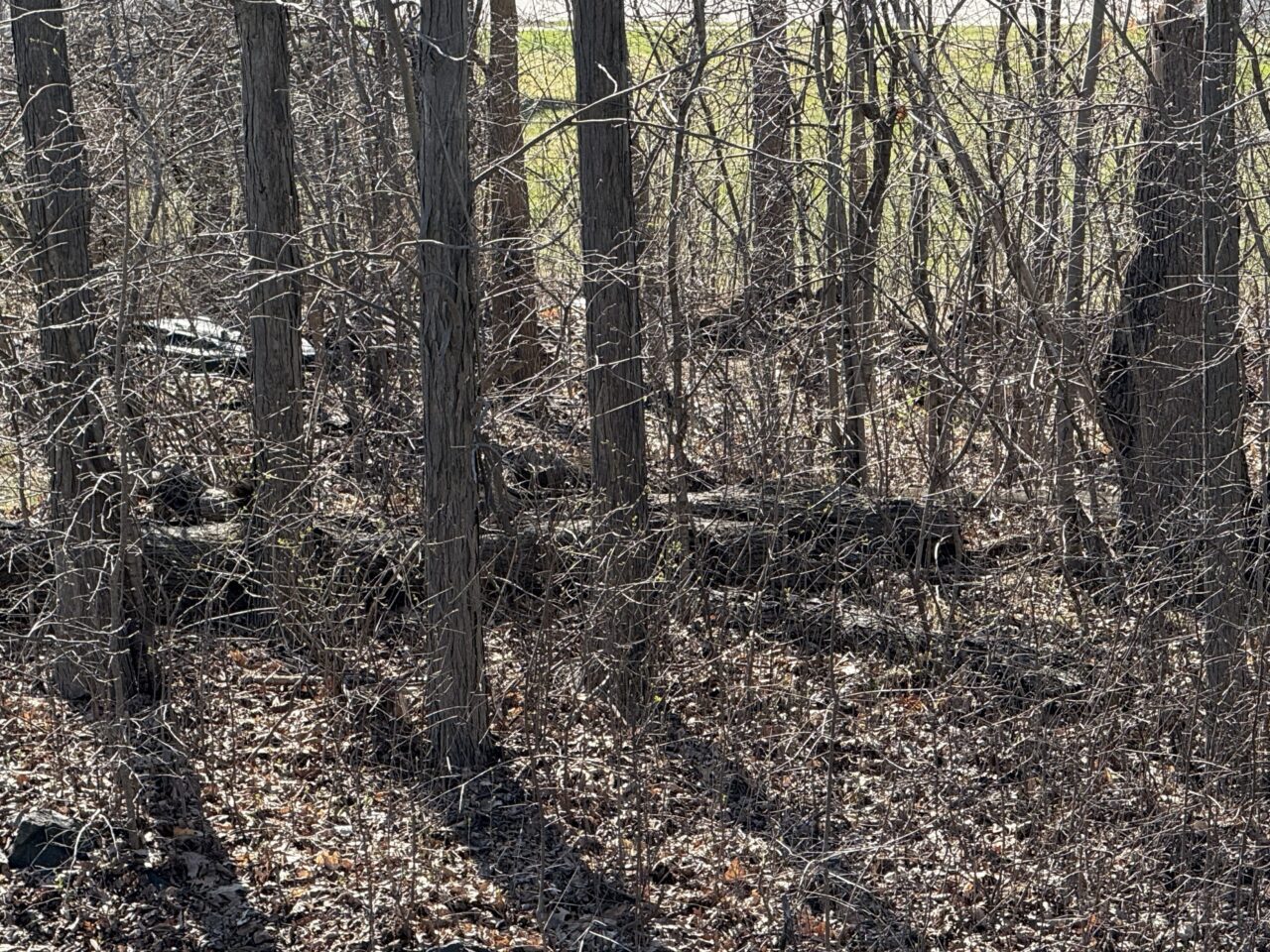
Minnesota. We chose to leave this storm damaged dead tree in place on our wooded acreage as a source of food for insect eaters and also potential nest holes. You can see it provides great bird habitat!
New York. Nest has been made this spring using materials from last fall’s Leaf It project. Photo by Susan Moore.
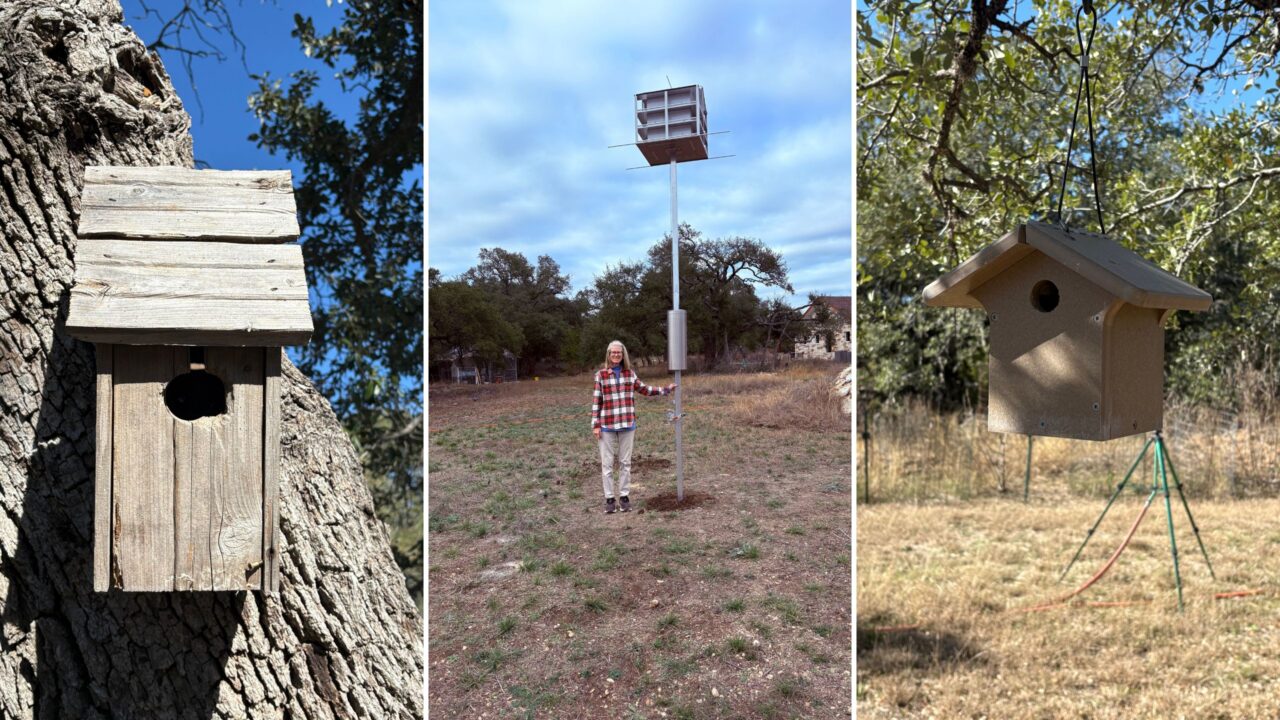
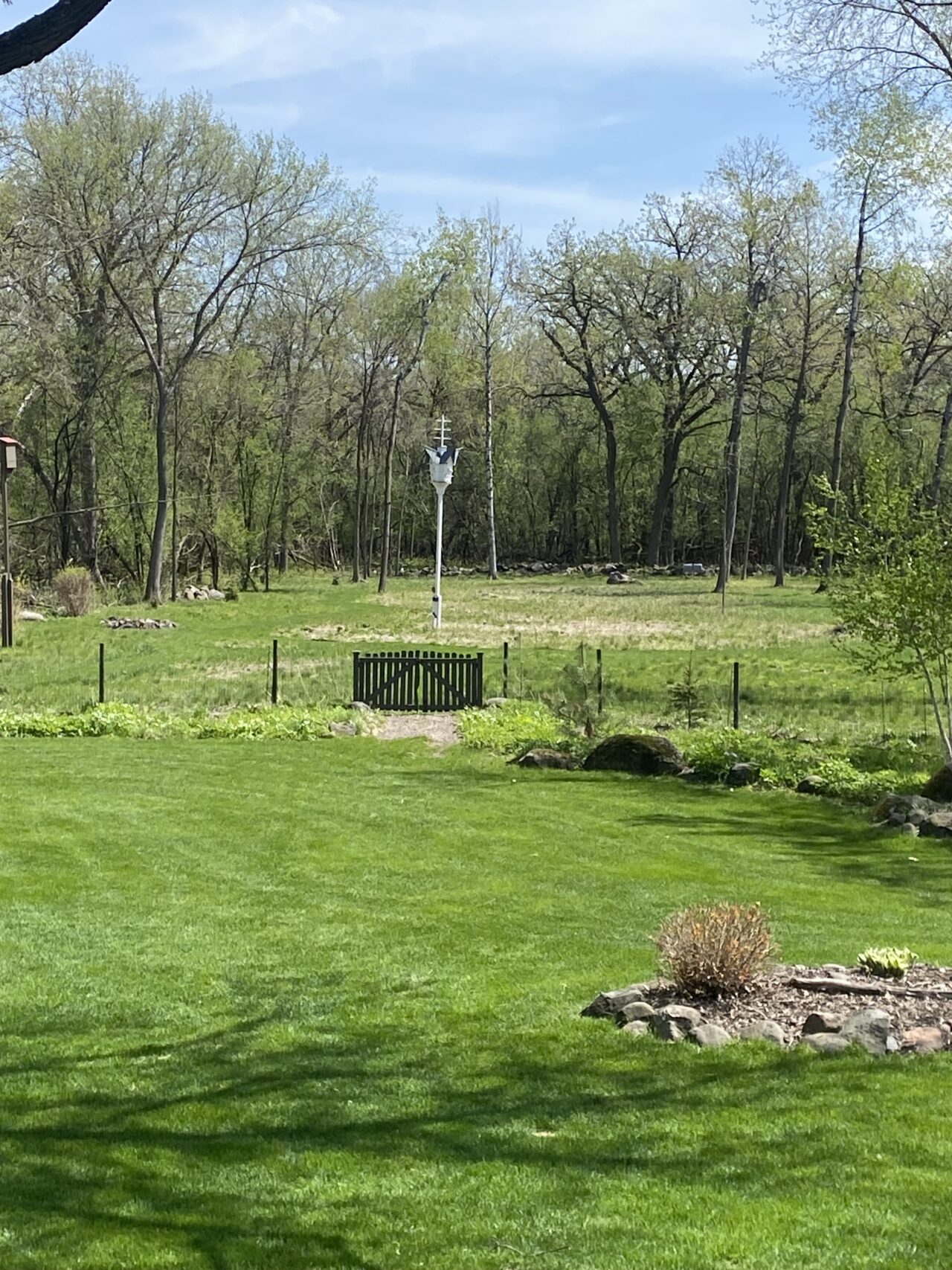
Texas. We installed a purple martin house. We look forward to their arrival! We also have other bird house around our yard. Photos by Lisa Stoll.
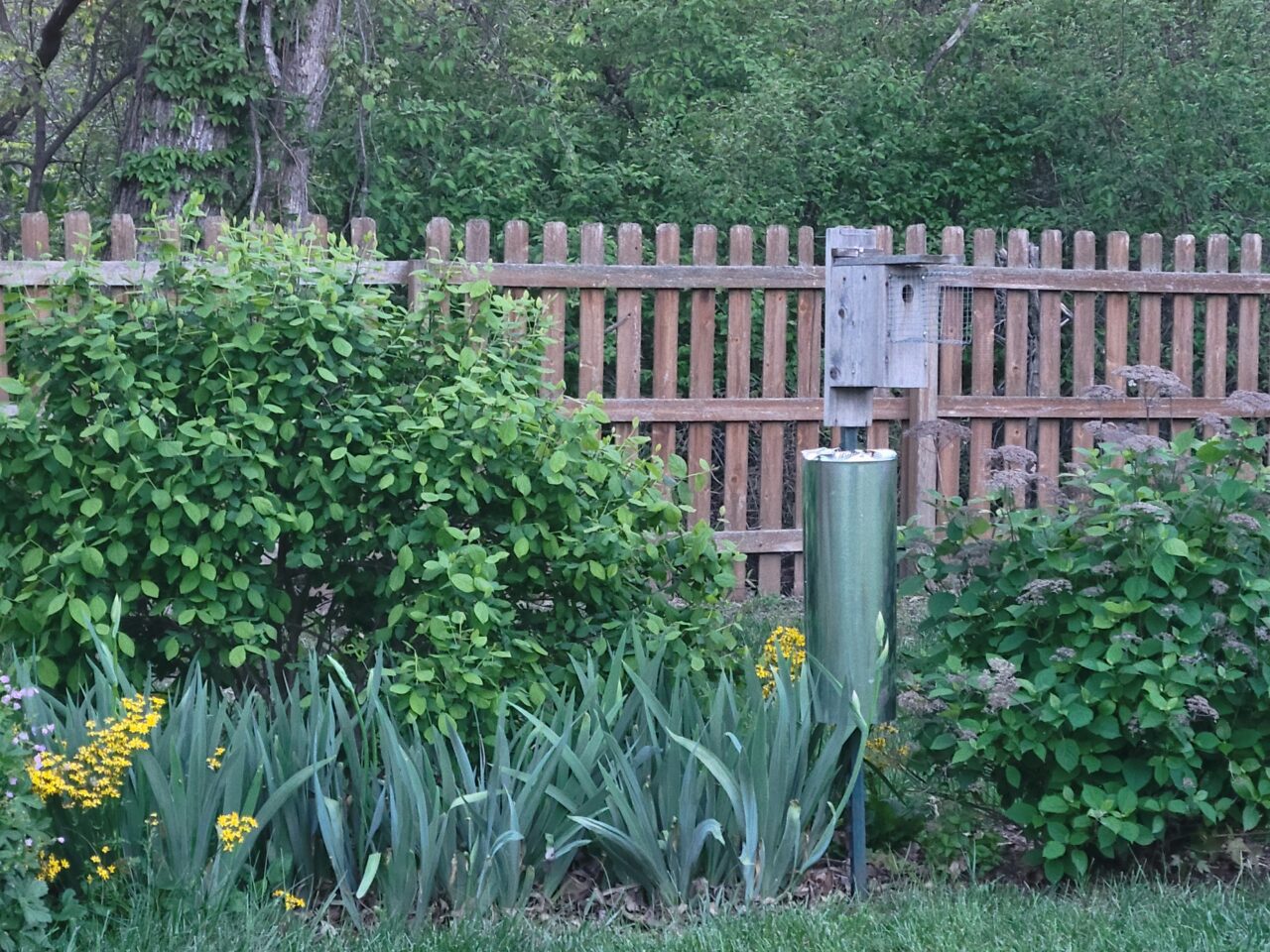
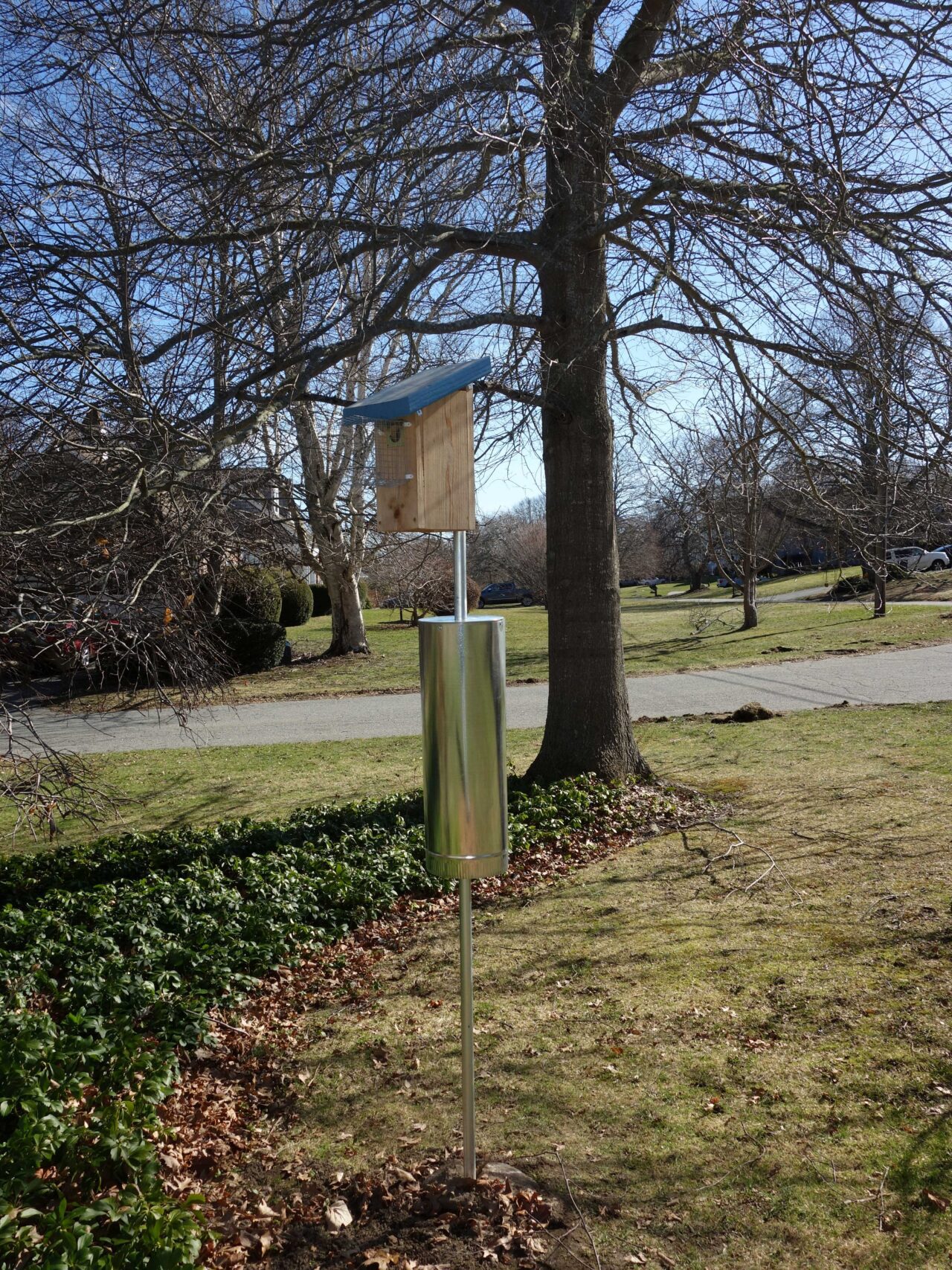
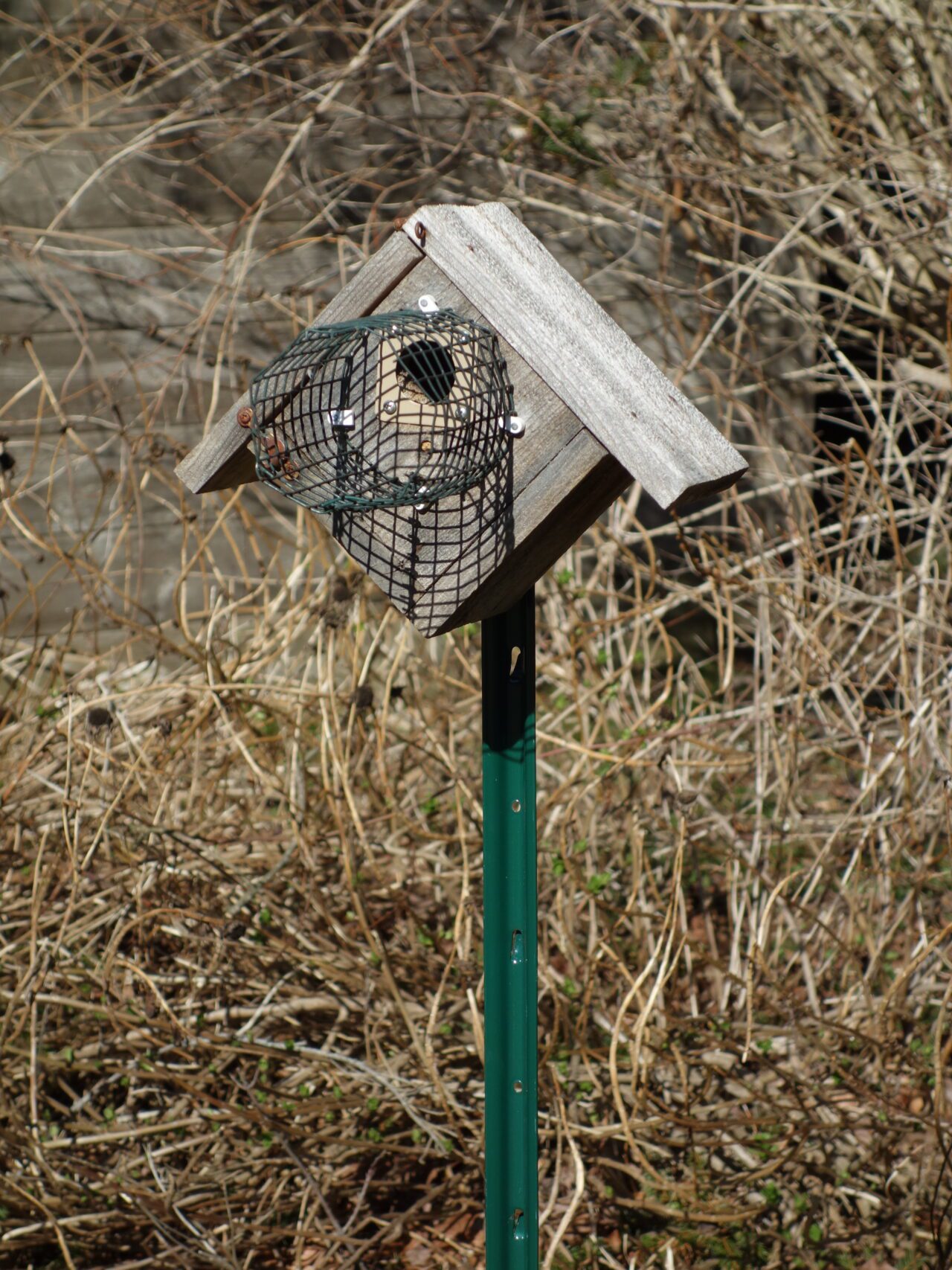
New York. As black-capped chickadees look for nesting sites, I place a nest box with a hole reducer to protect from house sparrows and a wren guard to protect from house wrens. Chickadees are currently incubating 7 eggs. Photo by Margie O’Brien.
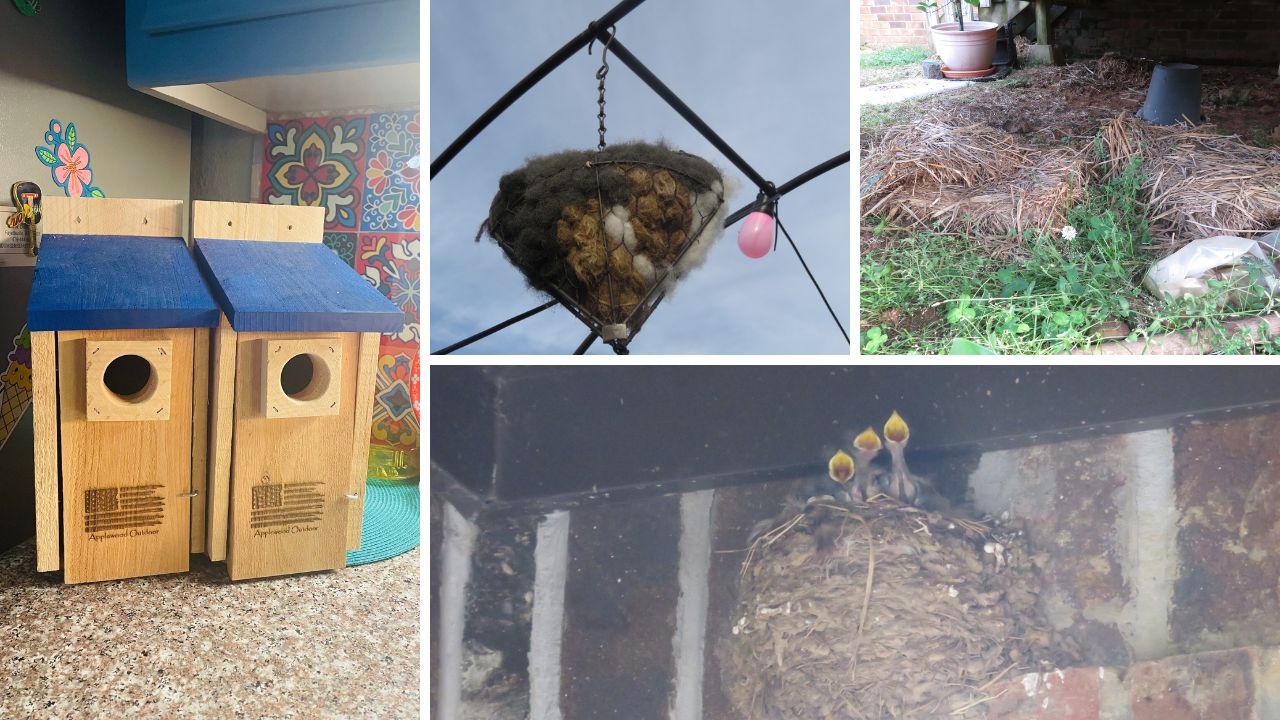
Arkansas. Along with buying two bluebird boxes, I always preserve the barn swallow nest on my porch. And this year, straw under my deck, and a cage full of llama and alpaca hair. Photos by Lisabeth Lopez.
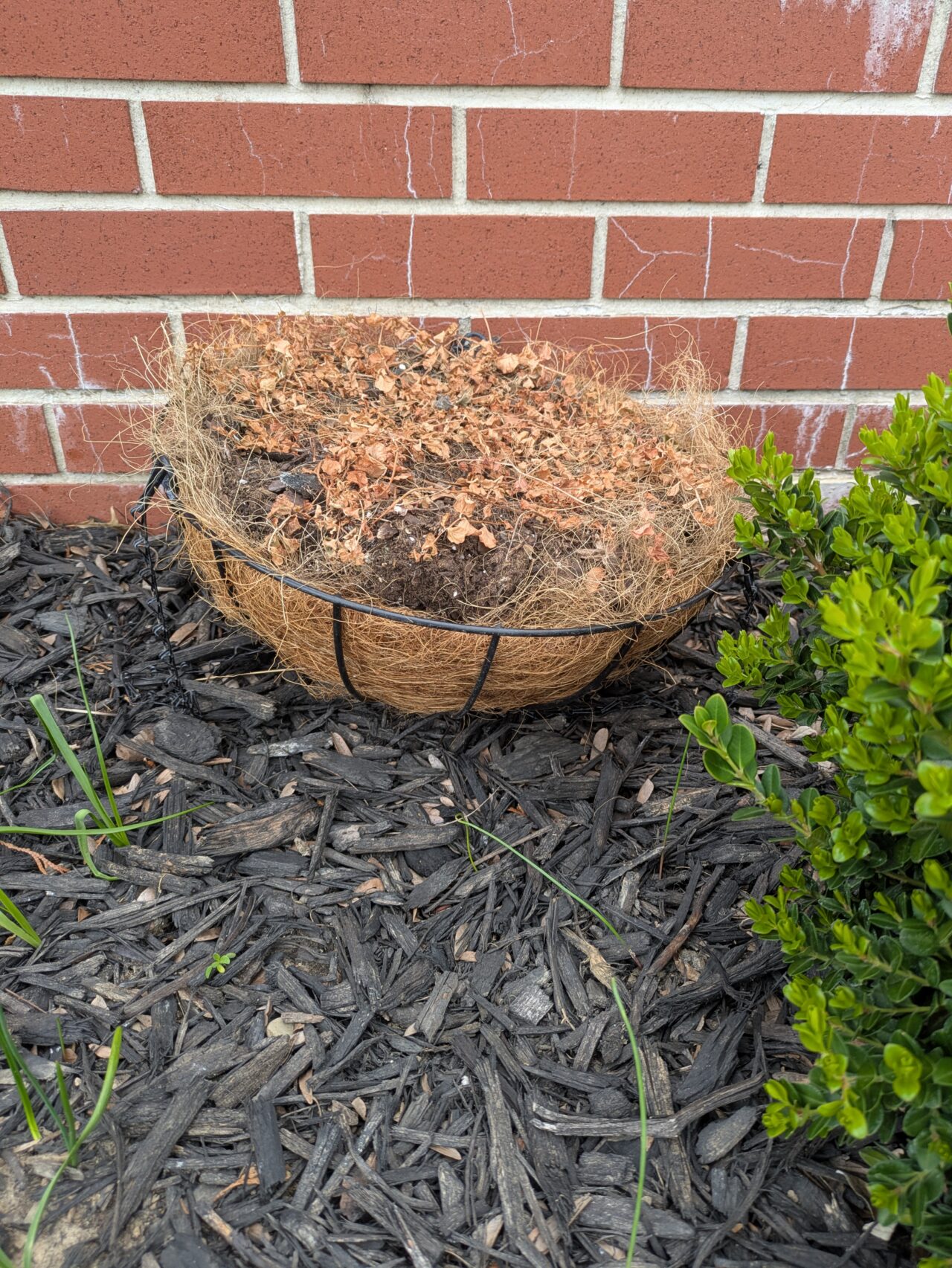
Ohio. Found out last year birds use the coco liners from hanging baskets to make nests. Both birds and squirrels and birds have used them this year. Photo by Michelle Reichenbach.
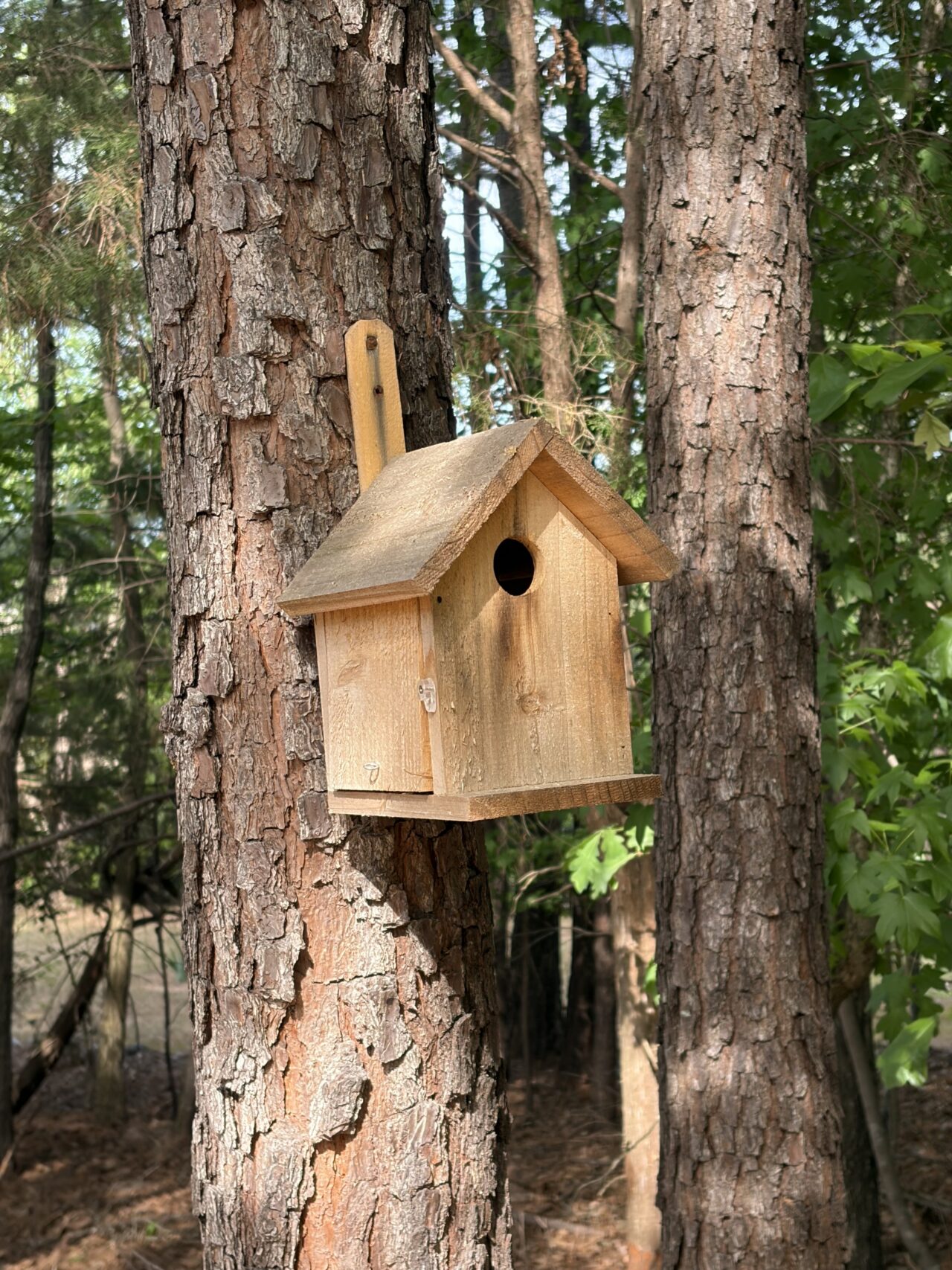
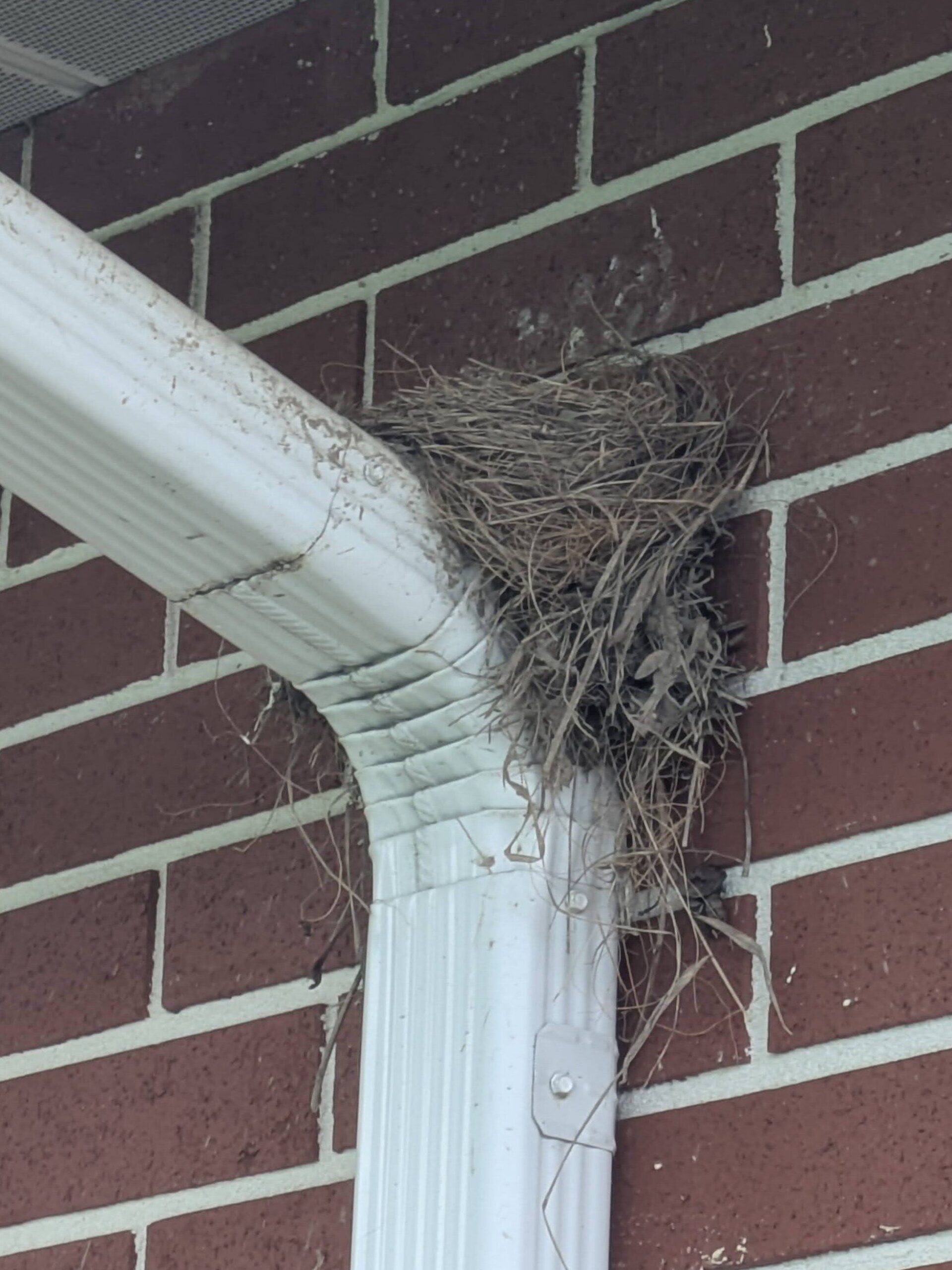
Ohio. Picture of robin nest made from the coco liner. Photo by Michelle Reichenbach.
Pennsylvania. Bird houses currently with nests in every house. Photo by Shannon Stirling.
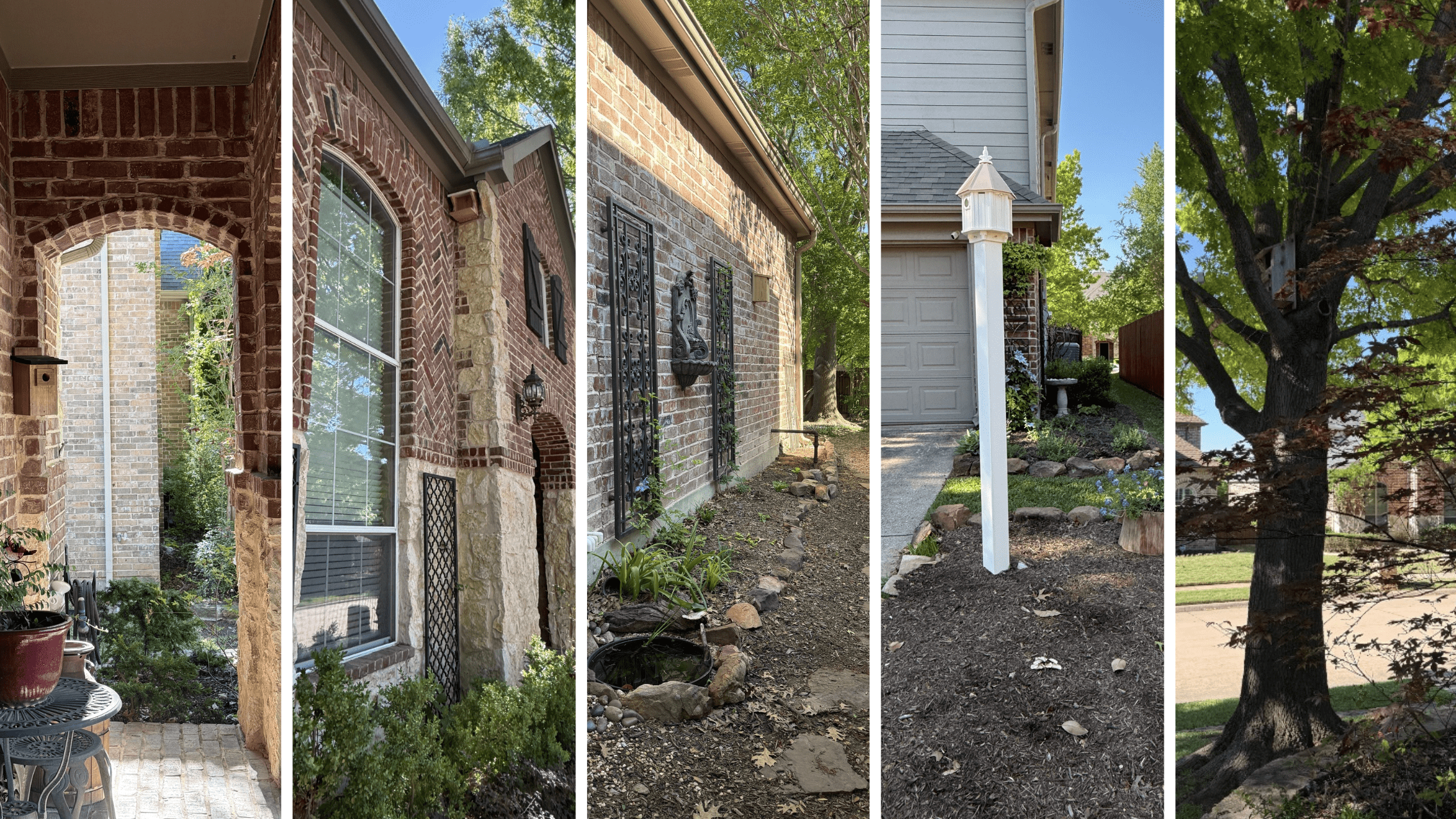
South Carolina. I provide nest boxes and other resources. Everything is at the base of woods for protection. Photo by Maryann Rowe.
New York. Adding nesting boxes to invite birds to make our home their home.
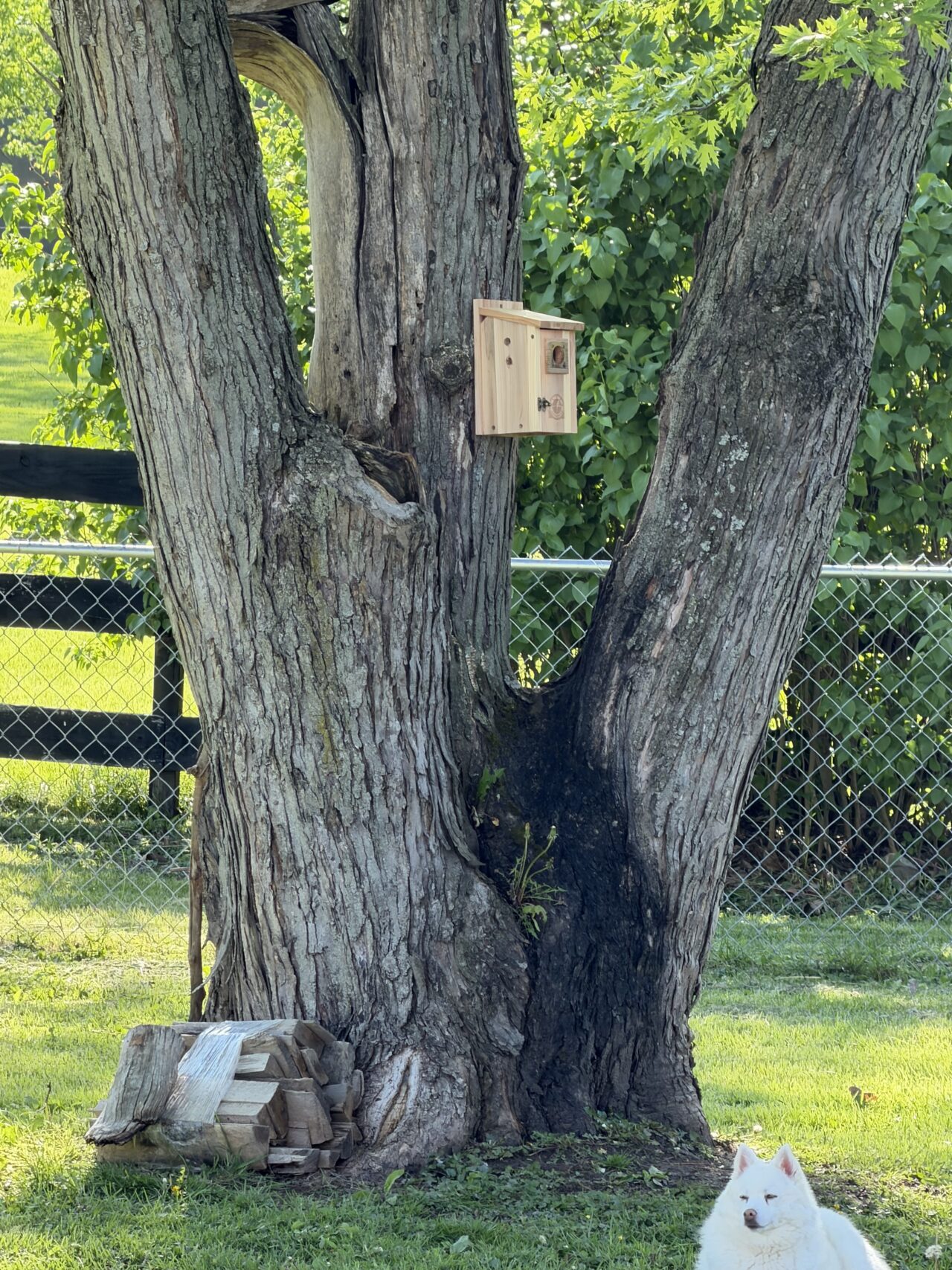
Ohio. Purchased and built two houses for the bluebirds and wrens in our neighborhood. This one is in a snag in our backyard. Photo by Deborah Derr.
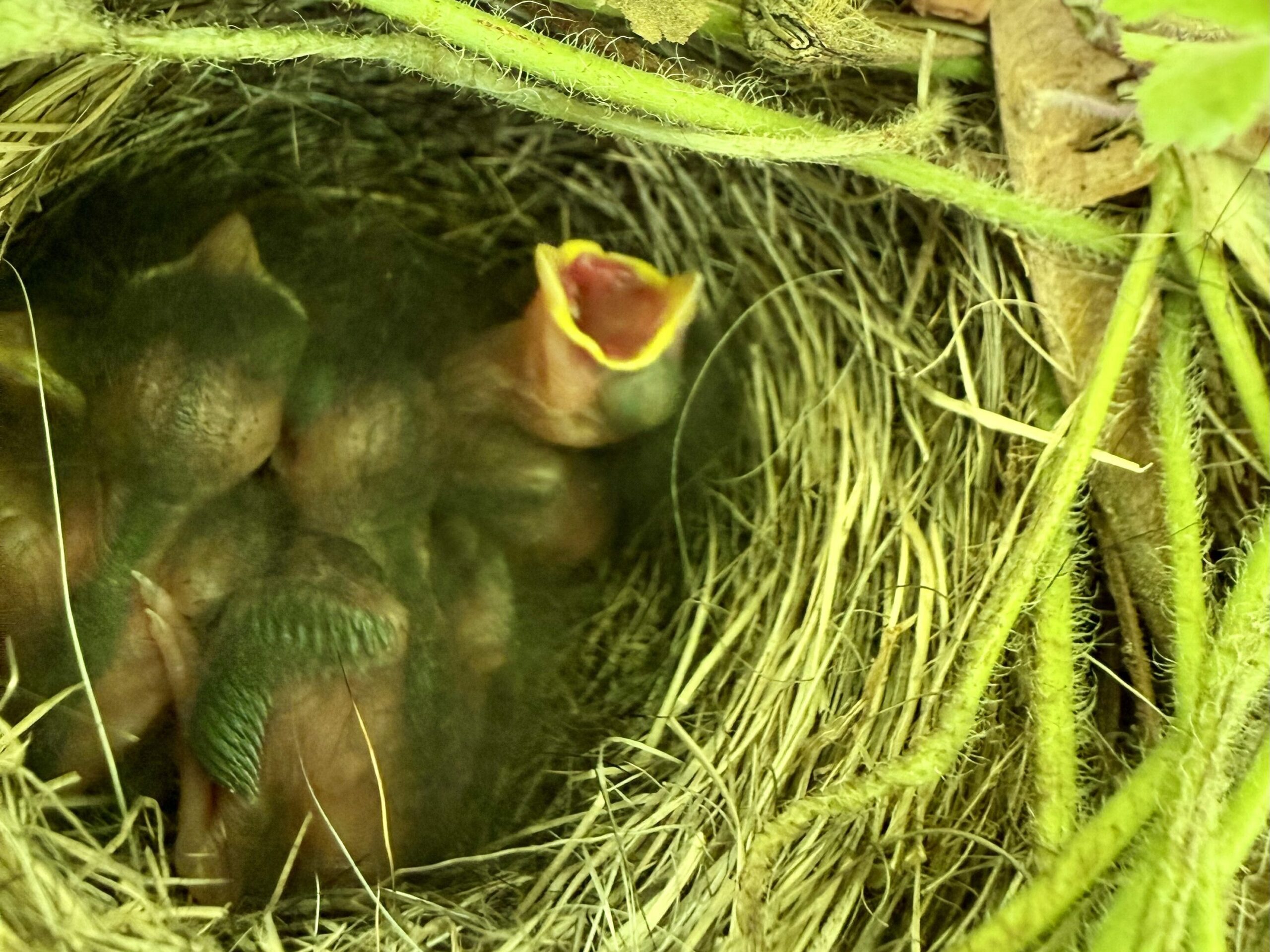
British Columbia. The plants in the hanging basket survived the mild winter and this is where a Dark-eyed Junco built her nest and laid 4 eggs. There are now 4 live naked hatchlings being fed by the junco. Photo by Ann Cotter.
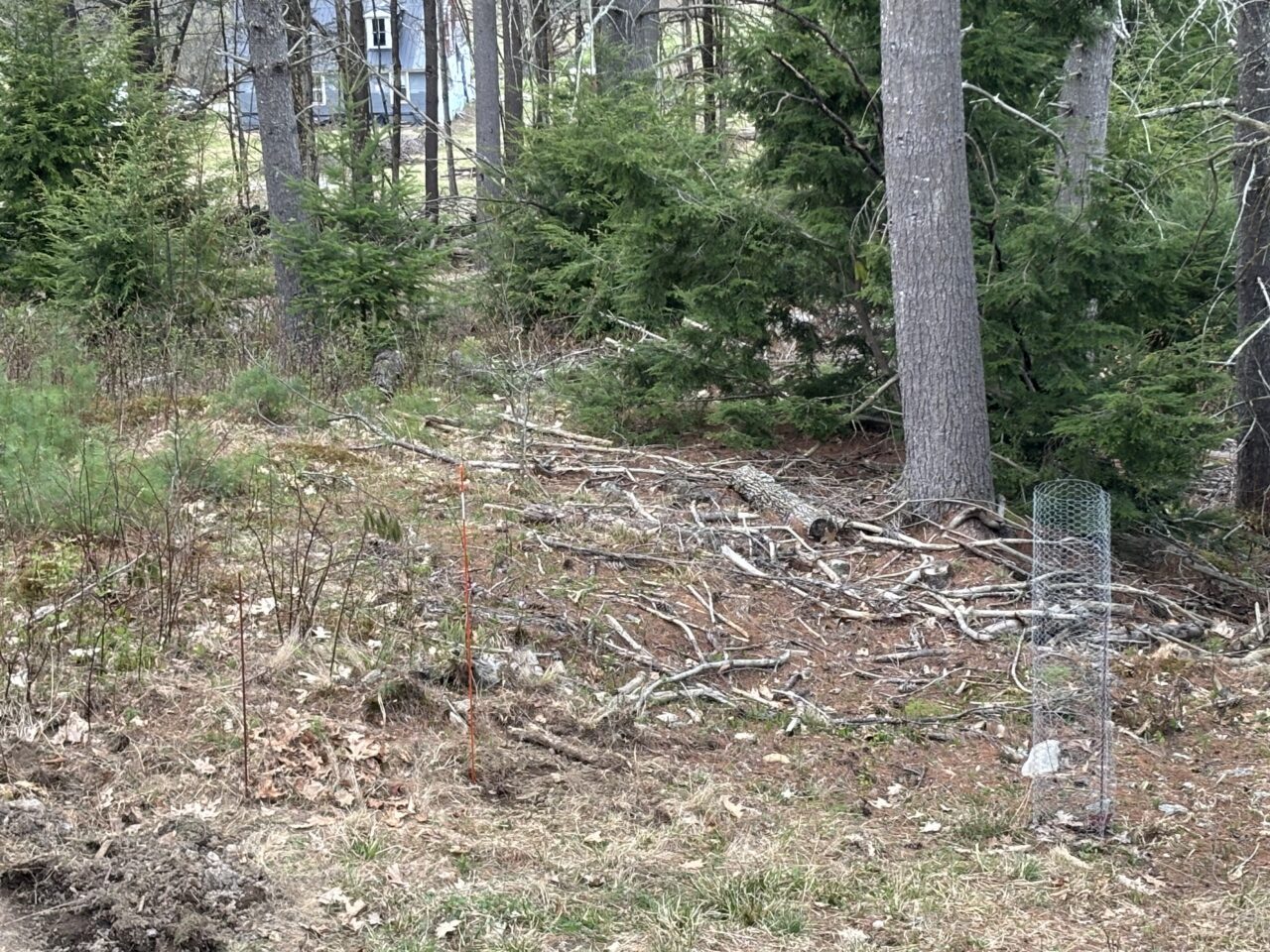
New Hampshire. There is a downed log and brush pile which can be used for nesting. Photo by Monica Brandau.
Massachusetts. We had a family of bluebirds visit late last summer and hang out on the utility wire above our front yard. This year, knowing they seemed interested in this area, we put up this box and were rewarded when this couple built their nest in it! Photo by Beth Brown.
Missouri. This bluebird nesting box is housing 5 baby bluebirds right now! Photo by Theresa Enderle.
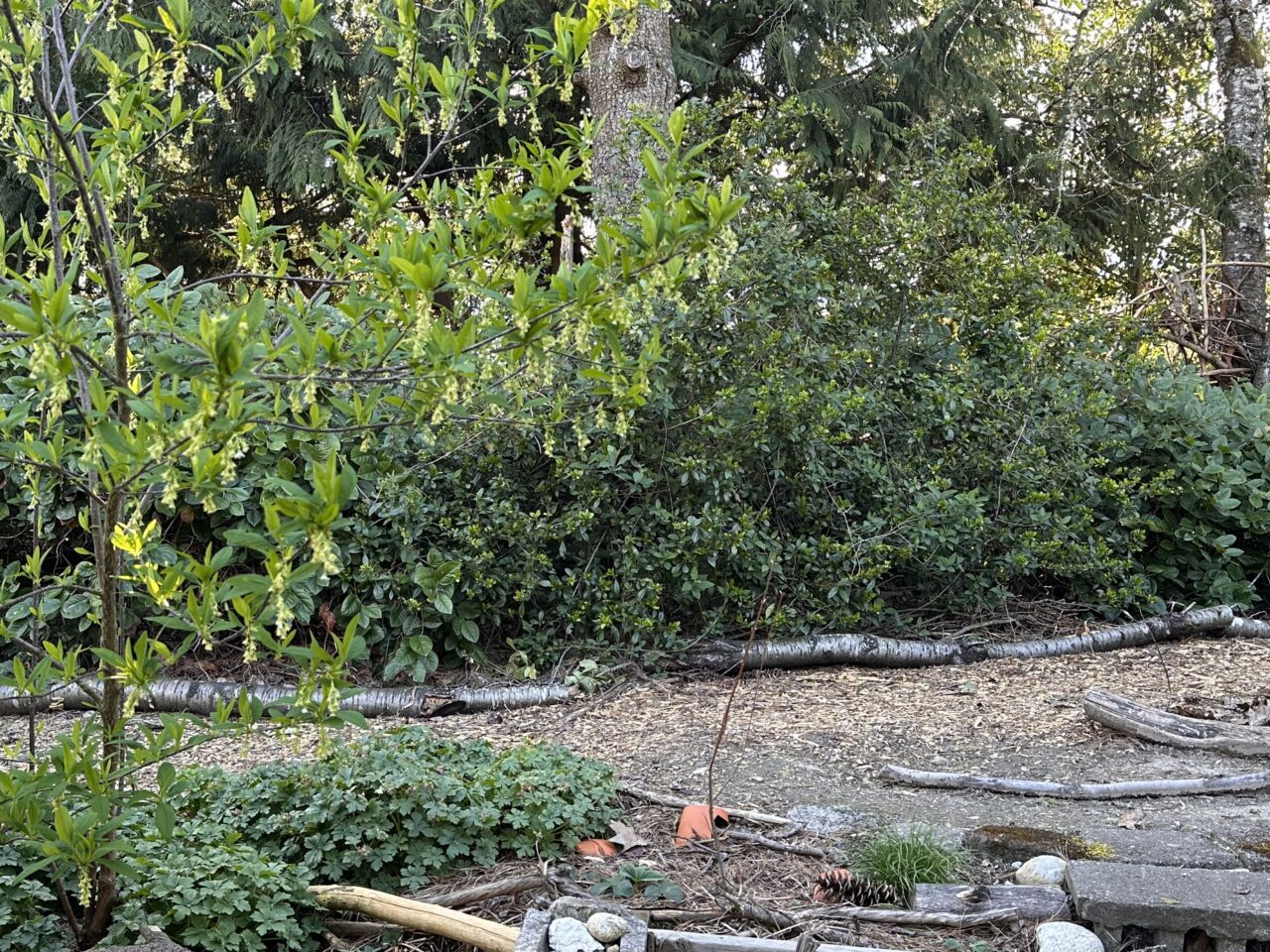
Washington. I have filled the space below these salal and pyracantha shrubs with “dead hedge” material. The birds love hiding out in there! Photo by Katherine Wimble Fox.
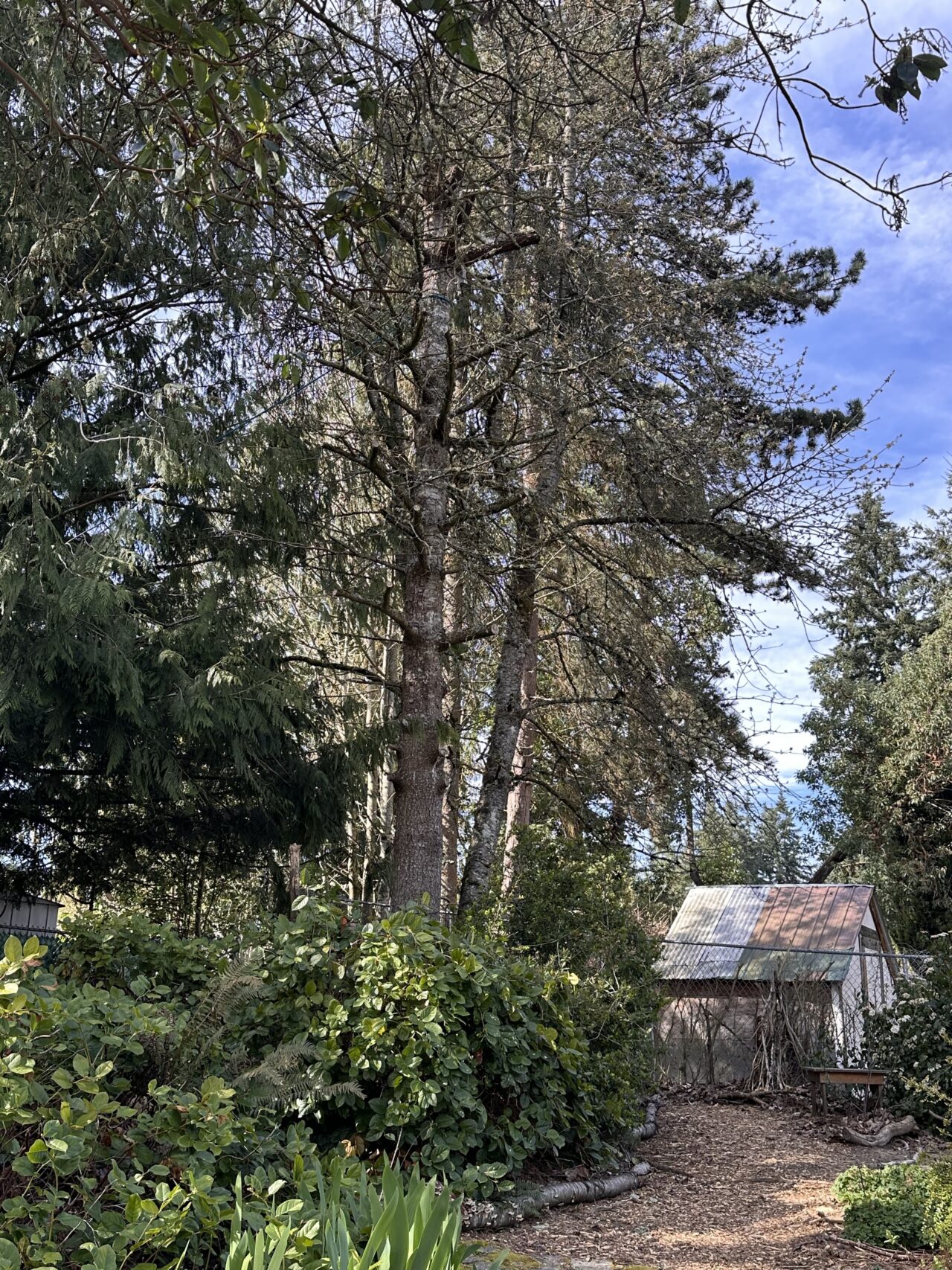
Washington. A large White Pine died on my property, so I asked my arborist to make it safe to leave as a snag. It is anchored to the limb of a nearby tree to be sure it won’t fall on any structures. Photo by Katherine Wimble Fox.
South Carolina. I provide nest boxes and other resources. Everything is at the base of woods for protection. Photo by Maryann Rowe.
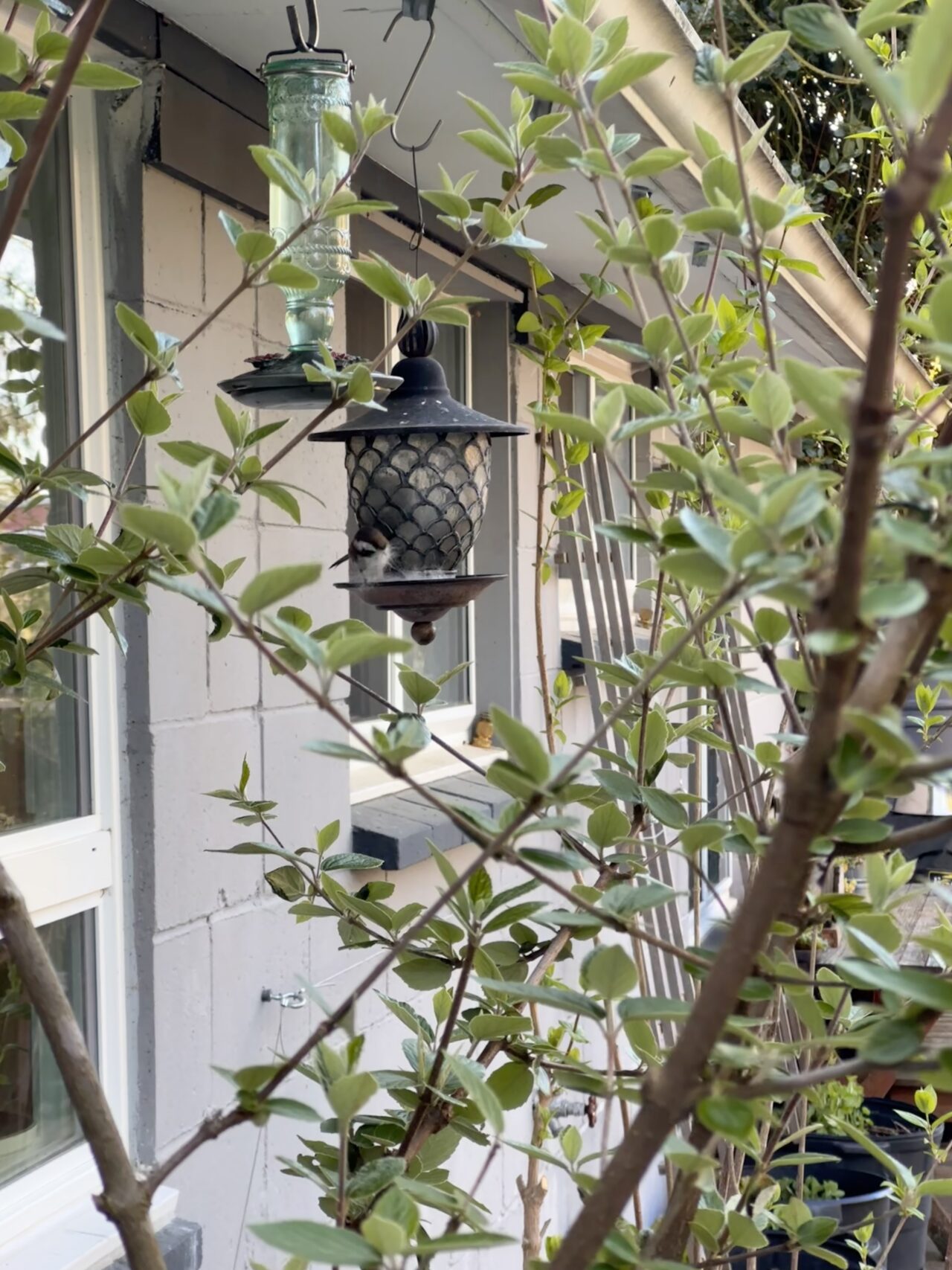
Washington. A chestnut-sided chickadee collects untreated dog fur from a repurposed bird feeder for nest building.
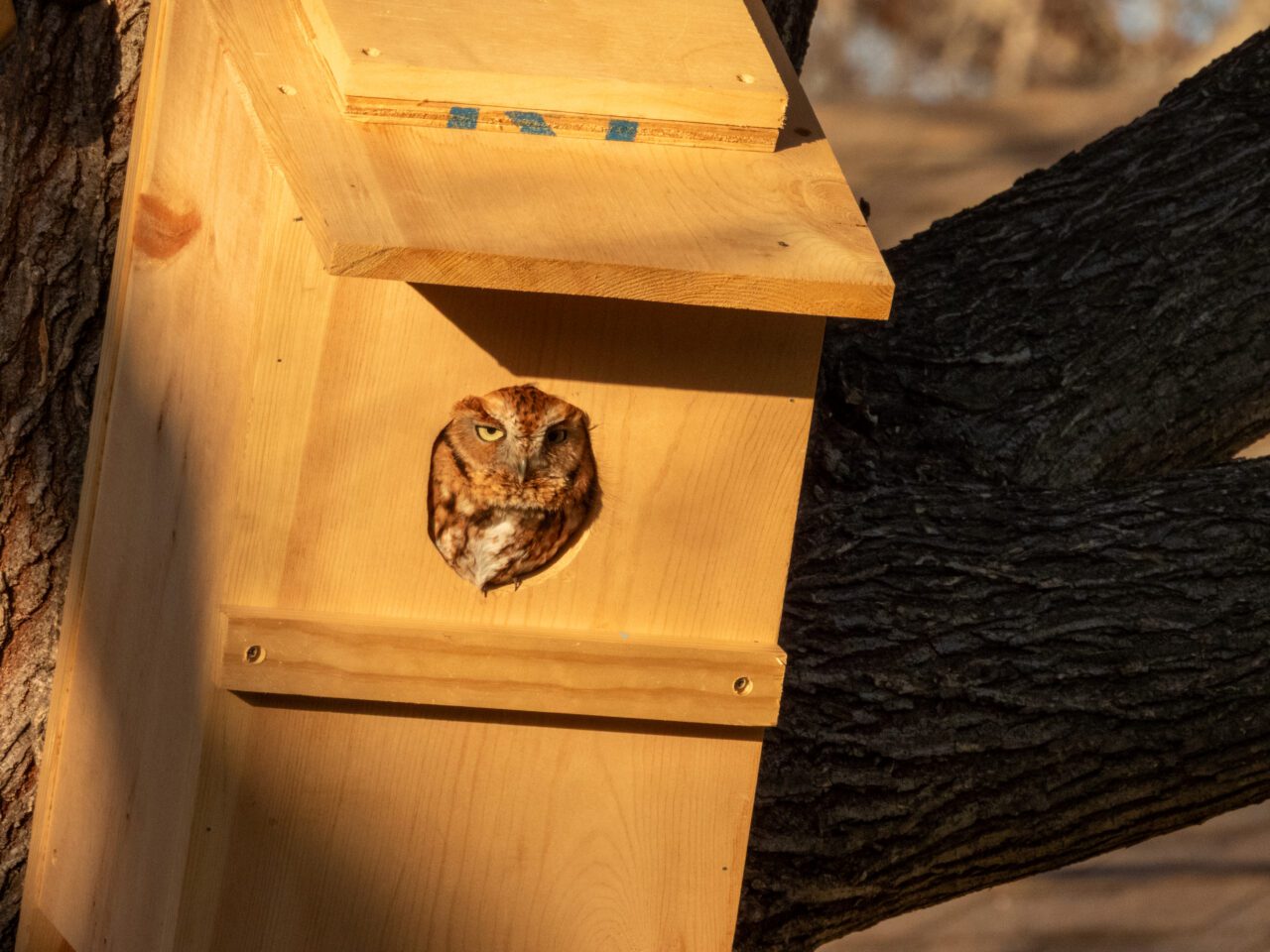
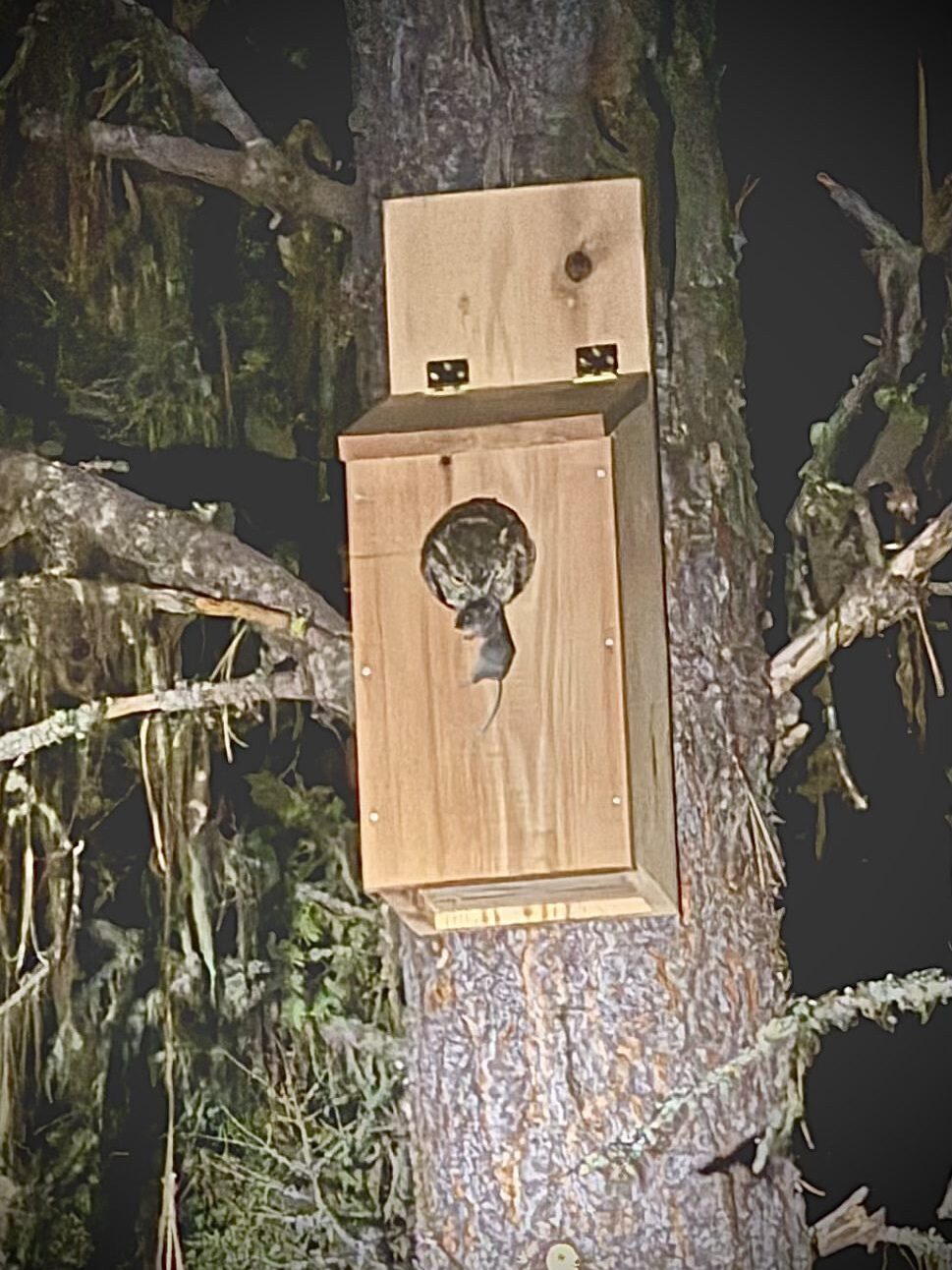
Texas. Spot the next boxes! Our new network of nest boxes is paired with an ongoing transformation to native plantings, so cavity‑nesting birds can raise young where the surrounding trees, shrubs, and perennials supply natural insects, seeds, and shelter. The owl box is already hosting eastern screech‑owls, while the platform box is aimed at an Eastern Phoebe that began frequenting our front yard the bluebird house targets a bluebird pair that had been eyeing the owl box, and the remaining two boxes are sized for Carolina Wrens and Carolina Chickadees that have visited our feeders for years. Photo by Pery Doan
New York. I have a nesting pair of Carolina Wrens and House Wrens that use the birdhouses to raise their young. It’s fun to watch them choose which one they like best and then listen for the chicks eagerly cheeping when the parents bring back food. Photo by Patricia Zamperlin.
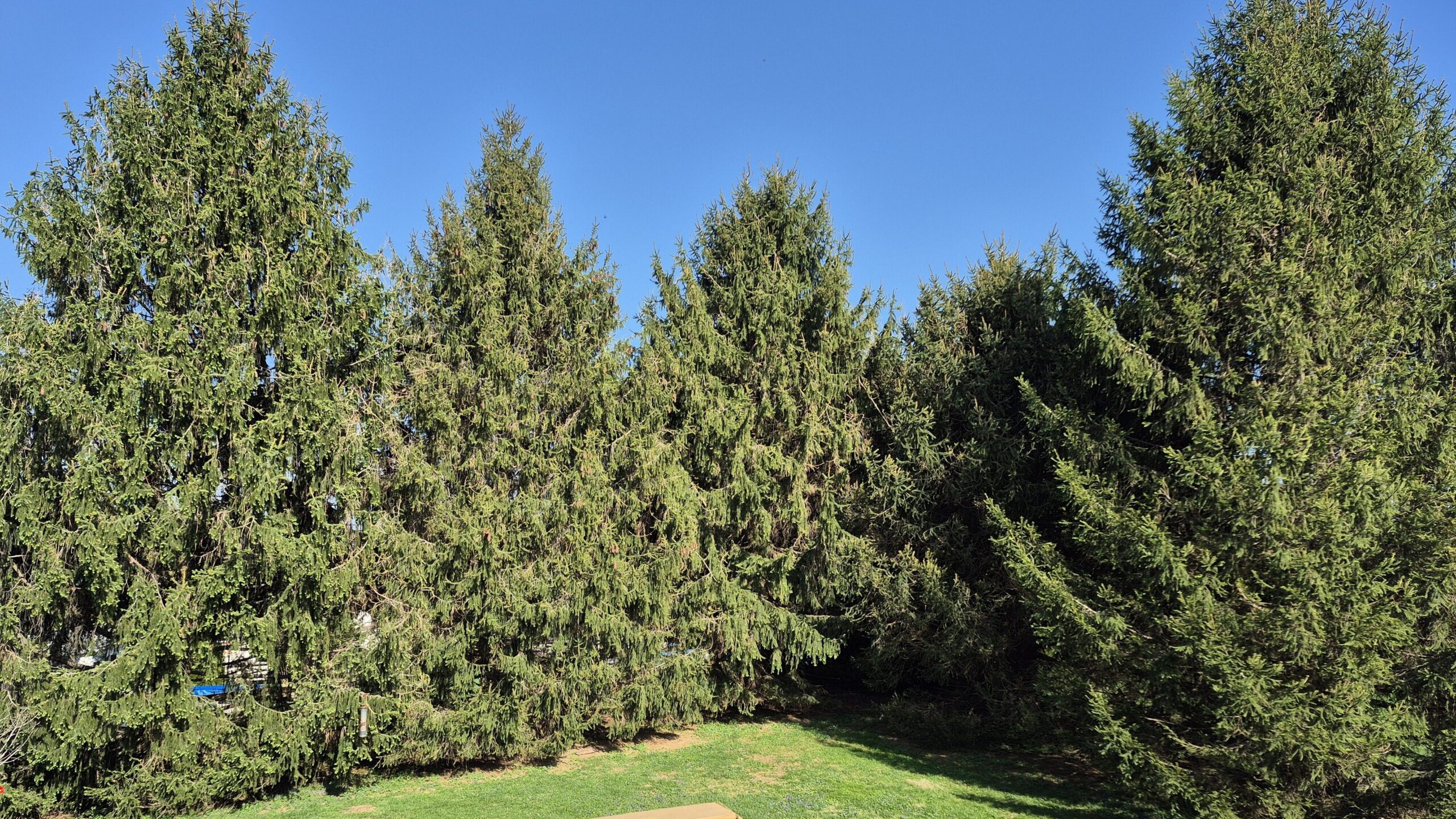
Pennsylvania. These 5 evergreens invite various birds shelter and nesting areas in the branches. Under the evergreens are bare spots where I collect the various sized sticks or small branches and dried leaves that the birds and other wildlife use for nests.
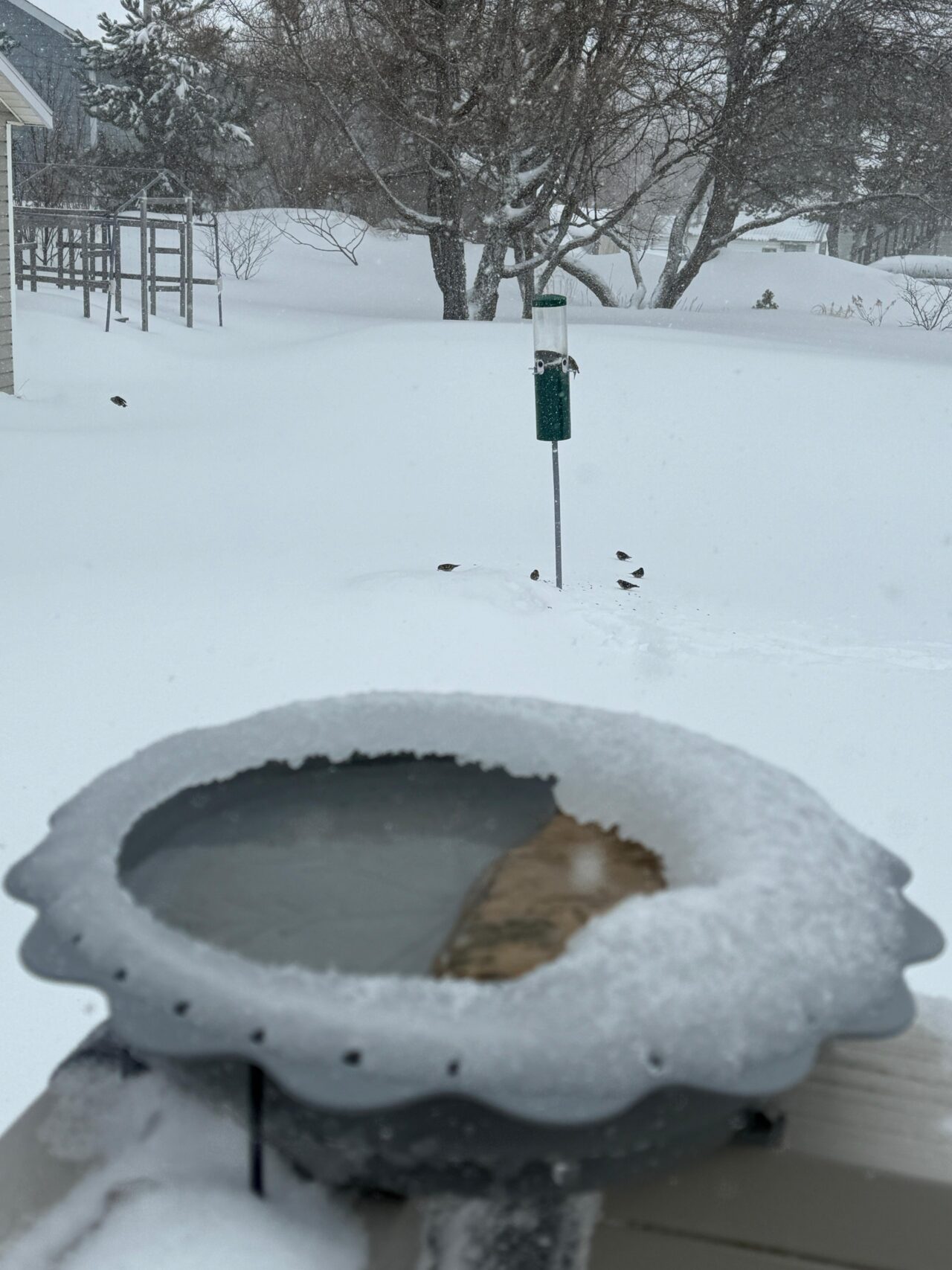
Quebec. Still feels wintery here! We set up a brand new feeder and a birdbath in January, that chickadees, American goldfinches, pine siskins and redpolls are already enjoying, hoping to see some of us nest in our backgarden. Photo by Lamontagne.
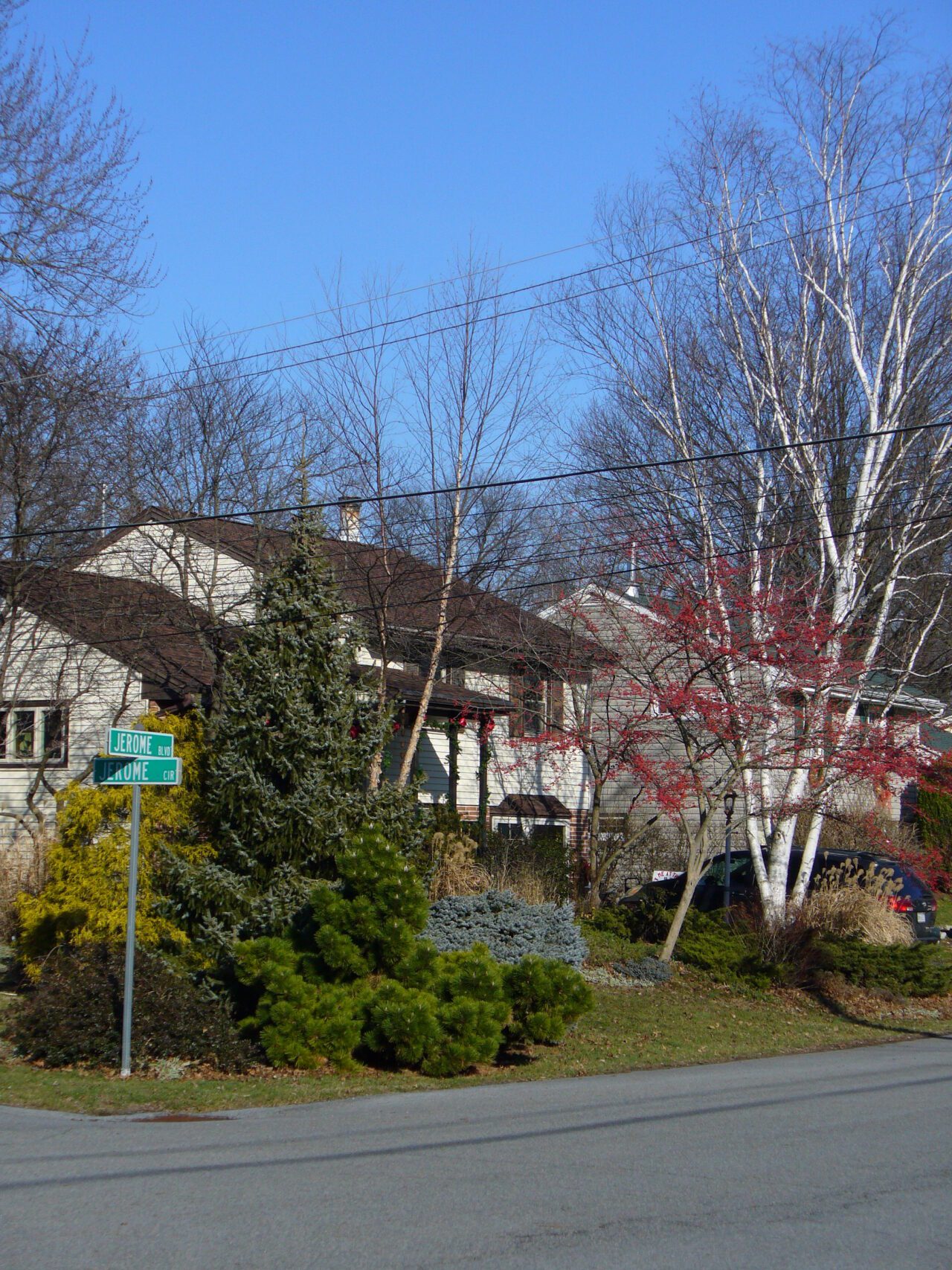
Pennyslvania. This is the front of my 1/4 acre lot. It includes both foreign and native plants: a Serbian spruce, a dwarf blue spruce, a dwarf black pine, a barberry (berries),a dwarf Japanese maple, a white birch, a river birch, a hawthorne (berries), two dogwoods(berries), two redbuds, and a serviceberry(berries). The birds love the grouping of evergreens (and so do the rabbits). Every year there’s a lot of nesting going on. What doesn’t show in the picture are five nest boxes. Photo by Kathie Gifford.
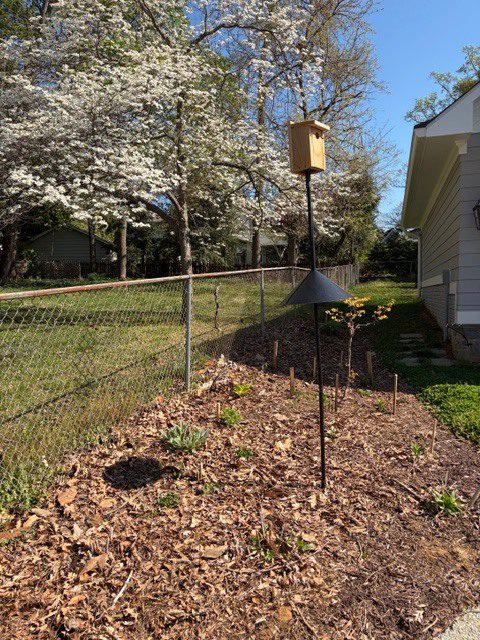
Maryland. A Bluebird Box for returning 2nd year nesters. Unfortunately the BB’s are battling it out with aggressive House Sparrows. Photo by Ronda Martinez.
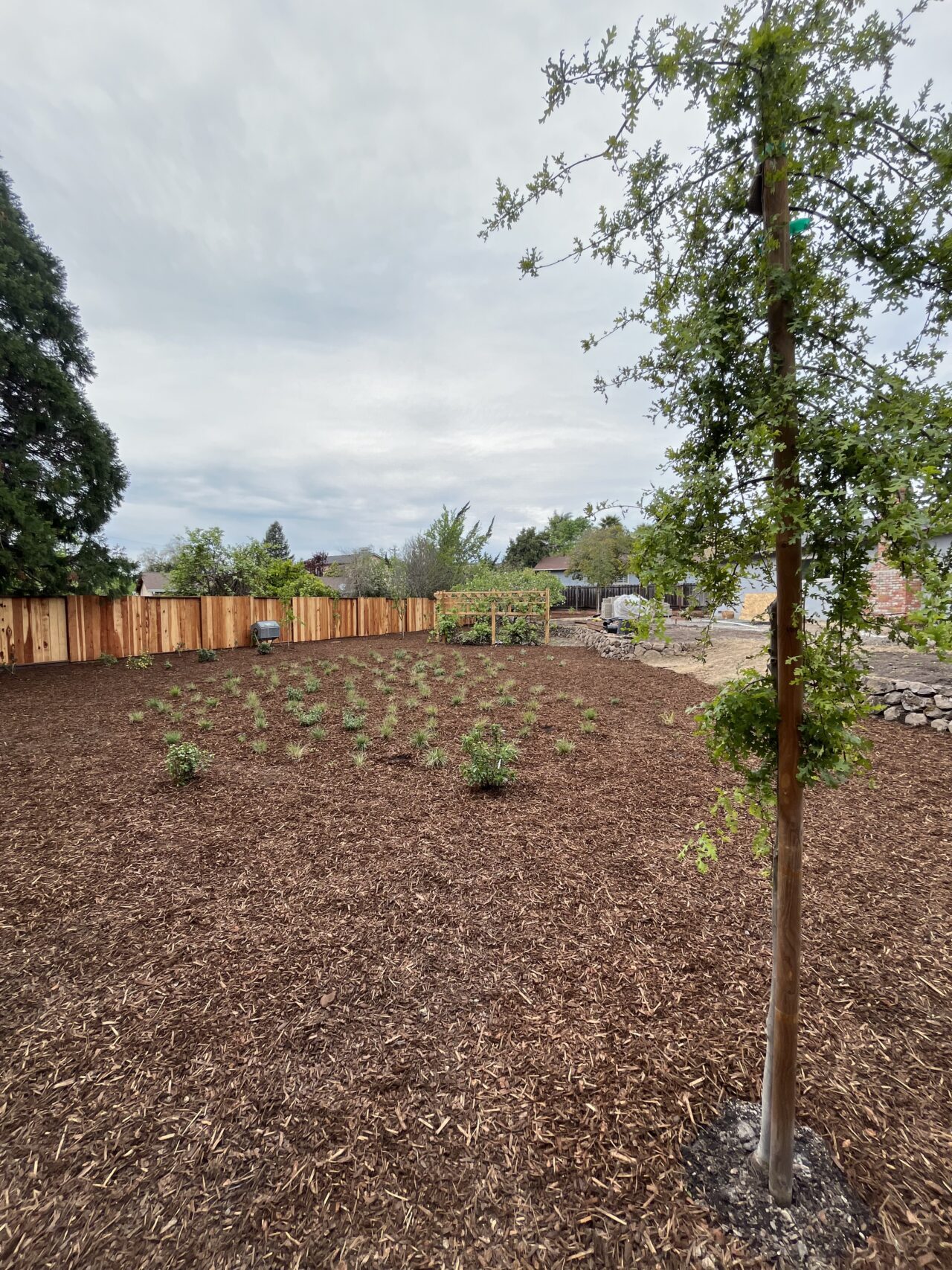
California. I am replacing a former swimming pool with a native meadow and trees and bird-friendly shrubs including valley oaks, coffeeberry, serviceberry, ceanothus.
Montana. This Western Screech-Owl nest box invites resident screech owls to nest on our property and gives them a cavity in an area where cavities are sparse. Photo by Dottie Herring
Connecticut. Crook in Cherry Tree. Photo by Robin Chapin.
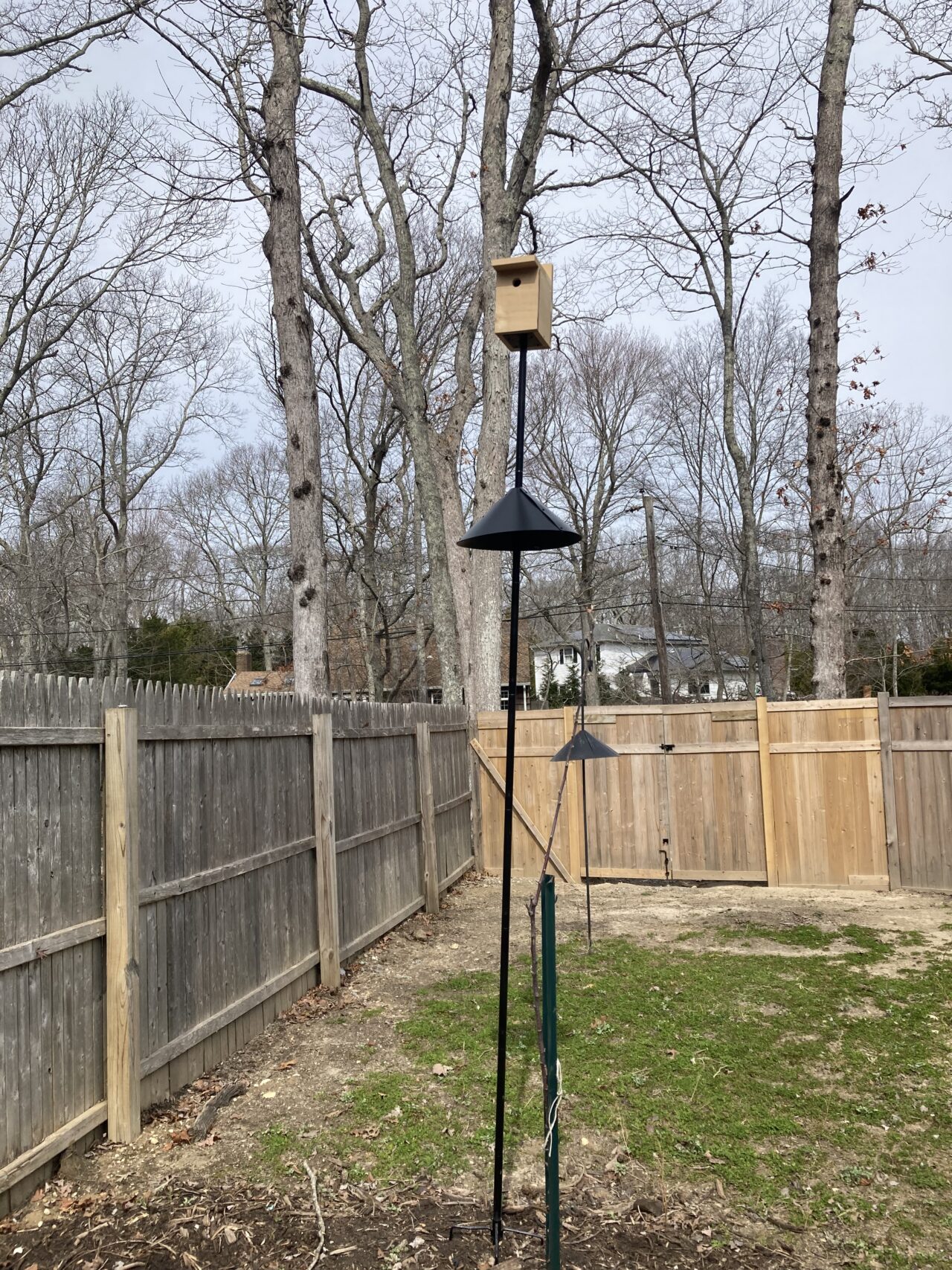
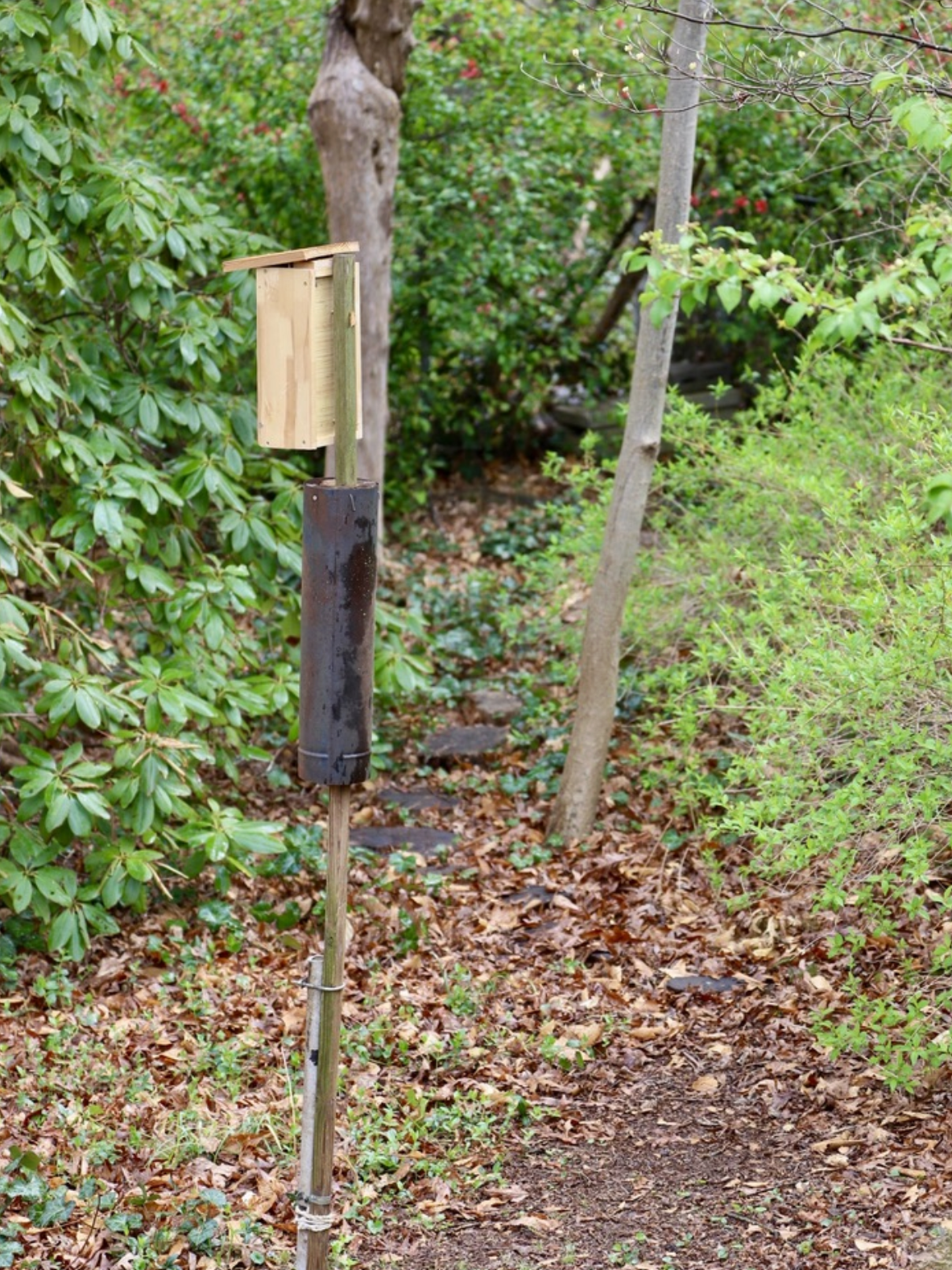
nest box with baffle for predator
Rhode Island. Three are “regulation” Bluebird boxes that I made per VA Bluebird Society. Photo by Kathy Fell.
nest box with cage at entrance.
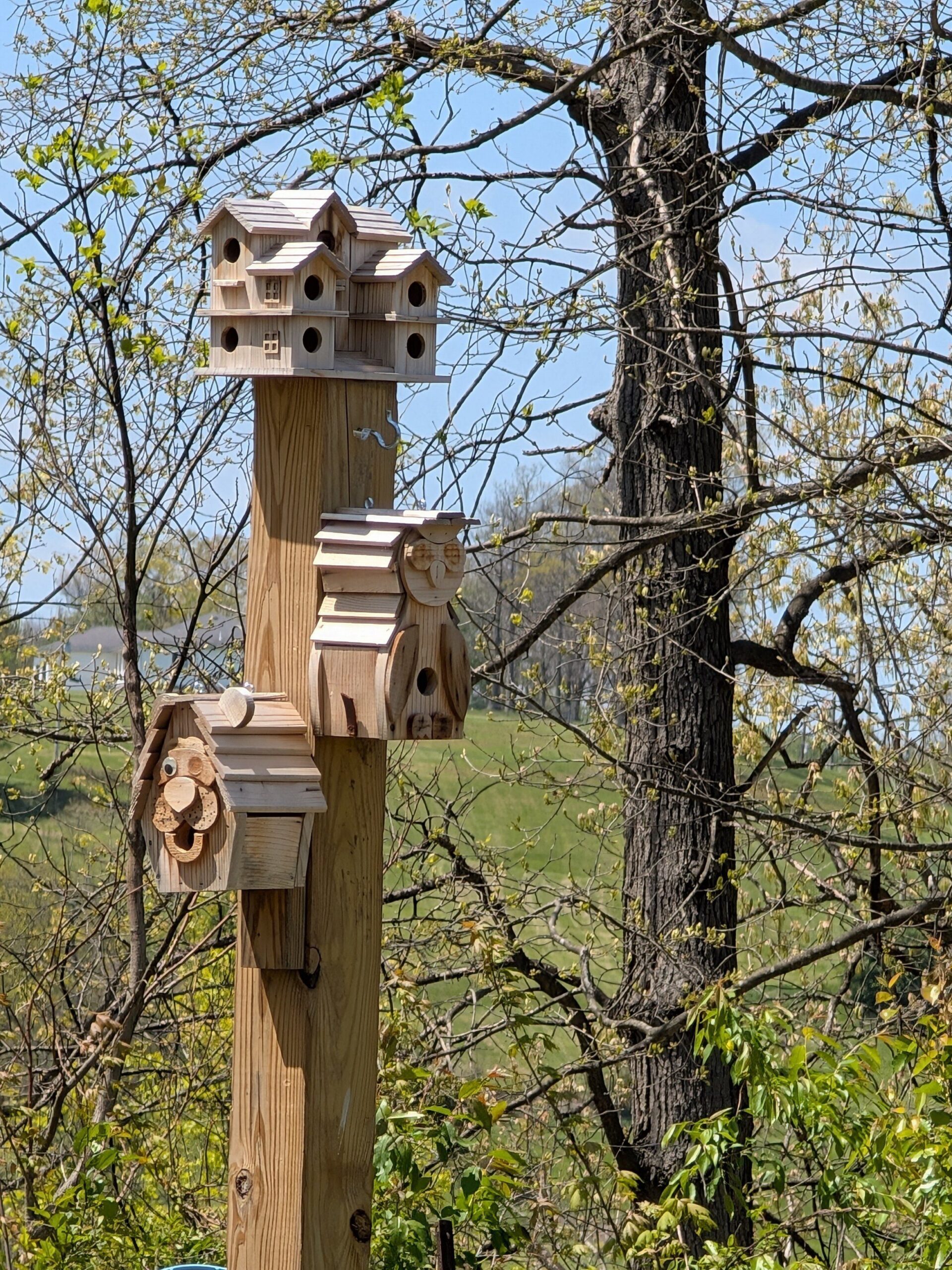
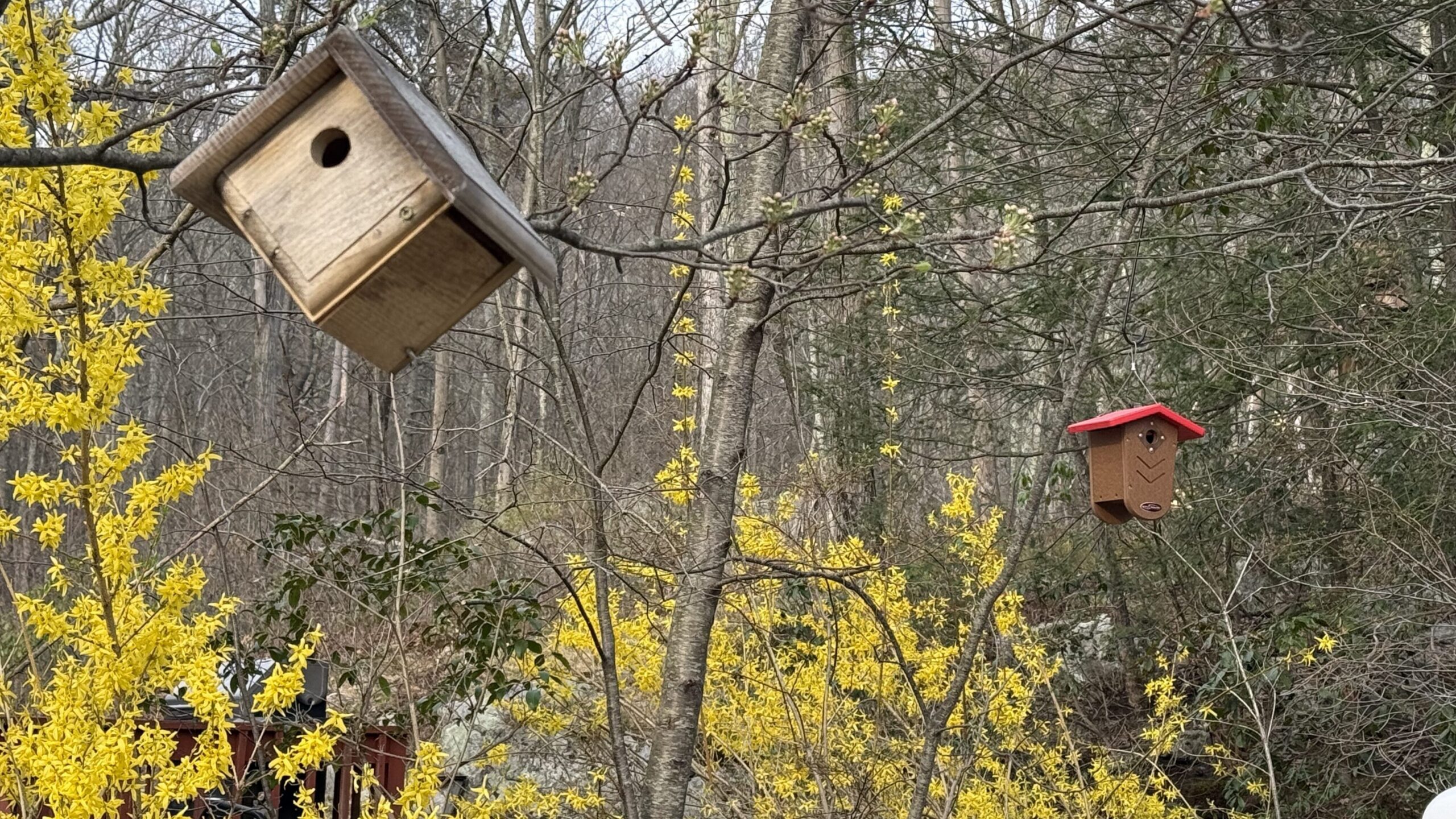
Rhode Island. Happy to report that yesterday was warm enough to set up 6 bird houses for nesting season. Photo by Kathy Fell.
Virginia. Carolina Chickadees, Eastern Bluebirds and even a Red-bellied Woodpecker were checking the box so I added a second one. Photo by JoAnn Dalley.
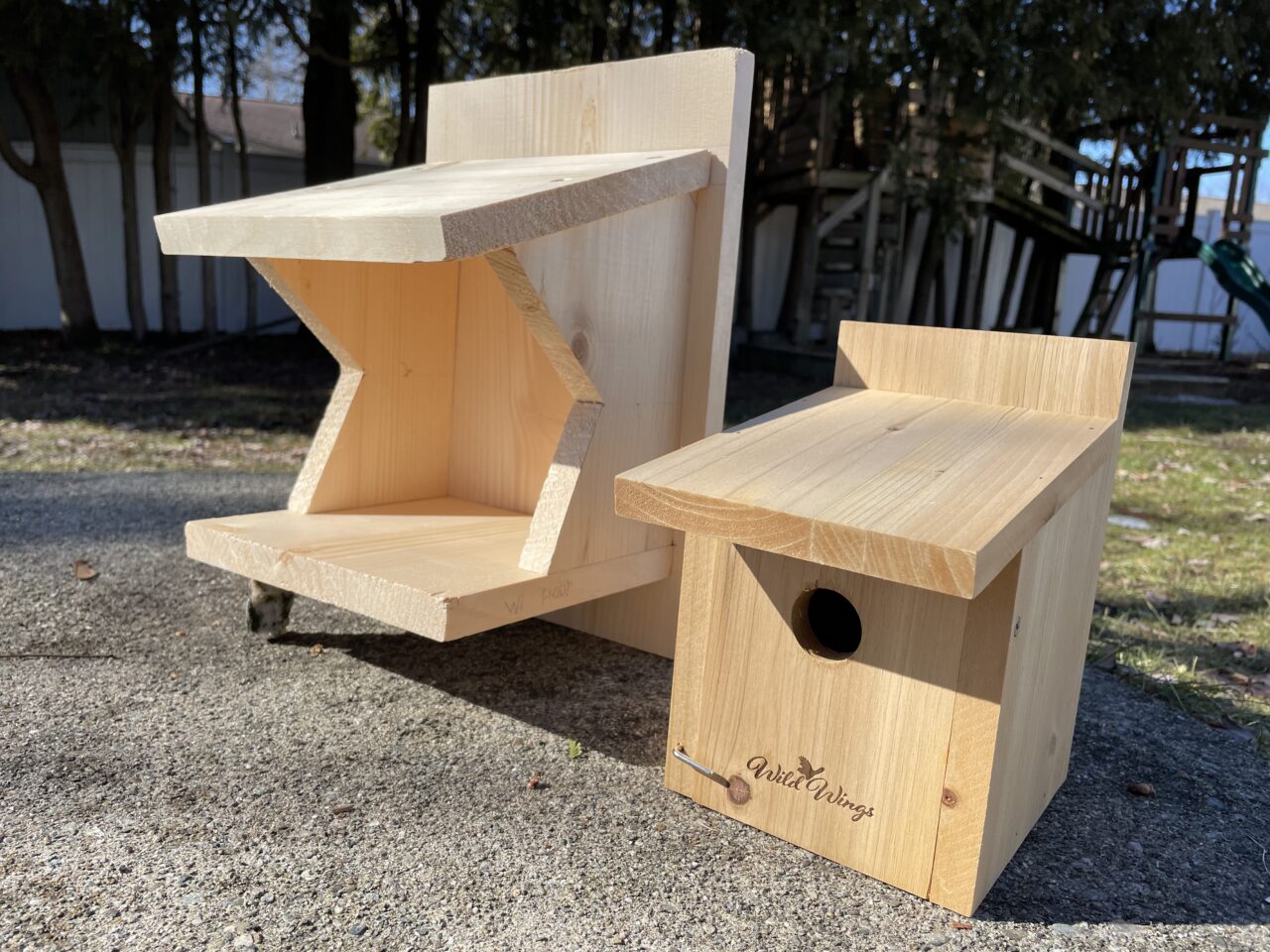
Two freshly made nest boxes
Vermont. Two birdhouses that I built and bought to put up in my bird garden. Photo by William Custer.
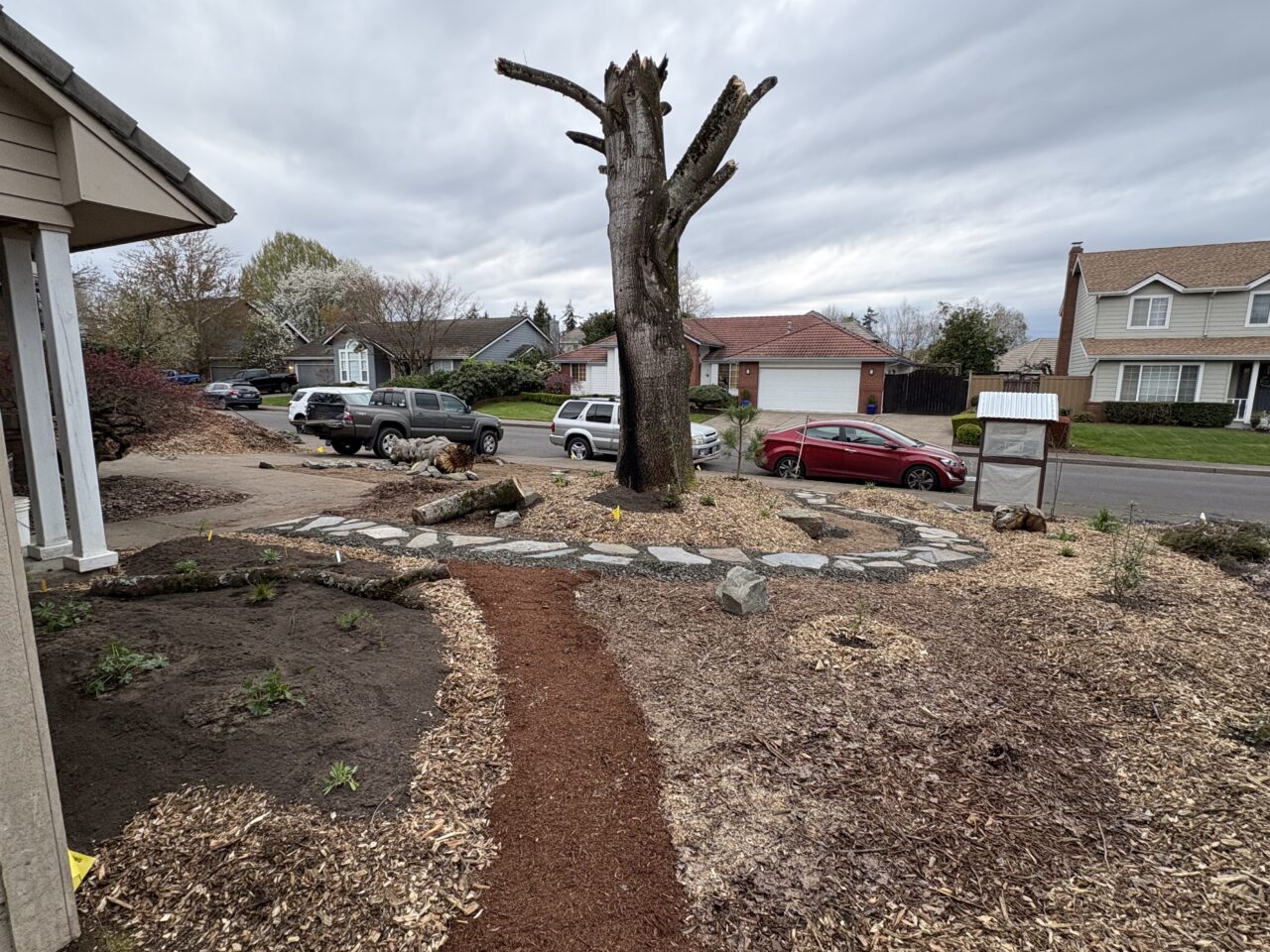
Oregon. We cut down a non native tree to a snag and added chickadee holes. Photo by Jan Jamieson.
Michigan. We have a downed tree/snag at the back of our property that we are leaving for wildlife.
Wisconsin. Waiting for the meadow to fill in and the Purple Martins to adopt a summer home. This is year 3 for the Martin house and this spring I am using a Songbird Magnet to play the dawn song each morning. Photo by Brent Martins.
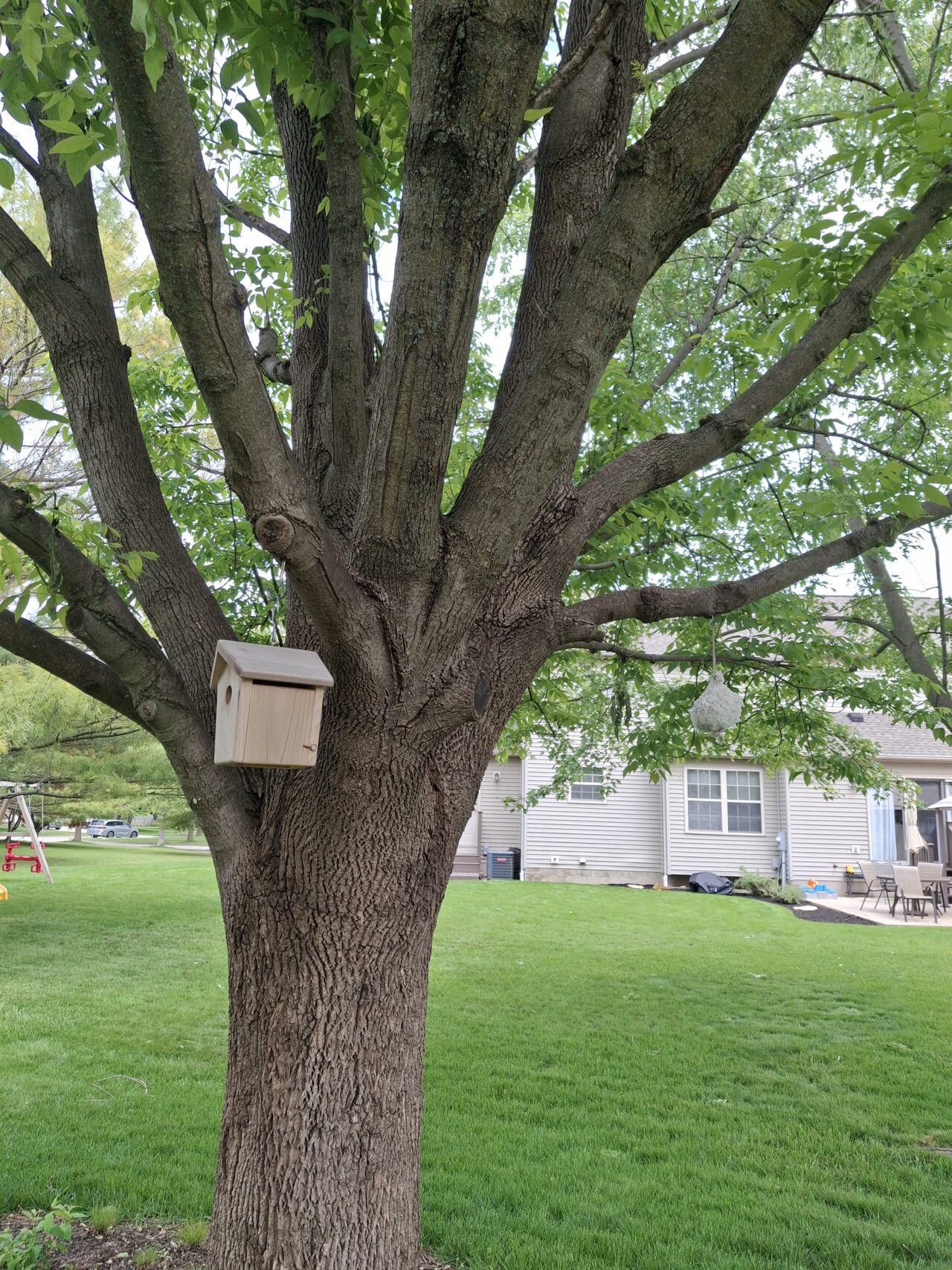
Ohio. I have placed a nest box in my backyard as well as a nesting material ball to invite nesting birds to my yard. Photo by Elise Jorgensen.
Wisconsin. We have had wrens in our yard the last couple of years, so this year we got a wren house for them.
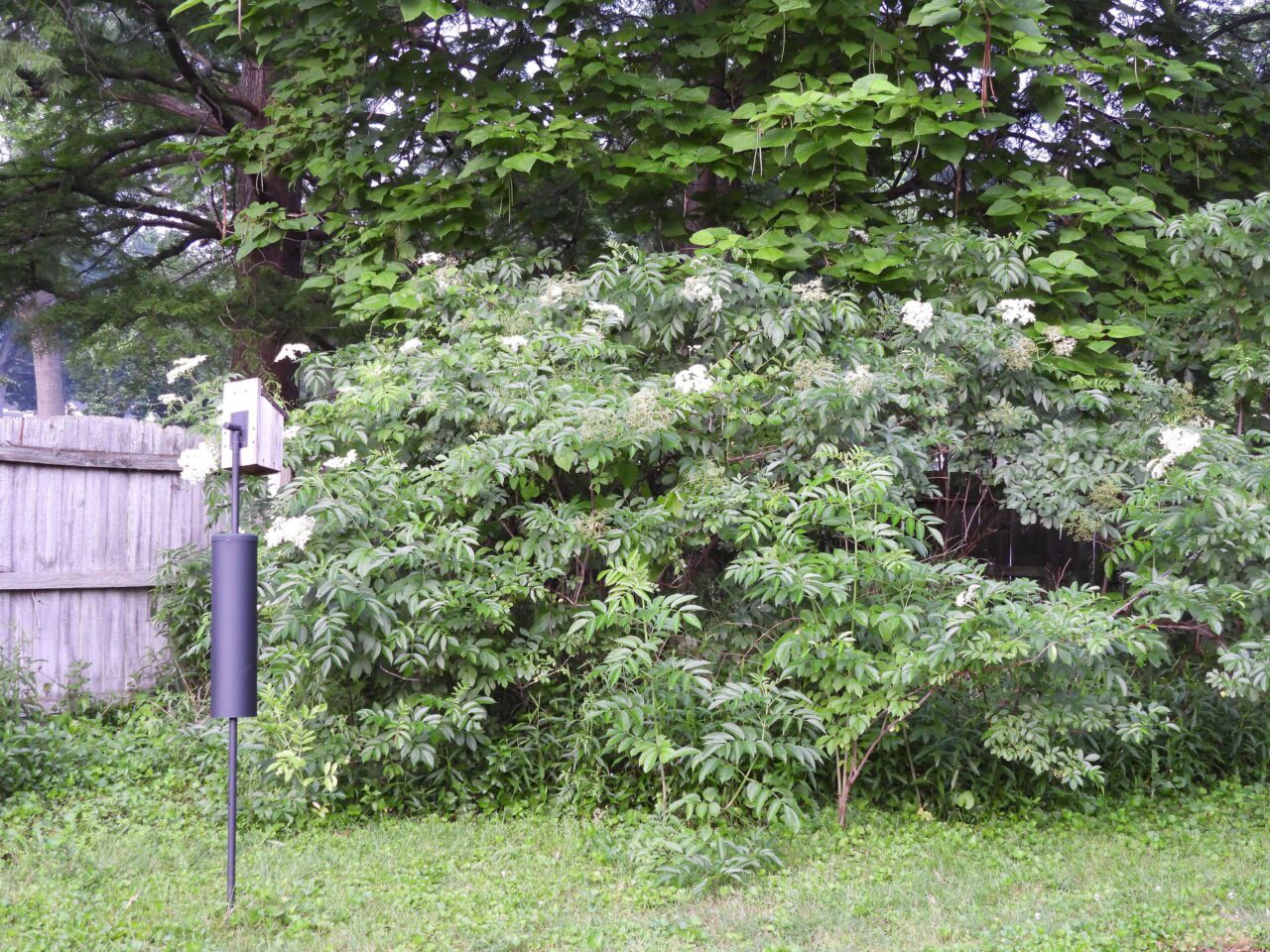
Missouri. I erected a birdhouse facing an elderberry grove. Behind the elderberries is a brush pile. Photo by Maureen Thomas-Murphy.
Wisconsin. Song Bird Magnet did the trick! My first batch of Martin babies. Photo by Brent Martins.
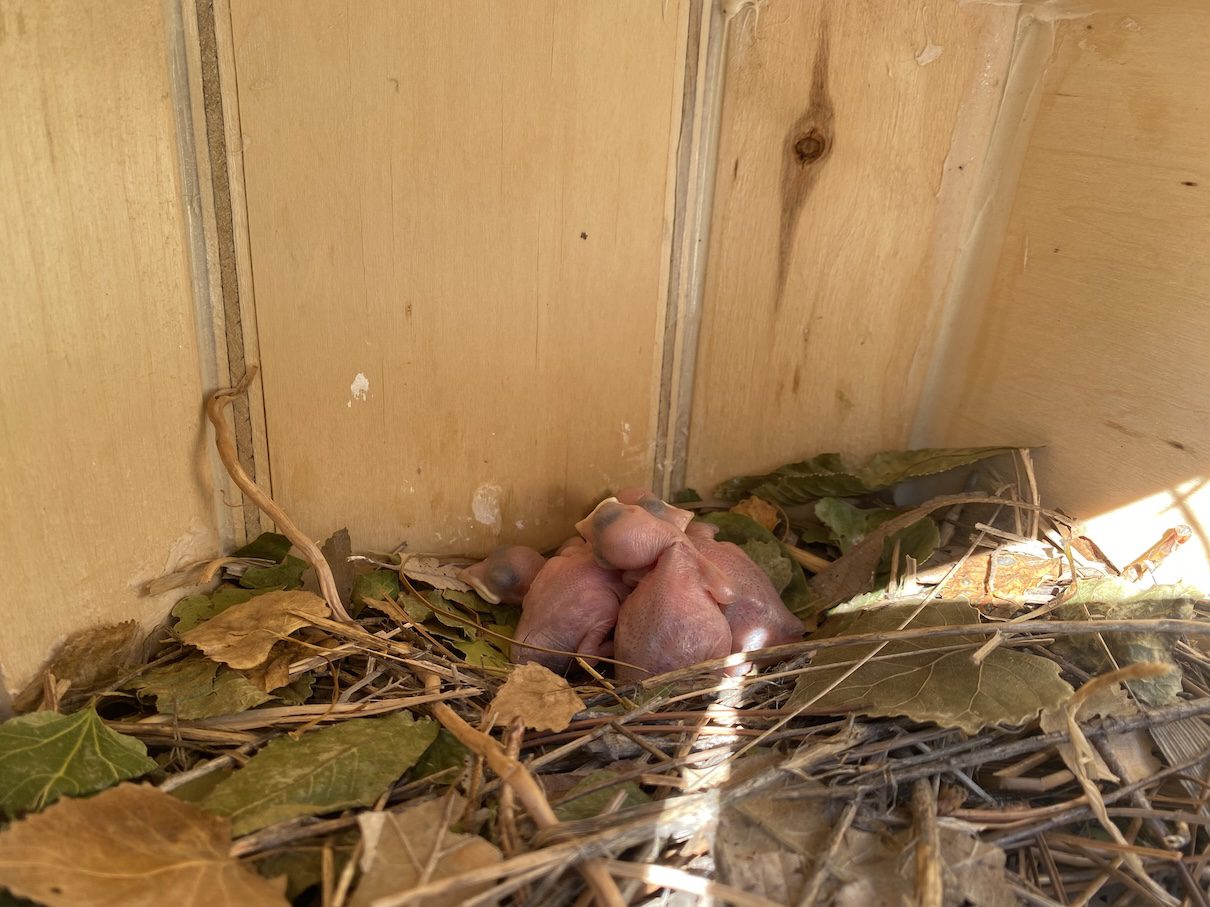
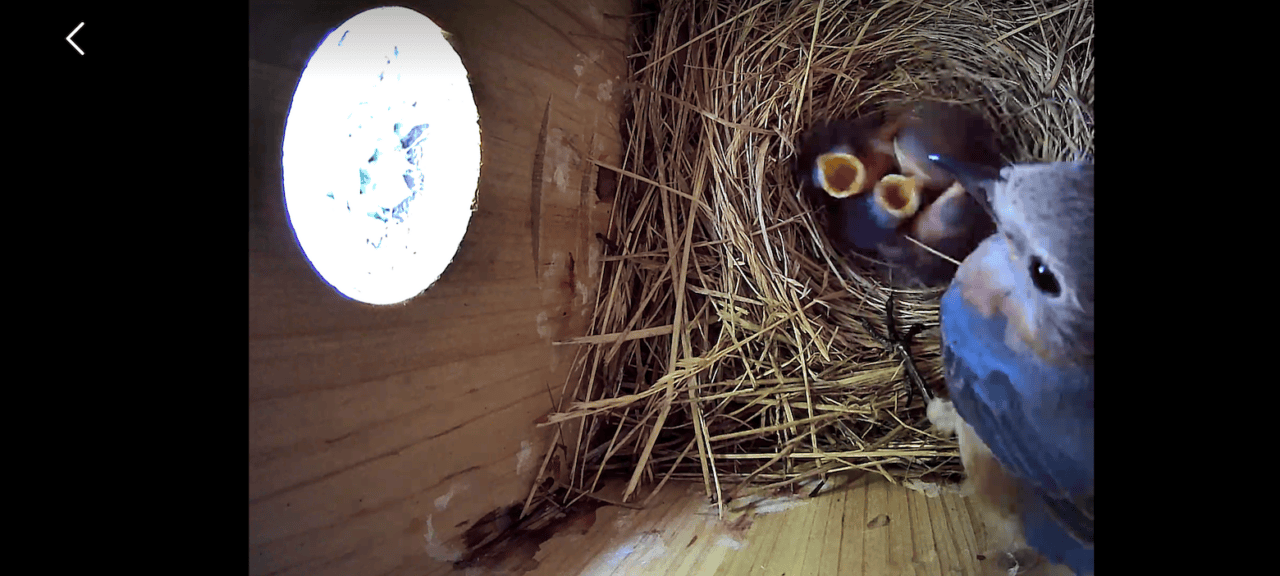
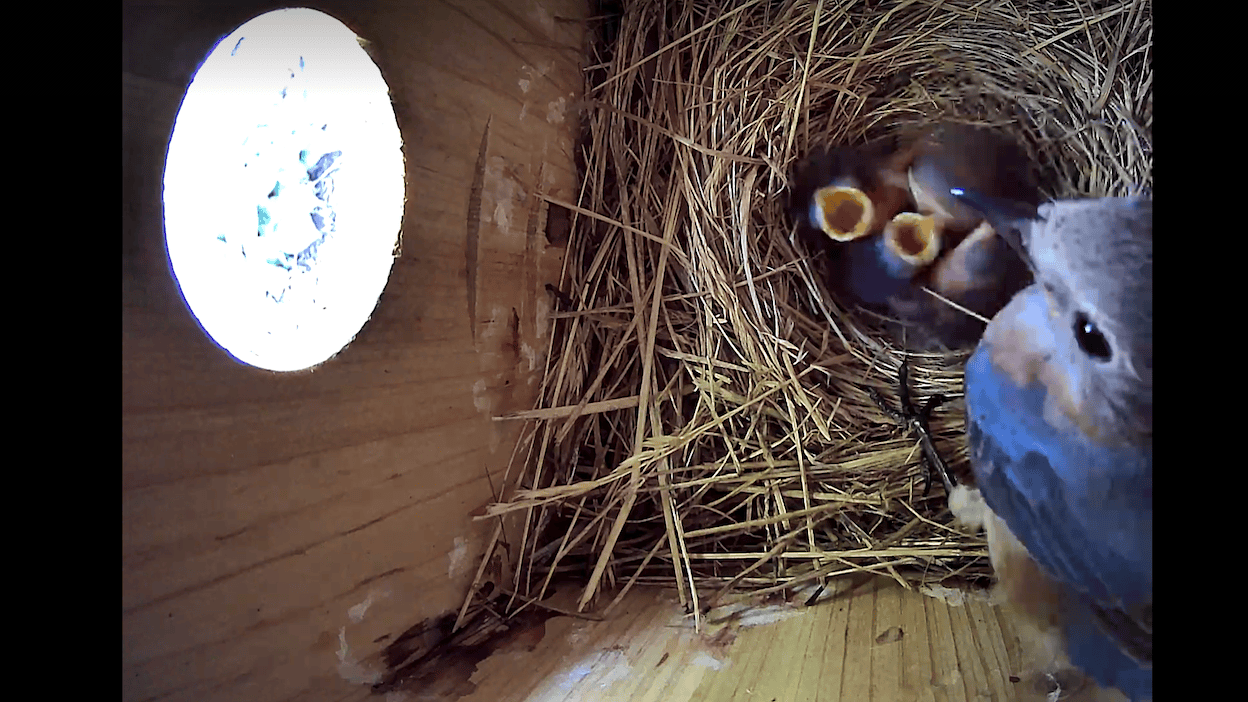
Indiana. This nest box invited a pair of Eastern bluebirds to raise two (so far) families back-to-back! A camera inside the birdhouse allows me to watch as “Mr. and Mrs. Blue” take care of their young. Native grasses planted last year provided some of their nesting material, and native flowers throughout my yard attract a “delicious” variety of bugs for them to eat. A nearby mealworm feeder adds a little extra to their diet. Photo by Amanda Demster.
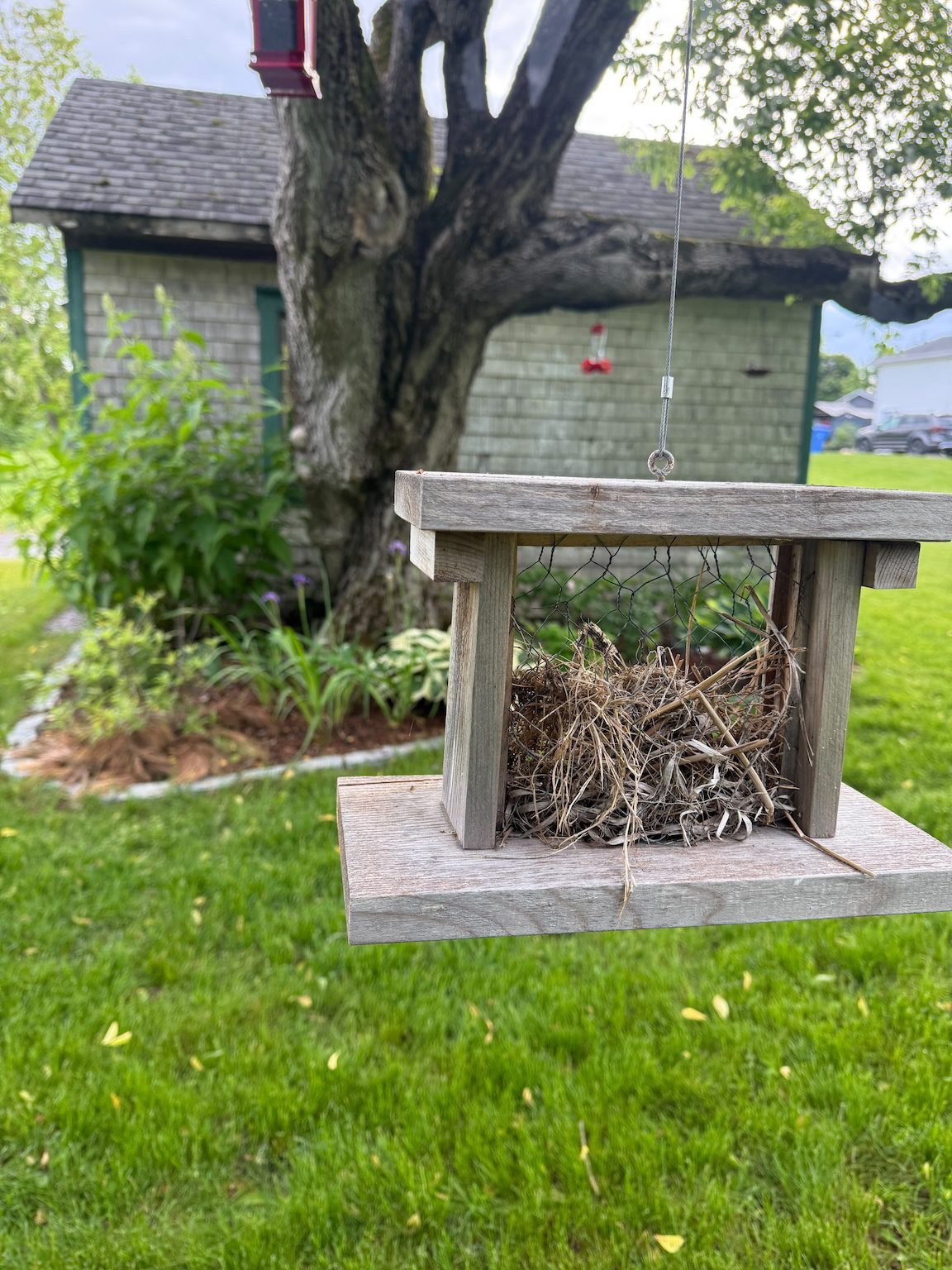
Quebec. Our black-capped chickadees and American goldfinches are very fond of this nesting material holder, made by my husband, who loves birds AND woodworking. Photo by Julie Lamontagne.
California. Noticing western bluebirds at my fountain, I built two bluebird houses and put them up overlooking a grassy slope. It worked! A total of four broods in two seasons means there are 17 more bluebirds in the neighborhood. Photo by Mark Wilfer.
Indiana. This nest box invited a pair of Eastern bluebirds to raise two (so far) families back-to-back! A camera inside the birdhouse allows me to watch as “Mr. and Mrs. Blue” take care of their young. Native grasses planted last year provided some of their nesting material, and native flowers throughout my yard attract a “delicious” variety of bugs for them to eat. A nearby mealworm feeder adds a little extra to their diet. Photo by Amanda Demster.

Stay Connected

By subscribing to stay connected to Garden for Birds, you agree to receive communications from the Cornell Lab. You may unsubscribe from the communications at any time.