February
February is one of a handful of months where what you can and cannot do in the garden depends drastically on your ecoregion. In northern, colder regions there is likely still snow on the ground or it’s predicted in the forecast. In warmer regions winter rains often bring ideal planting conditions. Use the recommended checklists below as a guide for where to dig-in or stay-in.
Garden Checklist
Warm Regions:
Southern U.S. Regions
- Protect your windows from bird collisions.
- If we create habitat for birds, we must protect them from hitting our windows. Do this before spring migration!
- Register for Designing Your Garden for Birds on Sunday, March 8, 5p.m. ET / 2pm PT
- Learn more about webinar.
- See Habitat Photos from 2025 for Inspiration.
- Photo document.
- If you are about to plant, snap a picture before you make changes as images tell a compelling story.
- Understand the conditions of your planting site.
- Make sure you know the growing conditions where you’ll be adding a new garden or plants.
- Visit local nurseries and begin to pick native plants that are suitable.
- Browse native seed and plant catalogues or online companies and get ordering! High demand varieties sell out.
- Get Planting! Cooler days with showers is an ideal time to add plants.
- Attend plant sales and presentations on native landscaping.
- Continue learning.
- Seek out webinars or speaking events to deepen your knowledge.
- Read a new book about native landscaping.
- Explore our resource page.
Cool Regions:
Rest of Regions in U.S. / CA
- Browse native seed and plant catalogues or online companies and get ordering! High demand varieties sell out.
- Register for Designing Your Garden for Birds on Sunday, March 8, 5p.m. ET / 2pm PT
- Learn more about webinar.
- See Habitat Photos from 2025 for Inspiration.
- Prune shrubs or trees before leaf-out.
- Most native trees and shrubs do not require pruning to flower, but if things are overgrowing the space they are in, feel free to prune 4-8 weeks before the last frost. Note that pruning will remove some flower buds.
- Map or plan your garden space.
- New spot? What conditions are present? What plants are the best fit?
- Existing garden? Are there gaps in blooms in your garden or a period where resource-availability is low? Find plants that fill those times.
- Our planting pallete may help!
- Continue learning.
- Seek out webinars or speaking events to deepen your knowledge.
- Read a new book about native landscaping while you wait for gardening temperatures to return.
- Explore our resource page.
Featured Plant & Bird
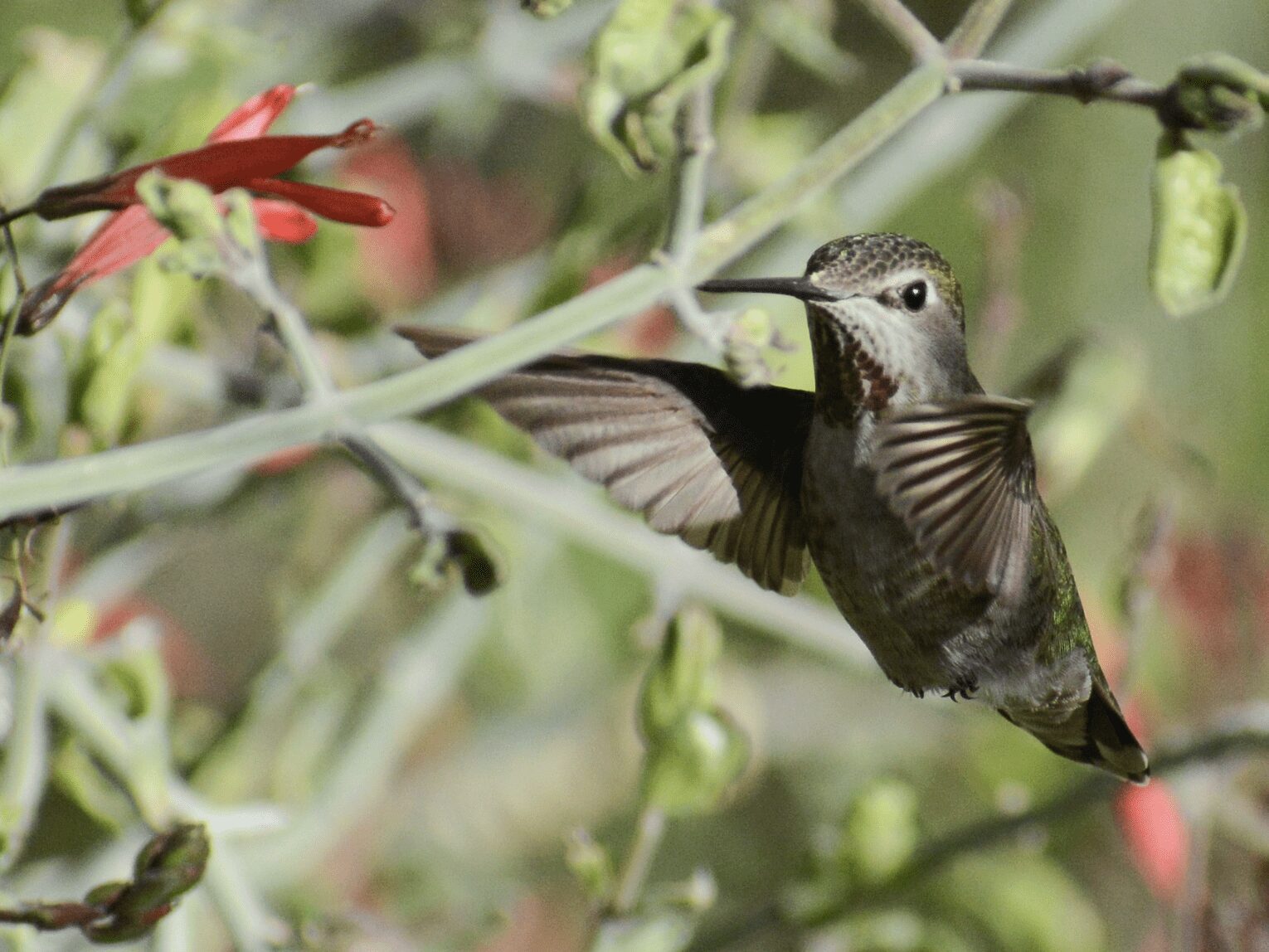
Common Name: Hummingbird Bush
Scientific Name: Justicia californica
Native to: AZ, CA
Plant characteristics: Deciduous shrub, grows to about 6ft/ 1.8 m.
Growing conditions: Full sun, dry, rocky soils. Often found in desert washes.
Benefits to Birds & Biodiversity: A favorite hummingbird stop for the replenishing nectar. Sparrows have also been sighted eating the flower bases for a quick sugar fix. Used by numerous other pollinators.
Additional Resources
- Native Plant Societies (Search by your State or Province)
- All societies for the U.S. and Canada are listed on this resource.
- WildOnes Chapters
- Great resource to connect with others who are passionate about native habitat.
- Audubon Chapters
- Local chapters often have demonstration gardens for people passionate about planting gardens for birds.
- Are deer an issue for you?
- We have a list of options in all regions of the U.S. and Canada with ideas for plants that will be less delectable.
Stay Connected
By subscribing to stay connected to Garden for Birds, you agree to receive communications from the Cornell Lab. You may unsubscribe from the communications at any time.