
Fall Gardens
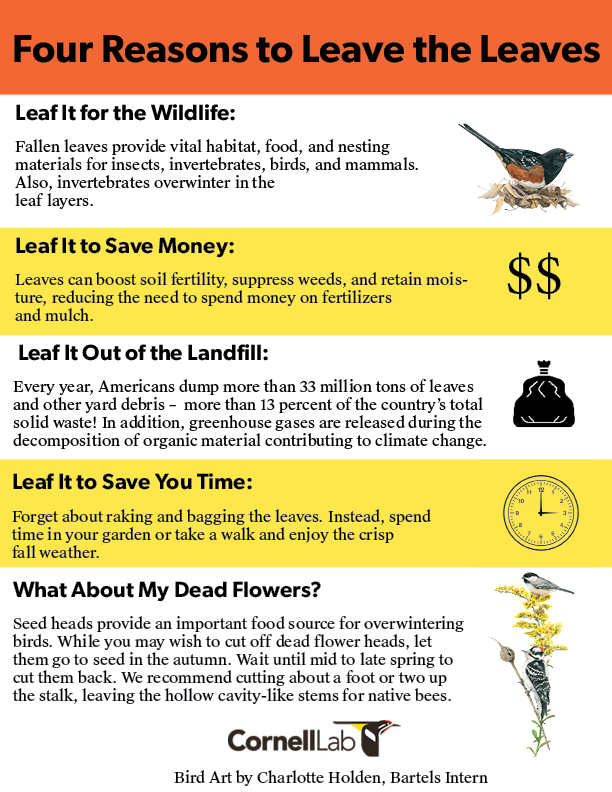
As fall approaches, our activity in the garden tends to wind-down. There are, however, things we can do to maximize the benefits for birds and biodiversity. Explore the FAQ below about why leaving resources in place is important. And, feel free to share this poster we made to inspire others to Leaf It for the Birds.
Leaf It Poster
Commit to leaving your leaves and flowering plants alone this fall for the birds. This small action can have a positive impact on biodiversity. The leaves create prime habitat for soil organisms and fallen seeds—a favorite amongst many songbirds. Flowers holding their seeds provide landing pads for birds to forage on all winter long!
Leave your leaves and share with others about how this simple action can have big impact for birds!
Below are commonly asked questions as it relates to activities in our gardens and on our properties in the fall. We hope this acts as a useful guide to leaving your leaves and garden resources in place for birds and biodiversity.
Click on the question or select the + to the right to see the answer.
The ONE Thing
Plant as many native plants as you can fit into your space! Fall is a great time for planting.
Fall Garden Activities
Trees can be planted in the fall, early winter, spring, and summer (in mild areas). That said, fall is a great time because the soil is warm from the summer, but the air is cooling. This makes digging a hole and allowing the roots to settle into a warm environment, ideal. Fall, however, can also be a dry period in some areas, so if rain or precipitation is scarce, water your tree every few days for a week or two while it settles in. Native tree species will quickly adjust to the local conditions. Do make sure to dig an adequate hole for your tree or plant, as in frost-prone areas, plants which haven’t had time to establish their roots in their new home can get “heaved out” when the ground freezes.
Elderberry and most native shrubs do not need to be trimmed. If they are growing too rapidly or growing over other foliage, it is best to trim most native shrubs in the late winter before they begin to bud out and after the fruit has been consumed by birds or other wildlife. Note that when trimming flower-producing shrubs, you will likely trim off some of the flower buds making for less flowers and ultimately less foraging for pollinators. Thus, prune modestly and or do a pruning rotation where you prune one set of flowering shrubs one year and another the next to minimize a drastic drop in spring flowers for pollinators.
Leaves as Mulch
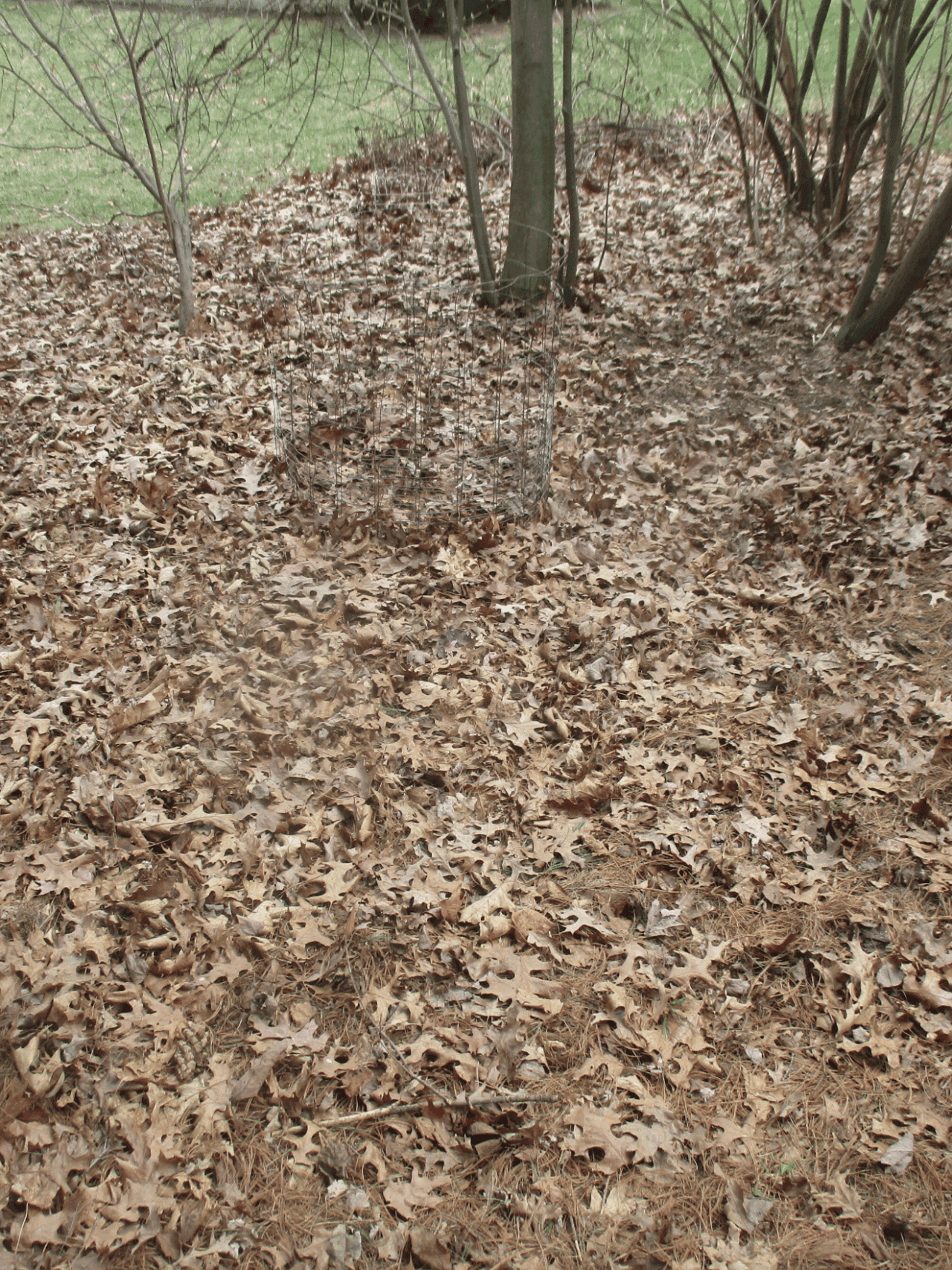
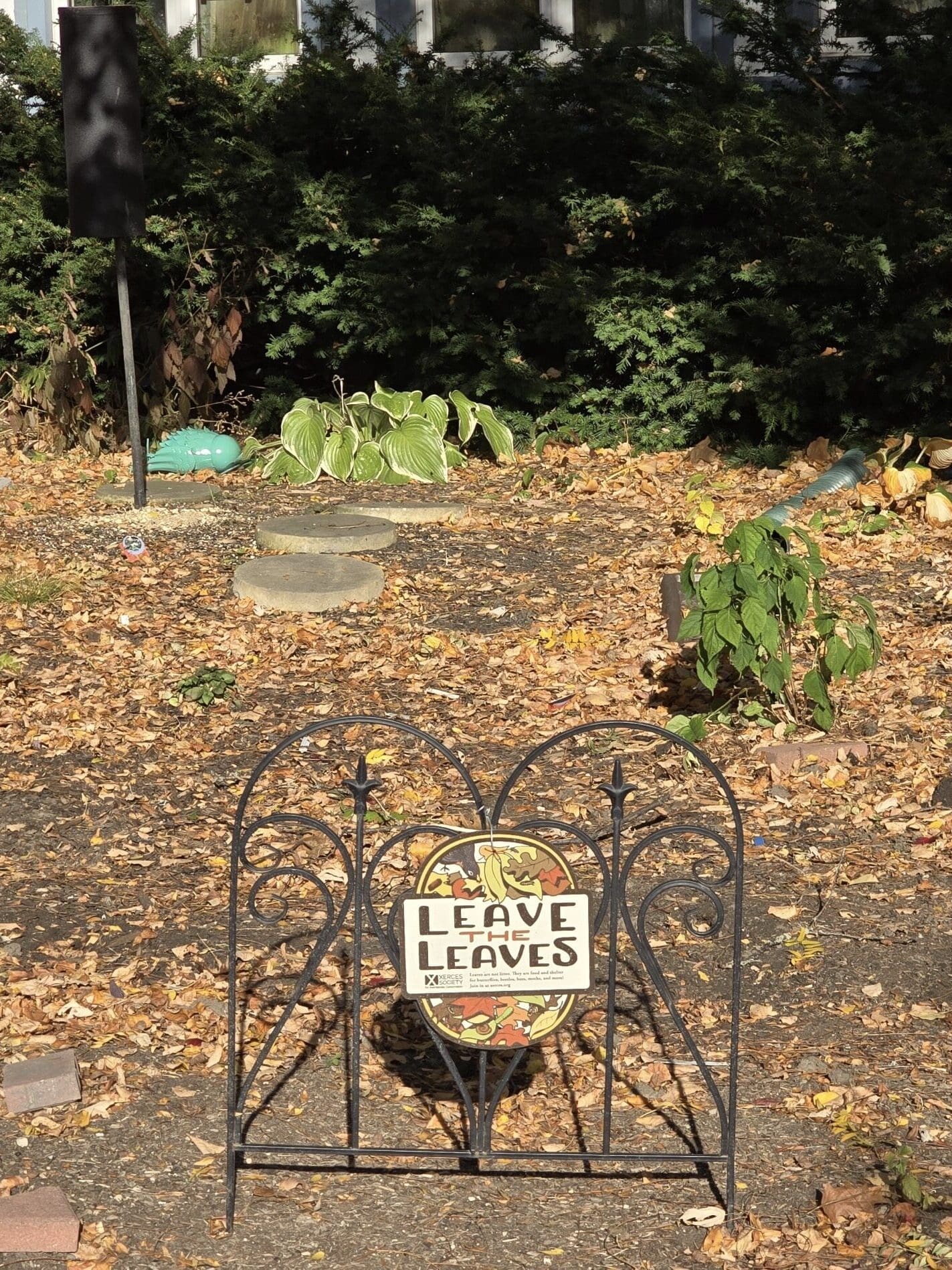
Many native plants can tolerate thick layers of leaf litter. This is what happens naturally in forests – in fact, introduced earthworms mean that leaves are broken down into the soil much faster than they would be naturally. In the north, snow, and elsewhere, rainfall, will flatten the pile down considerably. If you have very young, or recently planted plants, they may benefit from a gentle helping hand in the spring – you can gently part the leaves a little to help them reach the light. But remember – our native forest plants have evolved to deal with natural leaf fall from the canopy above. If you are growing desert plants, or plants from other naturally sparse ecosystems, use mulch sparingly if at all.
Large accumulations of leaves on lawns can cause some damage to the grass. However, it depends on the type of leaf, and the type of grass. Some leaf species break down more quickly than others – e.g. oaks can persist intact for longer than maples. Some lawn species are relatively dormant over the winter in northern areas. Pay attention to where leaves accumulate the most on your lawn. These areas could be great spots to give up on lawn and turn it into a native plant bed, especially if it is an area under a tree, with roots poking through, where grass may not be doing well anyway. If you like the look of lawn, you could replace the turfgrass with some native sedges in these areas. These would not need to be mown, and you could leave the leaves to accumulate here as native woodland sedges are quite used to pushing up through leaf litter.
Any kind of mechanical disturbance risks injuring or killing the many larvae and pupae that need a safe place to overwinter; mechanical mulching can be particularly destructive. Gently raking or blowing leaves into areas where they can be left alone – ideally where they can decompose into the soil – is the best approach for places where you can’t simply leave them where they fall. However, of course some leaf management may be necessary to maintain access routes, fire safety, drainage, and we encourage you to do this in whichever way works best for you. The gentler you can be, the happier their inhabitants will be!
You can move leaves around and add leaves from other places to your garden beds. Just always be vigilant about non-native invasive plants hitching a ride in bags of leaves from elsewhere – be vigilant to stop them from establishing the following spring. Checking in with your neighbors to see if they will let you take their leaves can be a great conversation-starter about the benefits of keeping leaves on-site.
Mechanical mulching poses a large risk to animals in and among leaf litter. If you find you have too much leaf volume to contain in your garden beds, consider creating a new planting area. Take some time to see where leaves accumulate naturally in your space, and create a new bed right there. This will save you effort in the long run, and provide habitat right where it is needed. Remember, once they get wet from rain or snow, leaves compress very quickly, and take up far less space by the end of winter than even seems possible on a warm, dry October when they fall.
The best place to “store” leaves is right on the ground in contact with the soil. However, if you need to store them temporarily, then bagging them can be ok. Ideally, use paper yard waste bags, and leave the tops open. Plastic and closed bags may keep the leaves too warm for fall insects. Alternatively, you could designate a spot where you pile excess leaves, and construct a wooden frame to keep them in place.
Most leaf species, including non-native leaves such as Norway maple, are generally perfectly fine to use as mulch. They will not harm the soil or any native plants you are trying to grow. There are plenty of native plants which do just fine under walnut trees and leaf litter, but walnut mulch may not be the best choice for your vegetable garden as it may inhibit the growth of food plants. Do be careful as leaf litter is likely to also include seeds, so applying e.g. Norway maple (a non-native, invasive tree) mulch will mean you’ll have to be vigilant for Norway maple seedlings establishing. These are fairly easy to pull up – especially from a thick layer of leaf litter. Be careful too if you are using material raked from gardens containing non-native invasive plants such as periwinkle, Japanese spurge and similar, as fragments of these species can grow and establish in new areas. Pine needles are also fine to leave where they fall or move to use as mulch elsewhere. Although some pines grow in acidic soils, pine needles themselves do not significantly change the pH (the acidity) of the soil.
Many non-native plants are not consumed by insects, which is why we really encourage replacing them with native species. However, non-native leaves, stems and other debris can be fine to use as mulch or to compost into soil. They may provide useful structure and cover for overwintering animals, including insects. That being said, subtle differences in chemical composition, structure and timing can have implications for how effective they are at providing the perfect shape, size, humidity and density even for over wintering habitat. If you have a source of non-native leaf litter, by all means use it, but add and replace with native species if possible.
If you have access to a lot of fallen leaves, using this as mulch on plant beds is usually sufficient, and is what our native forest plants have evolved to use. There is usually no need to add anything else: the leaves will decompose into the soil, improving its texture and organic content. If you have existing mulch, you can simply add leaves on top if you wish, though this may change the speed at which the mulch breaks down. If you have woodchips or fallen twigs and branches, these can be sprinkled on too as again, this is what would happen naturally in a forest. Adding branches or logs on top can also help hold leaves in place through wind events.
Using leaves which have fallen in your area is particularly valuable because as they fall from the tree, some will contain insect larvae and pupae. Once they fall to the ground, some may burrow into the soil a little, while some will remain attached to leaves. This is how they will overwinter, and emerge as adult insects in a subsequent spring. Commercial mulch is unlikely to contain insects in this manner, although it may provide adequate cover and protection for any insects already in the soil.
Dry leaves of course are easily blown in the wind, and might not like to stick around where you want them! In the short term, you can add logs, branches or rocks to provide bits of “micro shelter” and also to hold leaves in place. In the medium-term, adding more native plants will also help. Even herbaceous plants which die back completely can leave traces of stem and roughen up the surface of the soil, helping leaves stay in places. Woody shrubs and trees create an even better wind break and catch leaves. Once leaves get wet, they will stick around more easily, and if you get snow, they will be flattened and held in place by snow. You could lay down something like chicken wire or similar to hold things down too, but be very careful it doesn’t become dangerous to animals – toads and other small animals need access to the soil to be able to dig themselves below frost, and to emerge again in spring.
Deadheading & Dried Stem Benefits
If you think about a meadow or natural area, there isn’t much reason for any plants to have their flowers removed other than by a foraging or passing animal. Thus, the only real reason habitat gardeners would be dead-heading is if they don’t want that particular plant to spread its seeds. If you do need to dead-head we encourage you to sprinkle the seeds in an area where they still be available for foraging birds or an area where you are trying to grow more of the species you dead-headed.
Different species of bees and other insects have different needs when it comes to stems. In general, the more hollow the stem, the more beneficial to nesting bees. That said, there are a variety of different uses in stems, for instance the galls created by gall flies on goldenrod. This is one reason why planting a diversity of native flowering plants – and leaving the stems – maximizes the resources available to foraging or nesting insects.
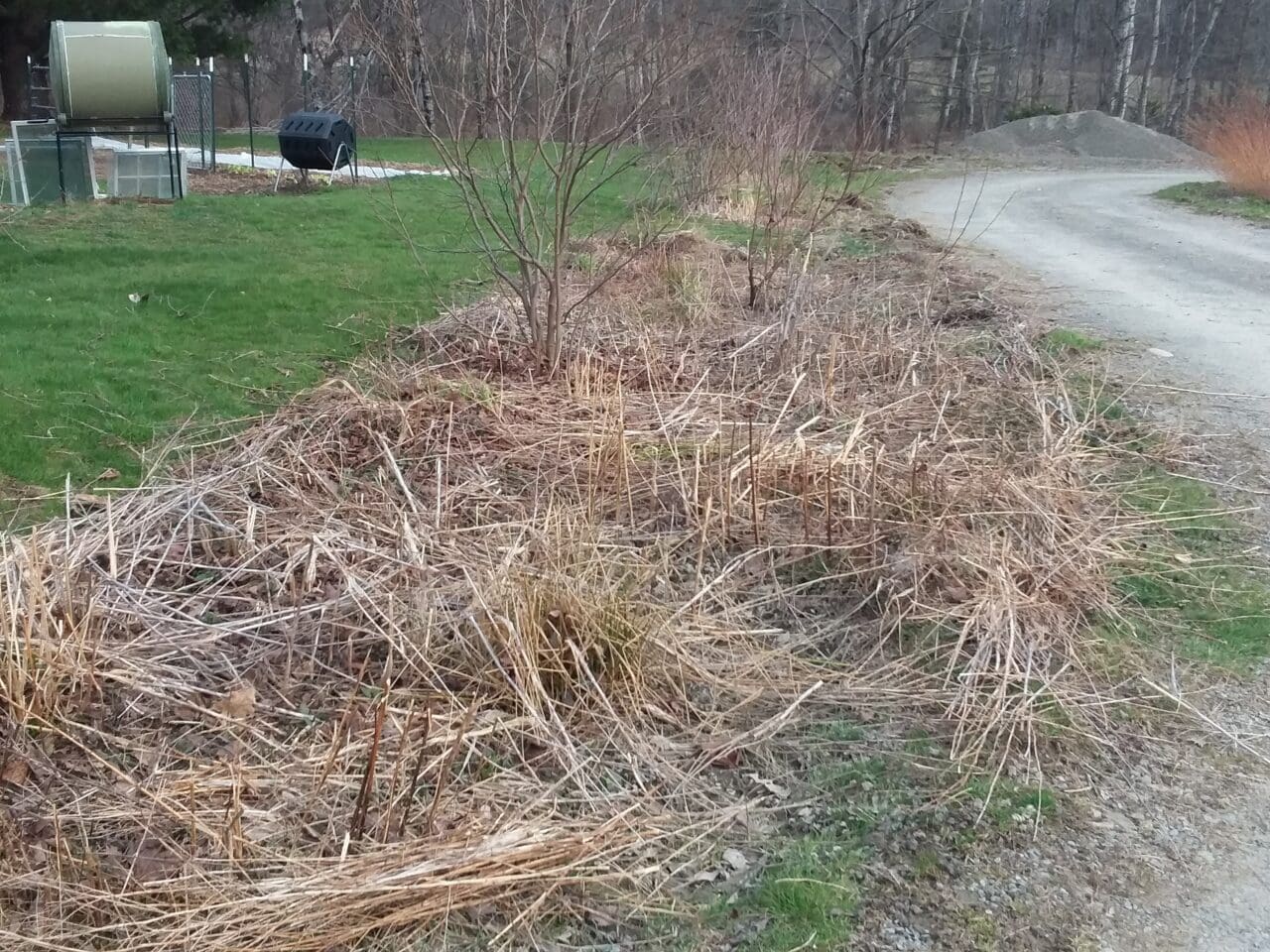
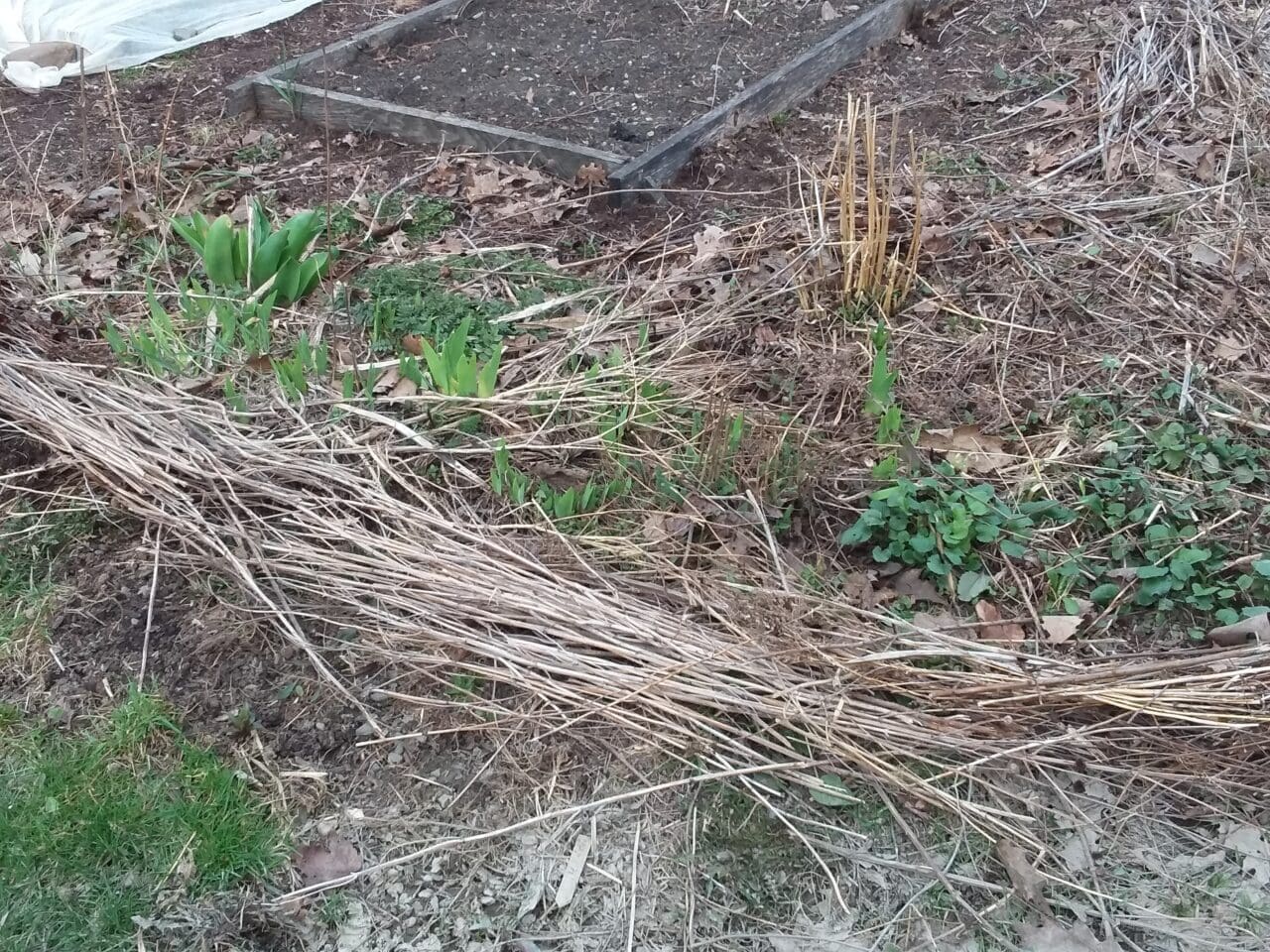
Dried stalks should be left for at least an entire growing season after they flowered as bees generally use the previous years stalks for creating nesting cavities. Stalks can be cut to 1-2 feet. The new growth will grow up and cover the old stalks quickly in the spring. Letting stalks naturally fall off and decompose is recommended.
When to Clean Up
There isn’t an ideal time as different bees and caterpillars emerge at different times of the year. One rule of thumb is to delay your clean-up as long as possible in the spring when evening temperatures in your region are in the high 40s or low 50s (4 – 10 C) for consecutive nights. This provides time for some early pollinators to emerge from their wintering habitats before beginning clean-up. However, insects are running through their lifecycles all year round, so there is a risk you’ll be disturbing something at any point. Leave as much as you can for as long as possible for maximum biodiversity benefits. Try to leave the stems and flowers in the garden, if possible, by using them as a border that the new growth will cover as it fills in.
The meadow or unmowed area should not be mowed until late spring. And, if possible, mow only a third of your meadow each spring, leaving two-thirds for all the biodiversity to thrive. Mowing will inevitably disturb pollinators and other organisms in your meadow, so leaving a portion of it it unmowed every year can help. If your meadow is supporting nesting birds, pay attention to the onset of breeding and avoid any disturbance between April/May and the end of July/August, give or take a few weeks at either end depending on your latitude. Spring mowing may be impractical in some areas, as the sol can be too wet to support machinery. If this is the case for you, try a later fall mowing, giving your native meadow plants a chance to set seed and support fall migrating birds. Again, try to leave some “refuge” areas unmowed each year, and rotate where and when you mow each year.
“No Mow May” is a nice and catchy concept, however, it doesn’t work well in all ecosystems nor at all latitudes. Different insect species are running through their life cycle all year round, and no matter when you mow, something will be disturbed or potentially killed. This can also include small mammals, amphibians, reptiles and turtles. It can certainly be good to push your first mowing as late as is practical. However, a better approach may be “Slow Mow May” – regardless of the timing of your mowing, choose a warm sunny afternoon when insects and amphibians etc are able to move faster, and mow slowly. This can give animals a chance to move away and avoid being hurt.
Keeping the Garden Tidy
Yes! If you do want to rake the leaves, do so, and put the piles in corners of the property where they can decompose and the leaf litter critters have a chance of emerging in the spring. Perhaps an area that is not well traveled or viewable from the road or walkways.
If you do cut seedheads, consider spreading the seeds in place or near areas where birds can forage safely in the winter. This will allow them an opportunity to still hunt for the seeds. Warning, native plants will spread in this new area so only do this for plants you want to encourage. Also leave the stems somewhere on the property in case there are nesting bees in the stalks.
Keeping distinct mowed edges around or outlining the native garden space is another way to signal that the plants that are being kept are intentionally left.
You can leave annuals in the gardens. They may also provide foraging resources for birds. If they are nonnative, however, they likely don’t provide a ton of ecological service, so they can be removed from the garden to make space for your native perennials to spread.
Yes, you can leave native plant leaves and stems and they won’t harm the native plant community. Unless you have a particularly large volume of a specific species which is particularly toxic, composting should be just fine.
Fire & No-Leaf Areas
The short answer is, yes! Fire and smoke most certainly affect birds and pollinators. There is still a lot we do not know about the impacts, but here is one article and another that may help. And, here is one about recovery as it relates to the Palisades fire in California.
In fire-prone areas, follow local guidelines concerning set-back distances of plants and organic material. There are various “fire smart” guidelines online with recommendations for vegetation management around structures. It is best not to stack flammable materials like leaves, stems and branches close to buildings. Don’t let leaves accumulate under decks or in windowwells. You may need to keep a plant-free zone around your house, using gravel or rock.
Spend time exploring your local ecosystems, getting to know the plants which are native there, and look at what happens to plant material naturally. Some sparse ecosystems do not accumulate much plant material – either living or dead – and that’s just fine!
Vegetable Gardens
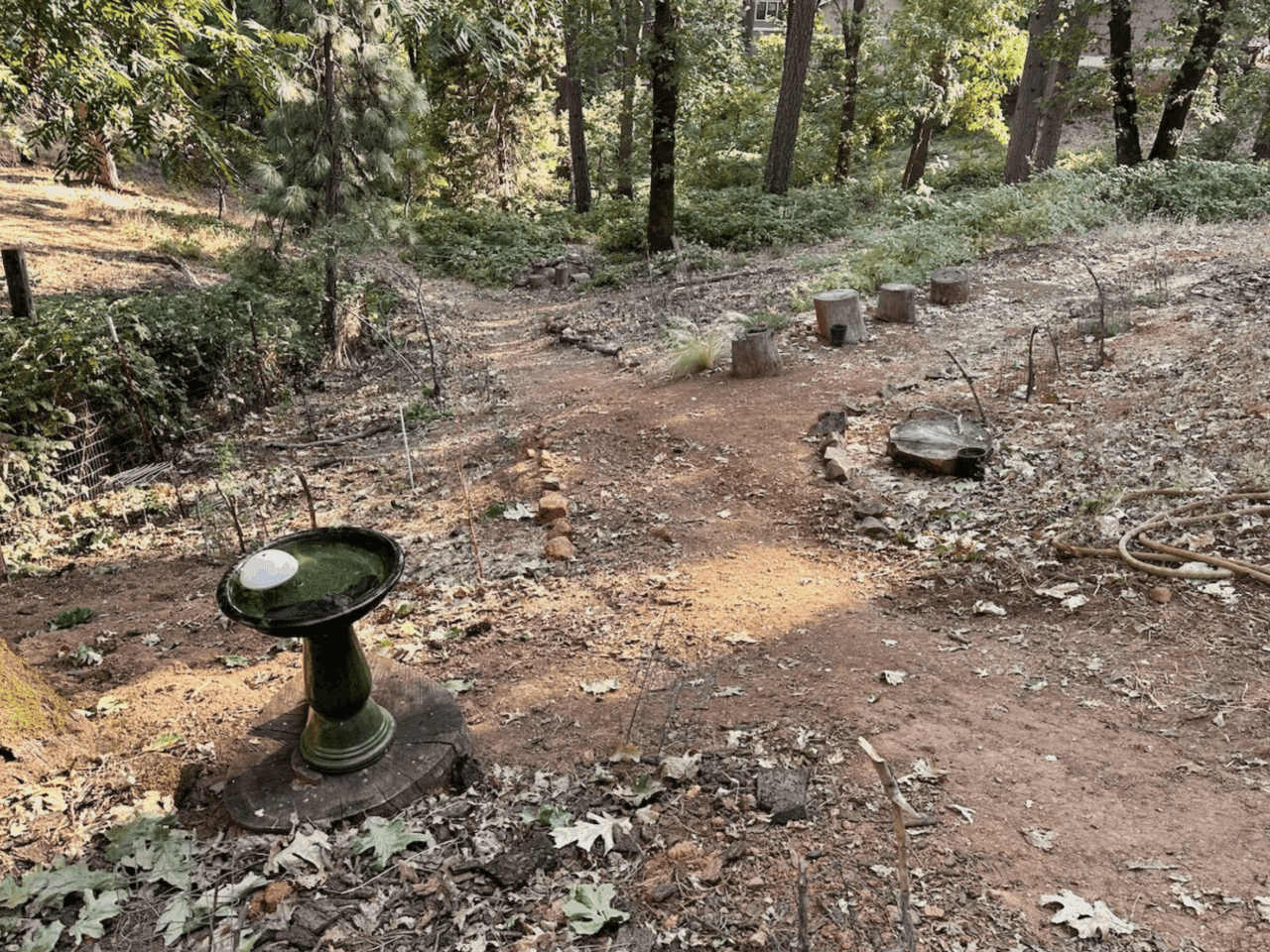
Yes! You can leave your vegetables in place over the winter and wildlife will certainly enjoy foraging on the drying foliage or around the plants. Birds may harvest cabbage moths and other late-season caterpillars of the brassica family. Or, worms, ants, and other insects that are slowly burrowing down into the soil for the cooler months may be hunted by birds.
Keep in mind, however, that to minimize disease and pests, many vegetable gardeners and farmers remove debris from their beds to risk disease-spread or continued pest pressure in the following year. Use your judgement about how the plants did and if you noticed pest damage, or not, when deciding whether to leave vegetable gardens intact until spring planting.
This is a difficult question as the squash family has both a lot of pests that are attracted to them and the plants generally don’t decompose in a way that is visually appealing. Perhaps you could consider keeping the fruits (pumpkins) and cutting the tops off and leaving them out for birds and other wildlife to harvest the seeds? They most certainly will find them.
Once the flesh of the pumpkin begins to decompose it can smell and mold, which may be unappealing both to the neighborhood and make it less likely to be visited by birds. This may be the time to compost what is left of the pumpkins. Note that because of squash bugs, cucumber beetles, etc., you’ll want to keep decomposing squash-family plants away from vegetable gardens as many of these creatures will overwinter in and around the soil and foliage of the squash plants.
“Unwanted” Visitors (including mold & disease)
In general, no, this is a sign of decomposition in progress and that mold will eventually allow the leaves to biodegrade and improve the quality of your soil. That said, mold can trigger reactions and health concerns in humans and pets in areas with poor air flow. If you notice a lot of mold and you or others in your family are sensitive, we recommend trying to keep your decomposing leaf pile as far away from where humans may come into contact with it. Generally the mold will give way to dark, nutrient rich soil. The pile can also be covered with a tarp or another barrier that minimizes the amount of spores that are released.
Decomposition of leaves leads to some mold development. If it is a concern, try leaving the leaves as far away as possible from where humans and pets may come into contact with it and cover it with a tarp or another barrier when it is actively biodegrading.
Small mammals are a part of our ecosystems. Creating an environment only for birds is near impossible. That said, there are things you can do to encourage more birds and less rodents. First and foremost, plant native flowers, shrubs, and trees to feed the birds rather than bird feeders. Bird feeders (even squirrel-proof options) will attract rodents to your yard. Native landscaping will still attract them, but in smaller numbers and spread out over the growing season.
If you do feed the birds, choose squirrel-proof feeders and clean up under your feeders regularly so they are not as attractive to small rodents. And, if your site is suitable, consider adding a nestbox for owls or American kestrels. These are our natural rodent management team!
Finally, if you want to see birds up close all year without feeders, a birdbath is almost as effective for attracting birds. Small mammals, though they can use it, are less likely to use a water source than they are bird feeders.
Part of gardening is embracing a dynamic, adventurous, unpredictable (sometimes), and learn-on-the-job experience. Mold, plant pests and diseases, squirrels, rodents, etc. are all part of many of our natural ecosystems, and can be perfectly benign. However, it is also important to consider your health and the sustainability of your home. Don’t let plant material accumulate against structures, as this can lead to rot and damage, and can increase fire risk in dry conditions. This can also provide attractive habitat for small mammals which may then find their way into your buildings. The more native plants you can plant, the more of an ecosystem you will be supporting, and this includes natural pest controllers – predators and other mechanisms which keep things in some sort of a balance.
In some specific cases, plant diseases can be managed by gathering and entirely removing fallen plant debris from your site. This situation is commonest in crop situations, for example, some blights which affect tomatoes may be managed via biomass removal. This situation is relatively unusual, and having a diverse habitat – as close to a “full” ecosystem as you can manage – is often one of the best ways to support solutions to common plant ailments, including by supporting predatory insects and other animals. Don’t forget that many plants will start to look “sick”, and have blotchy or damaged leaves at the end of the growing season. This is normal and does not necessarily indicate disease.
Ticks
Ticks can be present in leaf piles. There is conflicting research about the best strategy for how to manage leaves when it comes to residential landscapes. The piles provide moisture and overwintering areas for ticks. This is one case for leaving leaves in place (not creating thick piles) because the thicker the layer, the more moisture and potentially more ticks can be found.
That said, it is not always possible to leave leaves based on rules and regulations in Home Owner Associations (HOAs), towns, neighborhoods, and municipalities. Removing leaves to a place where they can naturally decompose, but be less likely to impact humans is ideal. Once leaves are bagged and shipped off to landfills, the likelihood of the life in the leaf litter surviving is low.
Managing our landscapes for wildlife is always a juggle between maximizing the benefits and minimizing things such as tick populations. Ticks are in our landscapes and the best prevention is protecting yourself from exposure by keeping well cleared walkways through your plantings, wearing tick-proof clothing, and conducting a thorough tick-check after your gardening work. Drying your gardening clothes for 15 minutes on high after you come in will kill any ticks that may be roaming your clothing.
Leaves and Water Quality, Run-off
Leaves contain some nutrients which can be released when they end up in water courses. In the natural environment, this is just fine, however, in urban areas with limited green space, large volumes of leaves end up in our water courses via storm drains and could impact nutrient loads. Keeping our leaves in our yards and letting them decompose into the soil is a great way to keep these nutrients right where your plants can then make use of them.
Leaves also contain carbon. Soils with higher carbon contents can hold more moisture for longer than those with less organic material in them, and so holding leaves on-site can not only boost soil carbon, but can also contribute to reducing the “flashiness” of flooding and slow subsequent droughts. The leaves themselves can also caused localized flooding if they are allowed to accumulate on sidewalks and roads where they wash into and block drains.
Stay Connected
By subscribing to stay connected to Garden for Birds, you agree to receive communications from the Cornell Lab. You may unsubscribe from the communications at any time.